
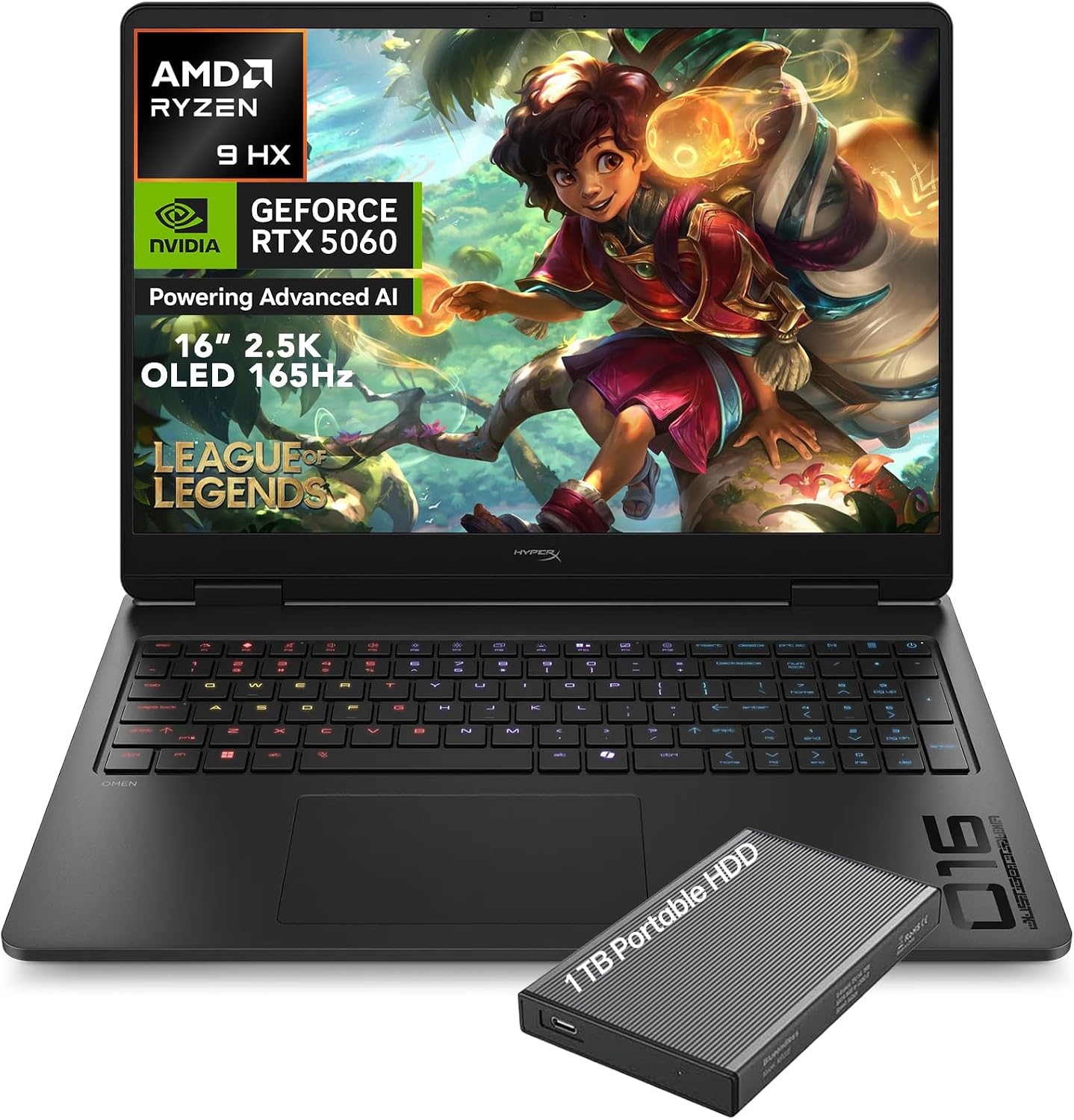
HP HyperX OMEN
5.0/ 5
RTX 5060 8GB GPU
165Hz 2.5K OLED
Ryzen 9 8940HX
Self-cleaning fan tech

Finding the right premium OLED gaming laptop means balancing raw GPU power with display quality, thermal design, and portability. We compare ten standout models featuring RTX 50-series graphics, high-refresh OLED panels, and the latest Intel and AMD processors to help you identify the best fit for your gaming and creative needs.
OLED panels deliver deeper blacks and more vivid colors than traditional IPS screens, making them ideal for immersive gaming and content creation. However, not every premium laptop handles sustained performance equally, and GPU wattage, cooling solutions, and memory configurations vary significantly across this price range.
To narrow the field, we examined GPU tier and wattage, OLED panel resolution and refresh rate, processor generation and core count, memory and storage capacity, thermal architecture, port selection, and overall build quality. These factors determine whether a laptop excels at competitive esports, cinematic AAA gaming, creative workflows, or a balanced mix of all three.
5.0/ 5

4.5/ 5
As an Amazon Associate we earn from qualifying purchases, at no additional cost to you.
Swipe across to compare all columns
| Product | Key highlights | Rating | Explore |
|---|---|---|---|
|
Best overall
Razer Blade 16
|
RTX 5070 Ti GPU
240Hz QHD+ OLED
32GB LPDDR5X RAM
14.9mm thin chassis
|
4.5/ 5 | Check Price |

Best for stealth design
MSI Stealth 16
|
RTX 5070 Ti GPU
240Hz QHD+ OLED
32GB DDR5 RAM
Intel Ultra 9 386H
|
4.3/ 5 | Check Price |
|
Premium pick
Razer Blade 16 5090
|
RTX 5090 24GB GPU
240Hz QHD+ OLED
64GB LPDDR5X RAM
2TB PCIe SSD
|
Not supplied | Check Price |
|
Best value
HP HyperX OMEN
|
RTX 5060 8GB GPU
165Hz 2.5K OLED
Ryzen 9 8940HX
16GB DDR5 RAM
|
5.0/ 5 | Check Price |

Best for creators
Dell XPS 16
|
RTX 5060 8GB GPU
4K 120Hz touchscreen
Intel Ultra 9 285H
32GB DDR5 RAM
|
5.0/ 5 | Check Price |

Best for touchscreen
Dell Premium 16
|
4K OLED touchscreen
Intel Ultra 7 255H
32GB LPDDR5X RAM
RTX 5050 GPU
|
4.6/ 5 | Check Price |
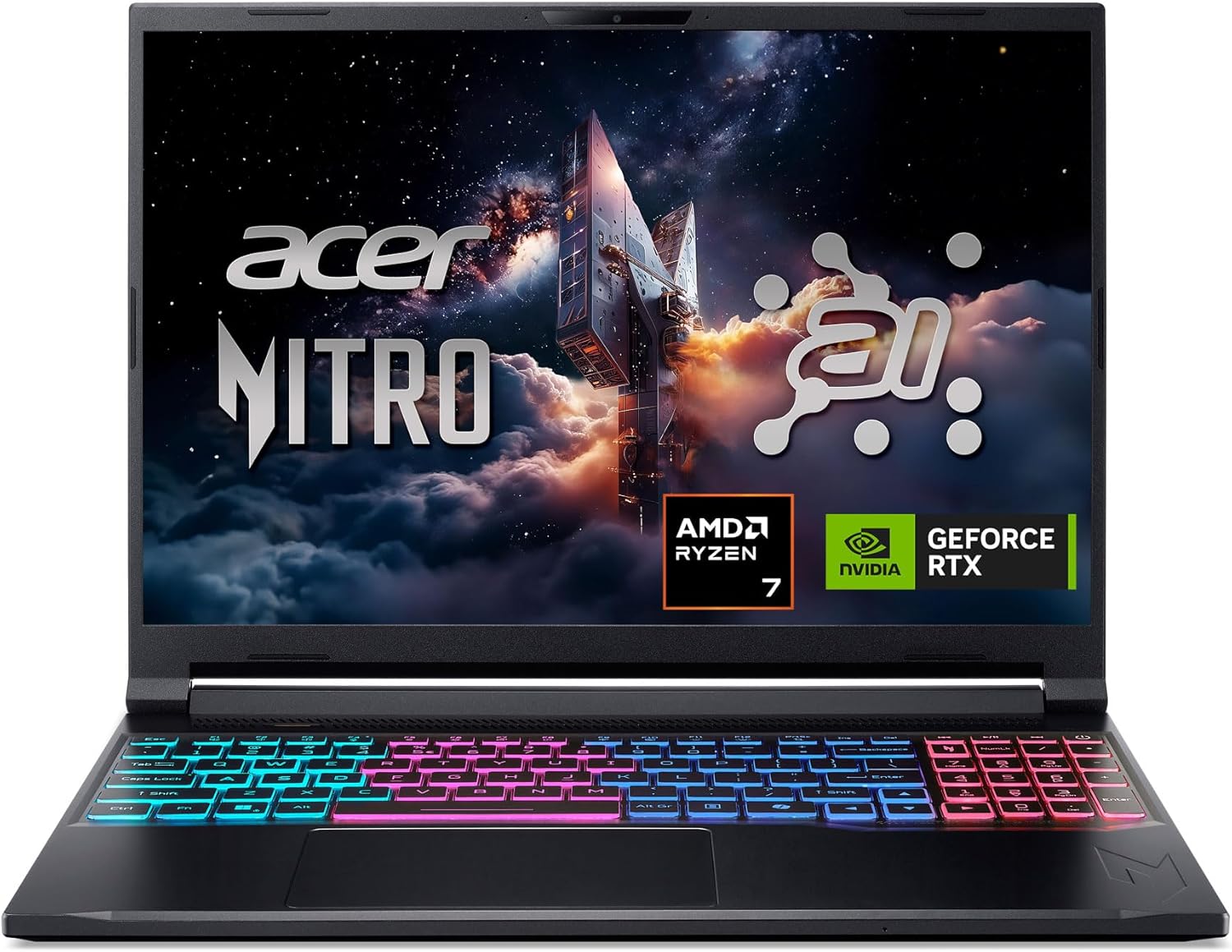
Best value
Acer Nitro V 16S
|
RTX 5060 GPU
180Hz WUXGA IPS
Ryzen 7 260 CPU
32GB DDR5 RAM
|
4.4/ 5 | Check Price |
|
Premium pick
Razer Blade 16 5090
|
RTX 5090 24GB GPU
240Hz QHD+ OLED
32GB LPDDR5X RAM
2TB PCIe SSD
|
4.2/ 5 | Check Price |

Best for raw performance
MSI Raider 16
|
RTX 5090 24GB GPU
240Hz QHD+ OLED
Intel Ultra 9 290HX
32GB DDR5 RAM
|
Not supplied | Check Price |

Best for balanced use
Lenovo Legion 5
|
RTX 5070 8GB GPU
165Hz QHD+ OLED
Intel Ultra 9 275HX
80Wh battery capacity
|
4.6/ 5 | Check Price |
As an Amazon Associate we earn from qualifying purchases, at no additional cost to you.
The Razer Blade 16 with the RTX 5070 Ti strikes a compelling balance between portability and gaming power. At just 14.9 mm thick, it is one of the slimmest 16-inch gaming laptops available, yet it houses a 140W TGP GPU and a 16-core Intel Core Ultra 9 386H processor. This combination makes it a strong choice for gamers who travel frequently and do not want to sacrifice frame rates at QHD+ resolution.
The 240Hz QHD+ OLED panel is the centerpiece of this machine. With a 0.2 ms response time, VESA DisplayHDR TrueBlack 1000 certification, and 100 percent DCI-P3 color coverage, the display handles fast-paced competitive shooters and cinematic single-player titles with equal skill. The 16:10 aspect ratio provides extra vertical space that benefits both gaming and productivity tasks such as video editing or spreadsheet work.
Connectivity is forward-looking, with Thunderbolt 5, HDMI 2.1, Wi-Fi 7, and an SD card slot. The vapor chamber cooling system is designed to sustain performance during long sessions, which matters because thin chassis designs can sometimes throttle under extended loads. The 32GB of LPDDR5X 9600MHz memory and 1TB PCIe 4.0 SSD provide fast load times, and a second M.2 slot allows storage expansion up to 8TB total.
This configuration is best suited for gamers who want a single laptop for AAA gaming, content creation, and daily productivity without carrying a bulky machine. The main tradeoff is the non-upgradeable RAM, so 32GB needs to be enough for your foreseeable needs. If you require more memory for heavy creative workflows, consider the 64GB variant in this lineup.
The Calman Verified color accuracy and full DCI-P3 coverage make this OLED panel suitable for photo and video editing alongside gaming. Creators who color-grade footage will appreciate the TrueBlack 1000 contrast ratio, which delivers near-infinite contrast for accurate shadow detail. For gamers, the 240Hz refresh rate and 0.2 ms response time virtually eliminate motion blur in fast-paced titles.
If you need more than 32GB of RAM for professional video editing, 3D rendering, or running multiple virtual machines, the soldered memory in this model cannot be upgraded after purchase. Buyers with those requirements should look at the 64GB Razer Blade 16 variant or a workstation-class laptop with socketed memory.
As an Amazon Associate we earn from qualifying purchases, at no additional cost to you.
The MSI Stealth 16 AI+ lives up to its name with a clean charcoal black chassis that blends into professional environments more easily than most gaming laptops. Underneath the subdued exterior, it carries the same Intel Core Ultra 9 386H processor and RTX 5070 Ti GPU found in the Razer Blade 16, making it a serious contender for gamers who prefer a low-key aesthetic.
One notable advantage of this MSI configuration is the 16GB of GDDR7 VRAM on the RTX 5070 Ti, which provides extra headroom for high-resolution texture packs and future game titles that demand more video memory. The 240Hz QHD+ OLED display delivers the same fast response and rich contrast that make OLED panels so appealing for gaming, and DLSS 4 support helps maintain high frame rates with ray tracing enabled.
The 32GB of DDR5 RAM and 1TB NVMe SSD cover the needs of most gamers and multitaskers. Wi-Fi 7 ensures fast wireless connectivity for online gaming and large downloads. The laptop ships with Windows 11 Home, which is fine for most users, though business buyers or those who need BitLocker encryption may want to upgrade to Pro separately.
This laptop is a strong choice for gamers who share their machine between office meetings and evening gaming sessions and do not want a device that screams gaming laptop. The 16GB VRAM is a meaningful advantage for future-proofing, though the lack of detailed thermal specifications makes it harder to predict sustained performance under heavy loads compared to competitors with published TGP figures.
The 16GB GDDR7 VRAM on this RTX 5070 Ti configuration gives it an edge over 12GB variants when running games with ultra-high-resolution textures or when multitasking between a game and streaming software. As game engines continue to increase texture quality, having extra VRAM can prevent stuttering and texture pop-in at higher settings.
Gamers who prioritize maximum sustained GPU wattage and detailed thermal transparency may prefer a model with a published TGP rating and a more aggressive cooling design. The Stealth line prioritizes thinness and quiet operation, which can mean slightly lower sustained clock speeds during extended gaming sessions compared to thicker performance-focused laptops.
As an Amazon Associate we earn from qualifying purchases, at no additional cost to you.
For buyers who want the most powerful GPU available in a thin 16-inch form factor, the Razer Blade 16 with the RTX 5090 is the top of the range. The 24GB GDDR7 GPU runs at up to 165W TGP, which is the highest wattage configuration in this guide and should deliver the strongest frame rates at QHD+ and 4K resolutions across the current AAA game library.
The 64GB of LPDDR5X 9600MHz memory and 2TB PCIe 4.0 SSD remove the storage and RAM constraints that many gamers encounter with lower-tier configurations. This amount of memory is particularly useful for content creators who run Adobe Premiere, DaVinci Resolve, or Blender alongside a game or streaming setup. The second M.2 slot allows total storage expansion up to 8TB.
The display, connectivity, and build quality are identical to the RTX 5070 Ti model: a 240Hz QHD+ OLED panel with TrueBlack 1000, Thunderbolt 5, HDMI 2.1, Wi-Fi 7, and the same 14.9 mm CNC aluminum chassis. The vapor chamber cooling system is tasked with managing significantly more heat from the 5090, which is worth keeping in mind for extended sessions in warm environments.
This configuration is designed for enthusiasts and professionals who need maximum GPU performance without moving to a 17-inch or desktop-replacement form factor. The price reflects the top-tier components, and the lack of a customer rating at this time means early buyers are relying on the Razer Blade platform reputation rather than community feedback for this specific configuration.
The 24GB of GDDR7 VRAM on the RTX 5090 is most beneficial for 4K gaming with maximum ray tracing settings, large AI model workloads, and professional 3D rendering in applications like Blender or Autodesk Maya. For standard QHD+ gaming, the 12GB on the 5070 Ti is often sufficient, so the VRAM upgrade matters most if you plan to push resolutions and settings to their limits or use the laptop for GPU-accelerated creative work.
If your primary use is competitive esports at 1080p or QHD+, the RTX 5090 is more GPU than you need, and the significant price premium could be better spent on a high-refresh external monitor or a dedicated streaming setup. The RTX 5070 Ti variant delivers excellent frame rates for competitive titles at a considerably lower cost.
As an Amazon Associate we earn from qualifying purchases, at no additional cost to you.
The HP HyperX OMEN stands out as one of the most affordable ways to get an OLED gaming display in a 16-inch laptop. The 2.5K 165Hz OLED panel with TrueBlack 1000 certification and 100 percent DCI-P3 color coverage delivers the same visual benefits as more expensive models, paired with an AMD Ryzen 9 8940HX processor and RTX 5060 GPU that handle modern titles well at medium to high settings.
The RTX 5060 with 8GB GDDR7 supports DLSS 4.5 and ray tracing, which helps compensate for the lower raw GPU power compared to 5070 Ti and 5090 configurations. In practice, enabling DLSS frame generation can bring frame rates close to those of higher-tier GPUs in supported titles, making this a practical choice for gamers who are comfortable adjusting settings for the best balance of visuals and performance.
Unique features include the self-cleaning Tempest Cooling system that reduces dust buildup over time, HyperX spatial 3D audio with DTS:X Ultra, and an 8000Hz polling rate on the 4-zone RGB keyboard for ultra-responsive input. The bundled 1TB portable hard drive is a useful bonus for expanding your game library without opening the laptop.
This laptop is best suited for budget-conscious gamers who want the OLED visual experience without paying premium prices. The 16GB RAM is the main limitation; while sufficient for most current games, it may feel restrictive for heavy multitasking or future titles with higher memory demands. If you plan to keep the laptop for several years, consider whether 16GB will remain adequate for your needs.
Dust accumulation is one of the most common causes of thermal degradation in gaming laptops over time. The OMEN Tempest Cooling system with self-cleaning fans is designed to expel dust particles before they build up on the heatsink fins, which can help maintain consistent performance and reduce the need for manual cleaning. This is a practical advantage for buyers who plan to use the laptop in dusty environments or who are not comfortable opening the chassis for maintenance.
Gamers who want to play the latest AAA titles at maximum settings with ray tracing enabled will find the RTX 5060 limiting, especially at the native 2.5K resolution of the OLED display. If maximum visual fidelity is your priority, a laptop with at least an RTX 5070 or higher will provide a more comfortable experience at higher detail levels.
As an Amazon Associate we earn from qualifying purchases, at no additional cost to you.
The Dell XPS 16 takes a different approach from the gaming-first laptops in this guide, prioritizing a premium creative and professional experience with a 16.3-inch 4K UHD+ touchscreen at 120Hz. The Intel Core Ultra 9 285H processor and RTX 5060 GPU provide solid performance for content creation, light gaming, and AI-accelerated workflows, making it a versatile choice for professionals who game on the side.
The 4K resolution delivers exceptional sharpness for photo editing, video work, and detailed design tasks. The 120Hz refresh rate is lower than the 165Hz and 240Hz panels on dedicated gaming laptops, which means competitive gamers may notice less fluid motion in fast-paced titles. However, for single-player games and creative applications, the 4K resolution provides a more detailed and immersive experience than QHD+ panels.
The XPS 16 excels in connectivity and professional features, with three Thunderbolt 4 ports that support up to three external 4K displays, a MicroSD card reader, Wi-Fi 7, and Bluetooth 5.4. The haptic glass touchpad and touch function row give it a modern, minimalist feel, and Windows 11 Pro includes enterprise features like BitLocker and Remote Desktop that business users will appreciate.
This laptop is best for content creators, software developers, and business professionals who want a premium machine that can handle occasional gaming. It is not the best choice for dedicated gamers who prioritize high refresh rates and maximum GPU power, but for mixed-use scenarios where creative work takes priority, the 4K display and professional feature set are significant advantages.
The combination of Windows 11 Pro, three Thunderbolt 4 ports, and support for multiple external displays makes this laptop well-suited for professional environments. Software engineers can connect to dual monitors for coding, financial analysts can run multi-screen dashboards, and video editors can use an external reference display while editing on the built-in 4K panel. The 99Wh battery also supports extended work sessions away from a power outlet.
Dedicated gamers who prioritize high frame rates and OLED contrast for competitive play should look at models with 165Hz or 240Hz OLED panels and higher-tier GPUs. The 120Hz refresh rate and RTX 5060 GPU in this configuration are adequate for casual gaming but will not match the responsiveness and visual performance of the gaming-focused laptops in this guide.
As an Amazon Associate we earn from qualifying purchases, at no additional cost to you.
The Dell Premium 16, the successor to the XPS 16 line, offers a 16.3-inch 4K OLED touchscreen that combines the deep blacks and vivid colors of OLED technology with the versatility of touch input. This makes it particularly appealing for creative professionals who use stylus-based workflows or prefer touch navigation in applications like Photoshop and Lightroom.
The product title lists an Intel Core Ultra 7 255H processor and RTX 5050 GPU, though the listing details reference a higher Ultra 9 285H and RTX 5060 configuration. This type of variance is common in retailer listings that cover multiple configurations under one page. Buyers should verify the exact processor and GPU at the time of purchase to ensure they receive the performance tier they expect.
With 32GB of LPDDR5X RAM, a 1TB PCIe SSD, and a 99Wh battery, the hardware foundation is solid for professional workloads. The three Thunderbolt 4 ports, SD card reader, Wi-Fi 7, and Bluetooth 5.4 provide comprehensive connectivity, and the fingerprint reader adds a convenient layer of security for business users. Windows 11 Pro is included for enterprise compatibility.
This laptop is best suited for professionals and creators who value the OLED touchscreen experience and need a reliable machine for productivity and light creative work. The GPU tier, whether 5050 or 5060, is adequate for casual gaming and GPU-accelerated creative tasks but will not deliver the frame rates that dedicated gaming laptops provide for demanding AAA titles.
Because the listing references both Ultra 7 and Ultra 9 processors as well as RTX 5050 and RTX 5060 GPUs, it is important to confirm the exact configuration before completing your purchase. Check the specific model number and specification details in the order summary to ensure the processor, GPU, and memory match your performance requirements and budget expectations.
Gamers who want consistent high frame rates in modern AAA titles at native 4K resolution will need a more powerful GPU than the RTX 5050 or 5060. For serious gaming at 4K, look at laptops with at least an RTX 5070 Ti or higher, which provide the VRAM and raw compute power needed to maintain smooth performance at that resolution.
As an Amazon Associate we earn from qualifying purchases, at no additional cost to you.
The Acer Nitro V 16S is the most affordable laptop in this guide and offers strong gaming performance for the price with an AMD Ryzen 7 260 processor and RTX 5060 GPU. It is important to note that this model uses a 16-inch WUXGA IPS display at 180Hz rather than an OLED panel, which means it does not deliver the same contrast and color depth as the OLED-equipped laptops in this comparison.
Despite the IPS panel, the 180Hz refresh rate and 100 percent sRGB color coverage provide a smooth and reasonably vibrant gaming experience. The RTX 5060 with 572 AI TOPS supports DLSS 4 with Multi Frame Generation, which can significantly boost frame rates in supported titles and make the WUXGA resolution a practical choice for maintaining high performance without demanding excessive GPU power.
A major advantage of the Nitro V 16S is its upgradeability. The 32GB of DDR5 5600MHz memory is installed across two slots, and a second M.2 PCIe slot is available for storage expansion. This is more flexible than the soldered memory in the Razer Blade models and gives budget-conscious buyers the option to upgrade components over time.
This laptop is best for gamers on a tighter budget who want RTX 50-series performance and do not consider an OLED display essential. The IPS panel is a meaningful tradeoff compared to the OLED models in this guide, but the lower price, upgradeable RAM, and solid GPU performance make it a practical entry point into current-generation gaming.
IPS panels offer good color accuracy and wide viewing angles, but they cannot match the per-pixel illumination of OLED displays, which produce true blacks and significantly higher contrast ratios. For competitive gaming where response time matters most, the 180Hz IPS panel performs well. For cinematic single-player games and media consumption where visual richness is important, the OLED models in this guide provide a noticeably more immersive experience.
If an OLED display is a primary requirement for your purchase, this model does not meet that criterion. Buyers who prioritize the deep blacks, infinite contrast, and vivid colors of OLED technology should choose one of the other laptops in this guide with a confirmed OLED panel, even if it means spending more or accepting a lower GPU tier.
As an Amazon Associate we earn from qualifying purchases, at no additional cost to you.
This Razer Blade 16 configuration pairs the flagship RTX 5090 GPU with 32GB of RAM and a 2TB SSD, offering a middle ground between the 5070 Ti model and the 64GB 5090 variant. It delivers the same 165W TGP GPU performance and 24GB of GDDR7 VRAM as the more expensive model, making it a strong option for gamers who want top-tier graphics without needing 64GB of memory.
The 240Hz QHD+ OLED display, vapor chamber cooling, and 14.9 mm CNC aluminum chassis are shared with the rest of the Razer Blade 16 lineup. The 2TB SSD provides ample space for a large game library and creative project files, and the second M.2 slot allows further expansion. Thunderbolt 5, HDMI 2.1, Wi-Fi 7, and Windows Hello round out a comprehensive feature set.
The 32GB of LPDDR5X 9600MHz memory is sufficient for most gaming and creative workflows, but it is soldered and cannot be upgraded. For gamers and streamers who run multiple demanding applications simultaneously, 32GB is generally adequate, though professionals working with large datasets or complex 3D scenes may find it limiting over time.
This configuration is ideal for buyers who want the RTX 5090 GPU for maximum gaming performance but do not need the 64GB RAM of the top-tier model. The 2TB SSD is a practical upgrade over the 1TB in the 5070 Ti variant, and the price difference between this and the 64GB model may be significant enough to make this the more sensible choice for gaming-focused users.
For gaming alone, 32GB of RAM is more than sufficient for current and near-future titles. The 64GB configuration becomes worthwhile if you regularly run memory-intensive creative applications, virtual machines, or large AI models alongside your games. If your primary use case is gaming with occasional content creation, the 32GB model offers better value while retaining the same GPU performance.
Buyers who need maximum RAM for professional workloads such as 8K video editing, large-scale 3D rendering, or running multiple virtual machines should opt for the 64GB variant. The non-upgradeable memory means that choosing 32GB now locks you into that capacity for the life of the laptop.
As an Amazon Associate we earn from qualifying purchases, at no additional cost to you.
The MSI Raider 16 Max HX is built for maximum sustained performance rather than portability. With a 24-core Intel Core Ultra 9 290HX Plus processor running up to 5.5GHz and an RTX 5090 GPU, it is designed to deliver desktop-class gaming and compute power in a 16-inch form factor. The thermal system supports up to 300W of total system power, which is significantly higher than the thin-and-light models in this guide.
The 240Hz QHD+ OLED display provides the same visual quality as the Razer Blade models, with rich contrast and fast response times for competitive and cinematic gaming. The 32GB of DDR5 RAM and 1TB PCIe Gen4 SSD handle current gaming and multitasking demands, and the robust cooling architecture is designed to maintain peak clock speeds during extended sessions without aggressive throttling.
Connectivity includes Intel Killer Wi-Fi 7 and a 2.5Gb Ethernet port, which is valuable for gamers who want the lowest possible latency for online multiplayer. The per-key RGB keyboard and signature front lighting bar give the Raider a distinctive gaming aesthetic, and Windows 11 Pro is included for users who need enterprise features.
This laptop is best for gamers and power users who prioritize sustained performance over portability and are willing to accept a heavier, thicker chassis in exchange for higher wattage and better thermal headroom. The lack of a customer rating means early buyers are relying on the MSI Raider platform reputation, which has historically been strong for high-performance gaming laptops.
The 300W total system power rating is one of the highest in the 16-inch laptop category and indicates that the Raider 16 can sustain higher CPU and GPU clock speeds under load than thinner competitors. This matters most during long gaming sessions or rendering tasks where thermal throttling can gradually reduce performance. The tradeoff is a larger and heavier chassis with more audible fan noise under load.
If you travel frequently or need a laptop that fits easily into a backpack for daily commuting, the Raider 16 Max HX is likely too large and heavy for comfortable portability. The Razer Blade 16 models offer similar GPU options in a significantly thinner and lighter chassis, though with lower sustained wattage.
As an Amazon Associate we earn from qualifying purchases, at no additional cost to you.
The Lenovo Legion 5 occupies a practical middle ground in this lineup, combining an Intel Core Ultra 9 275HX processor with 24 cores and an RTX 5070 GPU in a 15.3-inch form factor. The QHD+ OLED display at 165Hz with 1000-nit brightness delivers excellent visual quality for gaming and media, though the slightly smaller screen and lower refresh rate distinguish it from the 16-inch 240Hz models.
The RTX 5070 with 8GB GDDR7 provides strong performance for QHD+ gaming at high settings, sitting between the RTX 5060 and 5070 Ti in the GPU hierarchy. For most current AAA titles, this GPU delivers smooth frame rates at the native QHD+ resolution, and DLSS support helps push performance higher in ray-traced games. The 24-core processor handles multitasking and CPU-intensive games effectively.
Lenovo's Coldfront Hyper thermal solution uses turbo fans and vacuum-sealed 3D copper heatpipes to manage temperatures, and the Fn+Q multi-mode switching lets you adjust performance profiles on the fly. The port selection is comprehensive, with three USB-A ports, two USB-C ports, HDMI, Ethernet, and an audio combo jack. The 80Wh battery provides reasonable mobility for a gaming laptop.
This laptop is best for gamers who want a well-rounded machine with strong QHD+ performance, a quality OLED display, and good connectivity without paying for the highest-tier GPU. The 15.3-inch screen is slightly more compact than the 16-inch models, which some buyers will prefer for portability, though others may want the extra screen real estate for immersive gaming.
The Legion 5 offers one of the most practical port layouts in this guide, with three USB-A ports for peripherals, two USB-C ports for charging and data, a full-size HDMI output for external displays, and an Ethernet jack for wired gaming. This eliminates the need for dongles and hubs in most setups, which is a genuine convenience advantage over laptops that rely heavily on Thunderbolt-only connectivity.
Gamers who want the smoothest possible motion in competitive shooters may prefer a 240Hz display over the 165Hz panel in this model. The difference is most noticeable in fast-paced esports titles where every millisecond of motion clarity matters. If competitive gaming is your primary focus, consider one of the 240Hz models in this guide.
As an Amazon Associate we earn from qualifying purchases, at no additional cost to you.
Selecting a premium OLED gaming laptop involves more than comparing GPU model numbers. The display technology, thermal design, memory configuration, and connectivity all shape your daily experience. This guide breaks down the most important factors to help you make a confident decision.
The GPU is the single most important component for gaming performance, and the RTX 50-series lineup spans a wide range of capabilities. The RTX 5060 handles QHD+ gaming at medium to high settings with DLSS assistance, the RTX 5070 and 5070 Ti deliver strong high-settings performance at QHD+ and entry-level 4K, and the RTX 5090 provides the headroom for maximum settings and ray tracing at higher resolutions. The amount of VRAM also varies, from 8GB on the 5060 and 5070 to 12GB on the 5070 Ti and 24GB on the 5090.
Equally important is the Total Graphics Power, or TGP, which determines how much electrical power the GPU can draw inside the laptop chassis. A 140W RTX 5070 Ti will outperform a lower-wattage version of the same chip, and the difference can be significant in sustained gaming sessions. Thinner laptops often run GPUs at lower TGP to manage heat, while thicker performance-focused models can sustain higher wattage. Always check the TGP figure rather than relying on the GPU model name alone.
For most gamers playing at QHD+ resolution, an RTX 5070 or 5070 Ti provides the best balance of performance and value. Choose the RTX 5090 if you plan to game at 4K, use heavy ray tracing, or run GPU-accelerated creative workloads. The RTX 5060 is a practical choice for budget-conscious buyers who are comfortable using DLSS to boost frame rates.
OLED panels use individually lit pixels that can turn off completely, producing true blacks and near-infinite contrast ratios. This makes dark scenes in games look dramatically more immersive compared to IPS panels, which rely on a backlight that always leaks some light through dark pixels. OLED displays also offer faster pixel response times, typically around 0.2 ms, which virtually eliminates motion blur and ghosting in fast-moving scenes.
Refresh rate is the other critical display specification. The laptops in this guide range from 120Hz to 240Hz. A 240Hz panel updates the image 240 times per second, providing the smoothest motion for competitive gaming. A 165Hz display is still very smooth and sufficient for most players, while 120Hz is adequate for single-player games and creative work but may feel less responsive in fast-paced multiplayer titles. Higher refresh rates also require a more powerful GPU to consistently fill those frames.
If you play competitive esports titles where reaction time matters, prioritize a 240Hz OLED panel. For single-player and story-driven games, a 165Hz OLED display provides an excellent experience at a lower cost. Make sure the GPU you choose can consistently deliver frame rates close to the display's refresh rate at your preferred resolution and settings.
The latest Intel Core Ultra 9 and AMD Ryzen 9 processors in these laptops offer 16 to 24 cores with boost clocks above 5GHz, providing more than enough processing power for current games. The CPU matters most in CPU-bound scenarios such as large multiplayer games with many players, simulation titles, and streaming or recording gameplay while playing. For most single-player games, the GPU is the primary bottleneck.
Intel's Core Ultra 9 386H and 290HX Plus processors include dedicated AI acceleration cores that support features like DLSS frame generation and AI-enhanced upscaling. AMD's Ryzen 9 8940HX offers strong multi-threaded performance and efficient power consumption. Both platforms support the latest memory standards and connectivity protocols, so the choice between Intel and AMD often comes down to specific workload requirements and personal preference rather than a dramatic performance gap.
For pure gaming, any of the processors in this guide will perform well. If you also plan to stream, edit video, or run AI workloads, prioritize a higher core count and look for processors with dedicated AI acceleration. The difference between a 16-core and 24-core chip is most noticeable in multi-threaded productivity tasks rather than gaming alone.
The laptops in this guide come with 16GB to 64GB of DDR5 or LPDDR5X memory. For gaming alone, 16GB is the current minimum, and 32GB provides comfortable headroom for multitasking between a game, browser, voice chat, and streaming software. The 64GB configurations are aimed at content creators and professionals who work with large files, virtual machines, or complex 3D scenes.
A critical distinction is whether the RAM is soldered or socketed. LPDDR5X memory, used in the Razer Blade models, is soldered to the motherboard and cannot be upgraded after purchase. Standard DDR5 in socketed slots, found in models like the Acer Nitro V 16S, allows you to add or replace memory modules later. This difference can significantly affect the long-term usability of the laptop.
If you choose a laptop with soldered RAM, buy the amount of memory you will need for the entire lifespan of the machine. If upgradeability is important to you, look for models with socketed DDR5 slots and verify the maximum supported capacity before purchasing. For most gamers, 32GB is the sweet spot that balances current needs with future-proofing.
A gaming laptop's cooling system determines how long it can maintain peak performance before thermal throttling reduces clock speeds. Vapor chamber cooling, used in the Razer Blade lineup, spreads heat across a larger surface area than traditional heat pipes and is effective in thin chassis designs. Larger laptops like the MSI Raider 16 can accommodate more fans and larger heatsinks, supporting higher total system power ratings.
Sustained performance matters more than peak benchmarks for real-world gaming. A laptop that boosts to high clock speeds for five minutes but then throttles significantly will deliver a worse gaming experience than one that maintains slightly lower but consistent clocks over several hours. Features like self-cleaning fans in the HP OMEN and multi-mode thermal profiles in the Lenovo Legion help manage temperatures over the long term.
If you game in long sessions or in warm environments, prioritize a laptop with a robust cooling solution and a published TGP rating. Thinner laptops are more portable but may throttle earlier under sustained loads. Consider your typical gaming environment and session length when weighing portability against thermal headroom.
Premium gaming laptops range from ultra-thin 14.9 mm designs like the Razer Blade 16 to thicker performance-focused models like the MSI Raider 16. Thinner laptops are easier to carry and fit into standard backpacks, making them practical for commuters and travelers. Heavier laptops typically offer better cooling and more ports but are less convenient to transport daily.
Build quality varies across the lineup, with CNC aluminum chassis on the Razer models providing a rigid, premium feel and plastic or mixed-material constructions on more affordable options. Battery life in gaming laptops is generally limited to a few hours of light productivity use, as the high-performance components consume significant power. The Dell models with 99Wh batteries and the Lenovo Legion with its 80Wh battery offer the longest unplugged runtimes for non-gaming tasks.
If you travel frequently or commute with your laptop, prioritize a thin and light design with a sturdy chassis. If the laptop will mostly stay on a desk, a heavier model with better cooling and more connectivity may serve you better. Remember that gaming performance on battery power is always significantly reduced, so plan to game while plugged in regardless of the battery capacity.
Modern gaming laptops offer a range of connectivity options that affect both gaming performance and daily usability. Wi-Fi 7 provides the fastest wireless speeds and lowest latency for online gaming, while Wi-Fi 6 is still adequate for most connections. Ethernet ports, available on models like the MSI Raider 16 and Lenovo Legion 5, offer the most stable and lowest-latency connection for competitive multiplayer gaming.
Thunderbolt 5, found on the Razer Blade models, supports faster data transfer and external display connectivity than Thunderbolt 4, which is still the standard on most other laptops. HDMI 2.1 is important if you plan to connect to a 4K 120Hz external monitor or TV. USB-A ports remain useful for gaming peripherals, and SD card readers are valuable for photographers and videographers who transfer files from cameras.
Consider your existing peripherals and display setup when evaluating connectivity. If you use a wired gaming mouse, mechanical keyboard, and external monitor, make sure the laptop has enough ports to accommodate everything without requiring a hub. For future-proofing, Wi-Fi 7 and Thunderbolt 5 are the most forward-looking standards, but Thunderbolt 4 and Wi-Fi 6 remain perfectly functional for current needs.
When setting up your new gaming laptop, start by updating the GPU drivers and Windows operating system to the latest versions. Install the manufacturer's control software, such as Razer Synapse, MSI Center, or Lenovo Vantage, to access performance profiles, fan curves, and keyboard lighting customization. Set the power plan to high performance when gaming on AC power, and switch to a balanced or power-saver profile for everyday tasks to extend battery life and reduce fan noise.
OLED displays benefit from a few care practices to minimize the risk of burn-in over time. Enable the built-in screen saver or set the display to turn off after a short period of inactivity. Avoid leaving static elements such as taskbars, HUD elements, or desktop icons on screen at maximum brightness for extended periods. Most modern OLED panels include pixel-shift and refresh technologies that help prevent burn-in automatically, but reducing static content at high brightness is still a good habit.
Keep the laptop's air vents clear of obstructions by using it on a hard, flat surface rather than a bed or couch cushion. Clean the vents and fan intakes periodically with compressed air to prevent dust buildup, which can reduce cooling efficiency and increase fan noise over time. If your laptop has a self-cleaning fan system, follow the manufacturer's recommendations for activating it. Store the laptop in a cool, dry place when not in use, and avoid exposing it to extreme temperatures or direct sunlight for prolonged periods.
OLED displays offer significantly better contrast, deeper blacks, and more vivid colors than IPS panels, which makes games look more immersive, especially in dark or cinematic scenes. The faster pixel response time also reduces motion blur. The main tradeoff is a higher price and a small long-term risk of burn-in, though modern OLED panels include protections that make this less of a concern than in earlier generations.
An RTX 5070 or RTX 5070 Ti is the practical sweet spot for QHD+ gaming at high settings, delivering smooth frame rates that match 165Hz and 240Hz displays in most current titles. The RTX 5060 can handle QHD+ with DLSS enabled and some settings adjustments, while the RTX 5090 provides extra headroom for maximum ray tracing and future titles with higher demands.
A higher refresh rate makes motion appear smoother and reduces input lag, which is most noticeable in fast-paced competitive games. A 240Hz display updates the image twice as fast as a 120Hz panel, providing a tangible advantage in esports titles. For single-player and story-driven games, the difference between 165Hz and 240Hz is less dramatic, and the OLED contrast and color quality matter more than the refresh rate.
It depends on the model. Laptops with LPDDR5X memory, such as the Razer Blade 16 series, have soldered RAM that cannot be upgraded after purchase. Models with standard DDR5 in socketed slots, like the Acer Nitro V 16S, allow memory upgrades. Always check the specific model's memory configuration before buying if upgradeability is important to you.
The RTX 5090 has significantly more CUDA cores, 24GB of GDDR7 VRAM compared to 8GB on the 5070, and a higher power budget. This translates to substantially better performance at 4K resolution, with heavy ray tracing, and in GPU-accelerated creative workloads. For QHD+ gaming, the RTX 5070 delivers strong performance at a much lower price, making the 5090 most worthwhile for enthusiasts who demand maximum settings and resolution.
Modern OLED panels are rated for tens of thousands of hours of use before significant brightness degradation occurs. With normal gaming and productivity usage, an OLED laptop display should last the functional lifespan of the machine. Using built-in pixel-shift features, avoiding prolonged static images at maximum brightness, and keeping the display at moderate brightness levels for everyday tasks can help extend the panel's longevity.
Yes, the high-end processors, dedicated GPUs, and color-accurate OLED displays in these laptops make them well-suited for video editing, photo retouching, 3D rendering, and graphic design. Models with 32GB or 64GB of RAM and fast SSD storage handle large creative projects effectively. The OLED panels with full DCI-P3 color coverage are particularly valuable for color-critical work.
Wi-Fi 7 offers faster speeds, lower latency, and better performance in congested network environments compared to Wi-Fi 6. For online gaming, the reduced latency can provide a smoother experience, especially on shared networks. However, a wired Ethernet connection still offers the lowest latency for competitive gaming, and Wi-Fi 6 remains perfectly adequate for most online gaming scenarios.
TGP, or Total Graphics Power, indicates how much electrical power the GPU can draw inside the laptop. A higher TGP allows the GPU to sustain higher clock speeds and deliver better performance. Two laptops with the same GPU model can perform differently if one runs at 100W and the other at 140W or higher. Always check the TGP specification when comparing gaming laptops with the same GPU.
The Razer Blade 16 with the RTX 5070 Ti stands out as the strongest overall choice for most buyers, combining a stunning 240Hz OLED display, a powerful GPU, and an ultra-thin chassis that is genuinely portable. It delivers excellent QHD+ gaming performance, handles creative workloads with ease, and offers forward-looking connectivity with Thunderbolt 5 and Wi-Fi 7.
For buyers on a tighter budget, the HP HyperX OMEN provides an OLED display and RTX 5060 performance at a significantly lower price, while the Acer Nitro V 16S offers the most affordable entry into RTX 50-series gaming with upgradeable RAM, albeit with an IPS panel instead of OLED. At the premium end, the Razer Blade 16 with the RTX 5090 and the MSI Raider 16 Max HX deliver the highest GPU performance for enthusiasts who want maximum frame rates and ray tracing fidelity.
Your best choice depends on how you plan to use the laptop. Prioritize the GPU tier and display refresh rate that match your gaming habits, choose a RAM configuration that covers your multitasking needs, and consider the thermal design and portability that fit your lifestyle. Any of these ten laptops will deliver a premium gaming experience; the right one is the one that aligns with your specific priorities and budget.