

MSI Stealth 16 AI+
4.3/ 5
Core Ultra 9 386H
RTX 5070 Ti 16GB
16-inch 240Hz OLED
Wi-Fi 7 connectivity

Running games at 4K on a laptop asks a lot of the graphics card and its memory, so the right machine is about more than a sharp screen. We compare 10 models by GPU tier, VRAM, display resolution and refresh rate, memory, storage, cooling and portability.
Only a few laptops here have native 4K panels, and several rely on QHD+ or 2.5K screens paired with an external 4K monitor. The right pick depends on whether you want 4K on the laptop itself, how much VRAM your games need, and whether you also create content.
We compared the supplied specifications and customer ratings across these 10 models, focusing on graphics tier and VRAM, processor class, display resolution and refresh rate, color coverage, memory, storage, cooling design, display outputs and chassis size. We weighed how each configuration fits 4K gaming and creative workloads rather than assuming the priciest option is always the best match.
4.3/ 5

3.5/ 5

5.0/ 5
As an Amazon Associate we earn from qualifying purchases, at no additional cost to you.
Swipe across to compare all columns
| Product | Key highlights | Rating | Explore |
|---|---|---|---|

Balanced high-refresh option
ASUS ROG Strix G16 5070 Ti
|
Ultra 9 275HX
RTX 5070 Ti
16-inch 240Hz 2.5K
32GB DDR5
|
4.3/ 5 | Check Price |
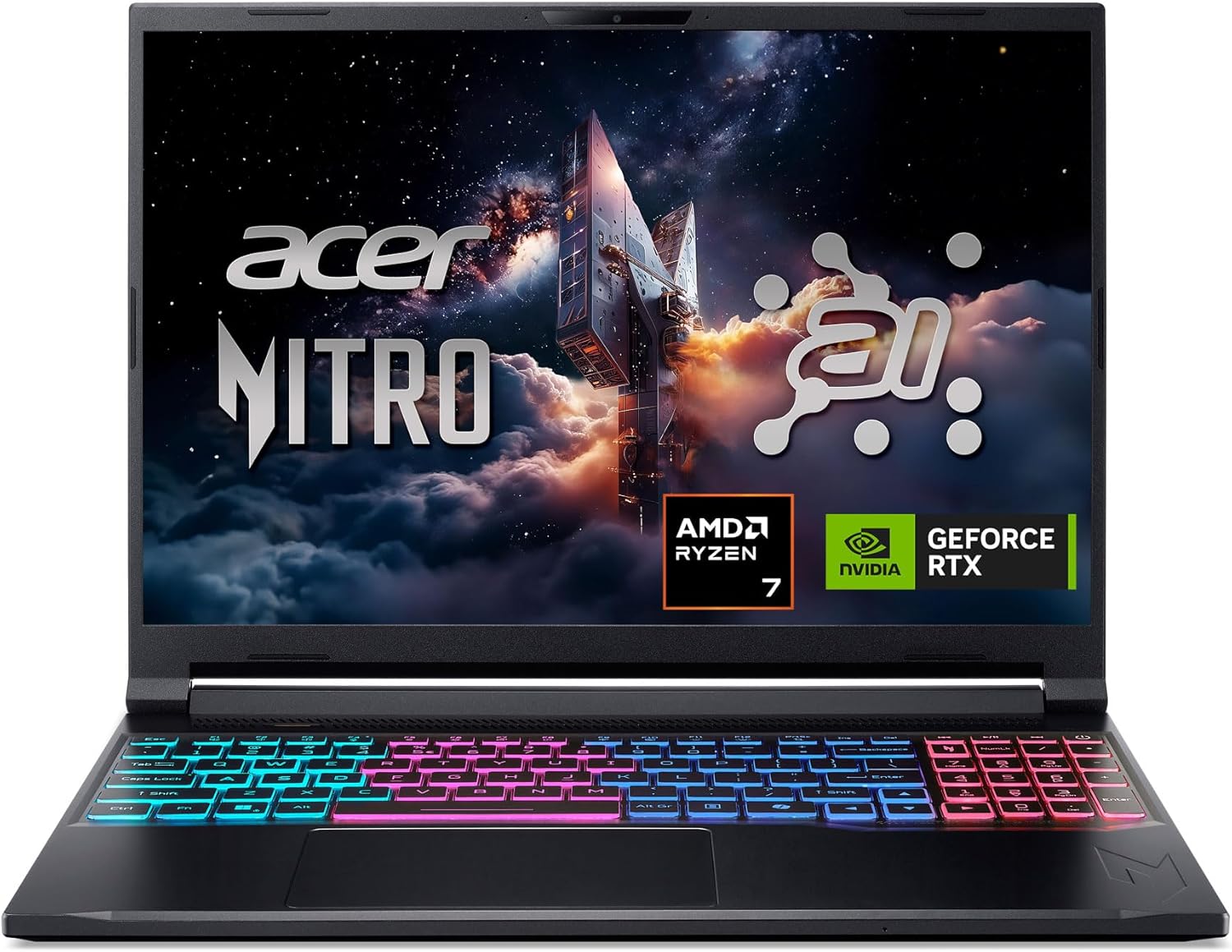
Balanced entry option
Acer Nitro V 16S AI
|
Ryzen 7 260
RTX 5060 GPU
16-inch 180Hz
32GB DDR5
|
4.4/ 5 | Check Price |

Best value
ASUS ROG Strix G16 2026
|
Core i7 14650HX
RTX 5060 GPU
16-inch 165Hz
16GB DDR5
|
4.4/ 5 | Check Price |
|
Premium pick
Dell XPS 16 4K Touch
|
Ultra 9 285H
RTX 5060 8GB
16.3-inch 4K touch
32GB DDR5
|
5.0/ 5 | Check Price |
|
Best overall
MSI Titan 18 HX AI
|
Ultra 9-290HX
RTX 5090 24GB
18-inch 4K Mini LED
64GB DDR5
|
3.5/ 5 | Check Price |

Large-screen QHD+ option
MSI Crosshair 18 HX AI
|
Core Ultra 9 275HX
RTX 5070 8GB
18-inch 240Hz QHD+
2TB NVMe SSD
|
5.0/ 5 | Check Price |

Best value
MSI Cyborg 17
|
Core 7-240H
RTX 5060 GPU
17.3-inch 144Hz
16GB DDR5
|
4.5/ 5 | Check Price |
|
Best value
MSI Stealth 16 AI+
|
Ultra 9 386H
RTX 5070 Ti
16-inch 240Hz OLED
32GB DDR5
|
4.3/ 5 | Check Price |

Best value
ASUS TUF A18 RTX 5060
|
Ryzen 7 260
RTX 5060 8GB
18-inch 144Hz
16GB DDR5
|
3.0/ 5 | Check Price |

4K OLED creator option
Dell Premium 16 4K OLED
|
Ultra 9-285H
RTX 5060 8GB
16.3-inch 4K OLED
32GB LPDDR5X
|
4.6/ 5 | Check Price |
As an Amazon Associate we earn from qualifying purchases, at no additional cost to you.
The ROG Strix G16 with the RTX 5070 Ti is a strong choice for buyers who want high-resolution gaming without a native 4K panel. Its 16-inch 2.5K Nebula display runs at 240Hz with a 3ms response time, and the RTX 5070 Ti has enough headroom for demanding titles at QHD+ or on an external 4K monitor.
The Core Ultra 9 275HX and 32GB of DDR5 memory cover gaming, streaming and creative work, while the 1TB SSD and Wi-Fi 7 round out the practical features. ROG’s cooling uses an end-to-end vapor chamber, three fans and liquid metal on the chipset, which matters for sustained sessions.
The main limitation for a 4K shopper is the panel: 2.5K looks sharp at 16 inches but is not native 4K. Buyers who need 4K on the laptop itself should look at the Dell XPS 16 and MSI Titan 18. The customer rating is also slightly lower than some rivals.
This model fits gamers who want a fast, sharp display and strong RTX 5070 Ti graphics and plan to use an external 4K monitor for high-resolution play. If native 4K on the laptop is essential, the Dell and MSI Titan models are the better match.
A 2.5K panel is easier to drive than 4K, so the RTX 5070 Ti can reach higher frame rates while still offering sharp visuals. Pair it with an external 4K monitor when you want native 4K output for gaming or editing.
Buyers who want a native 4K panel on the laptop should compare the Dell XPS 16 4K Touch and the MSI Titan 18 HX AI.
As an Amazon Associate we earn from qualifying purchases, at no additional cost to you.
The Nitro V 16S AI is a balanced entry point for buyers who want modern gaming hardware and 32GB of memory without a flagship price. Its 16-inch WUXGA panel runs at 180Hz, which is smooth but not a 4K display. Buyers who need native 4K should plan on an external monitor.
The Ryzen 7 260 and RTX 5060 cover mainstream gaming, streaming and creative apps, while the 32GB of DDR5 gives headroom for multitasking. The 1TB Gen 4 SSD keeps load times short, and the chassis leaves one M.2 slot free for adding storage later.
Wi-Fi 6 is older than the Wi-Fi 7 found on several rivals, and the WUXGA resolution is less sharp than the QHD and 4K panels on the higher-tier models. The pair of DDR5 slots is already occupied by the 32GB kit, which caps memory at 32GB if you follow the listed maximum.
This model fits gamers who want generous memory and a smooth 180Hz screen and are comfortable adding a 4K monitor for high-resolution play. If you need a built-in high-resolution panel, the Dell and MSI Titan models are the better fit.
The Nitro’s internal panel is WUXGA, not 4K. Pairing it with an external 4K monitor gives you high-resolution output for gaming or editing while keeping the laptop screen for everyday tasks.
Buyers who want a built-in 4K or near-4K panel should look at the Dell XPS 16 and MSI Titan 18 models.
As an Amazon Associate we earn from qualifying purchases, at no additional cost to you.
The 2026 ROG Strix G16 brings the cooling design of ASUS’s premium line to an RTX 5060 configuration. Its Core i7 14650HX and 16GB of DDR5 memory cover mainstream gaming and everyday productivity, while the 16-inch FHD+ panel runs at 165Hz with a 3ms response time and an anti-glare film.
The cooling system combines an end-to-end vapor chamber, three fans and liquid metal on the chipset. That matters for sustained play, where a simpler cooling setup might force the GPU to reduce clocks after a long session. The 1TB Gen 4 SSD is a practical size for a moderate library, and Wi-Fi 7 adds future-ready wireless.
The main trade-off for a 4K shopper is resolution: FHD+ looks sharp for its size but is not a high-resolution editing or gaming panel. Memory is also limited to 16GB, which is less comfortable for heavy multitasking.
This model fits gamers who prioritize cooling and wireless modernity and plan to add an external 4K monitor for high-resolution work. If you need a built-in high-resolution panel, the Dell and MSI models are the better fit.
A laptop that throttles after twenty minutes undermines its own specifications. The tri-fan vapor chamber design is aimed at keeping clocks steadier during long sessions, which matters more than a short burst of peak performance.
Buyers who need a built-in high-resolution panel or 32GB of memory should compare the Dell XPS 16 and the MSI Stealth 16 AI+.
As an Amazon Associate we earn from qualifying purchases, at no additional cost to you.
The Dell XPS 16 is our Premium pick because it combines a 16.3-inch 4K UHD+ touchscreen with an RTX 5060, a Core Ultra 9 285H and 32GB of DDR5 memory. For buyers who specifically want native 4K on the laptop itself, it is the most straightforward option here and adds Thunderbolt 4 and Wi-Fi 7.
The 4K touchscreen runs at 120Hz with 400-nit brightness, and the FHD RGB-IR camera supports Windows Hello facial recognition. The 32GB of DDR5 and 1TB PCIe SSD are appropriate for the class, and the triple Thunderbolt 4 ports support external displays and high-speed storage.
The RTX 5060 with 8GB of GDDR7 is the main limitation for 4K gaming: it handles many titles at moderate settings, but the most demanding games will need DLSS or lower settings at native 4K. The listing also states the computer has been resealed to upgrade the system, with a one-year seller warranty rather than the manufacturer’s standard terms.
This model fits buyers who want a native 4K touchscreen for creative work and gaming and are comfortable with RTX 5060 performance at high resolutions. If you want more graphics headroom, the MSI Titan 18 with the RTX 5090 is the better fit.
A native 4K panel gives you sharp text and fine detail on the laptop itself, which matters for photo and video editing as well as high-resolution gaming. Pairing it with a strong GPU helps, but the RTX 5060 may need DLSS for the most demanding titles.
Buyers who want stronger 4K gaming performance should compare the MSI Titan 18 HX AI with its RTX 5090.
As an Amazon Associate we earn from qualifying purchases, at no additional cost to you.
The MSI Titan 18 HX AI is our Best overall pick because it pairs an 18-inch 4K Mini LED display with an RTX 5090, 64GB of DDR5 memory and a 4TB SSD. For 4K gaming specifically, it is the most capable laptop in this comparison, and the native 4K panel means you do not need an external monitor for high-resolution play.
The RTX 5090 with 24GB of GDDR7 gives it the most VRAM in this list, which helps at 4K with high-resolution textures. The 64GB of memory and 4TB of storage mean you can keep a large library and run demanding applications at the same time. Thunderbolt 5 and Wi-Fi 7 add future-ready connectivity.
The main caution is the customer rating, which is the lowest in this comparison. That does not identify a specific flaw by itself, but it is worth reading recent owner feedback and checking the return policy before buying. The 18-inch chassis is also large, heavy and expensive.
This model fits buyers who want the strongest 4K gaming performance and a native 4K display in one machine. If price or portability matters more, the MSI Stealth 16 AI+ and Dell XPS 16 are the better matches.
4K gaming uses more GPU memory than lower resolutions, especially with high-resolution textures. The RTX 5090's 24GB gives it the most headroom here, which helps at 4K with demanding settings.
Buyers who want a more portable machine or a higher customer-rated option should compare the MSI Stealth 16 AI+ and the Dell XPS 16 4K Touch.
As an Amazon Associate we earn from qualifying purchases, at no additional cost to you.
The Crosshair 18 HX AI is a large-screen option that pairs an 18-inch QHD+ 240Hz panel with a 24-core Core Ultra 9 275HX, an RTX 5070, 32GB of RAM and 2TB of storage. It is not a native 4K laptop, but the QHD+ resolution looks sharp at 18 inches and the 2TB SSD gives you room for a large library.
The RTX 5070 with 8GB of GDDR7 handles modern games at QHD+ and can drive an external 4K monitor for high-resolution play. The 100% DCI-P3 coverage helps with creative work, and the 240Hz refresh rate keeps motion smooth.
The main limitation for a 4K shopper is the panel resolution: QHD+ is not native 4K, and 8GB of VRAM is more limiting at 4K than the RTX 5080 and RTX 5090 models. The 18-inch chassis is also large and heavy.
This model fits gamers who want a big, sharp screen and generous storage and plan to use an external 4K monitor for high-resolution play. If you want native 4K on the laptop, the Dell and MSI Titan models are the better fit.
An 18-inch panel gives games and creative timelines more room, which can reduce the need for an external monitor. The QHD+ resolution also keeps text and UI elements sharper than a 1080p display at the same size.
Buyers who specifically want a native 4K panel should choose the Dell XPS 16 4K Touch or the MSI Titan 18 HX AI.
As an Amazon Associate we earn from qualifying purchases, at no additional cost to you.
The Cyborg 17 is built around a 17.3-inch FHD 144Hz display, giving it a larger viewing area than the 15.6- and 16-inch models. It is not a 4K laptop, but it is a more portable big-screen option for buyers who want immersion without a permanent desk setup.
The Core 7-240H and RTX 5060 provide current-generation graphics with ray tracing and DLSS support, while 16GB of DDR5 memory and a 1TB NVMe SSD cover most gaming and everyday needs. Wi-Fi 6E and a useful port set support online play and external displays.
The main limitation for a 4K shopper is the FHD resolution, which looks less sharp on a 17.3-inch panel than QHD or 4K would. Memory is also limited to 16GB, and the RTX 5060 has less headroom at 4K than the higher-tier models.
This laptop suits buyers who want a big screen and modern graphics and plan to use an external 4K monitor for high-resolution play. If you need a built-in sharp panel or 32GB of memory, the higher-spec models are the better fit.
The larger screen is useful for games and split-screen work, but check the dimensions against your bag and desk before buying. Thin-and-light design helps, but a 17-inch chassis is still a different carry than a 15-inch one.
Buyers who need a built-in high-resolution display or 32GB memory should compare the Dell XPS 16 and MSI Stealth 16 AI+.
As an Amazon Associate we earn from qualifying purchases, at no additional cost to you.
The Stealth 16 AI+ is our Best value pick because it pairs a 16-inch 240Hz QHD+ OLED panel with an RTX 5070 Ti and 32GB of DDR5 memory at a lower price than the native 4K models. The OLED screen offers deep contrast, and the RTX 5070 Ti with 16GB of GDDR7 gives it more VRAM than the 8GB models here.
The Intel Core Ultra 9 386H handles gaming, streaming and heavy multitasking, and Wi-Fi 7 adds future-ready wireless for buyers with a compatible router. The 1TB NVMe SSD is a practical starting point, though large libraries may want more space later.
The main limitation for a 4K shopper is the panel: QHD+ OLED is not native 4K, though it is sharp and high-contrast. The RTX 5070 Ti can drive an external 4K monitor for high-resolution play, and its 16GB of VRAM helps at higher resolutions.
This model fits buyers who want OLED contrast, strong RTX 5070 Ti graphics and modern connectivity and plan to add an external 4K monitor for high-resolution work. If you need native 4K on the laptop, the Dell XPS 16 and MSI Titan 18 are the better fit.
OLED panels can turn individual pixels off, which produces deep blacks and high contrast. That helps games look more cinematic and also benefits photo and video work where shadow detail matters.
Buyers who specifically want native 4K on the laptop should compare the Dell XPS 16 4K Touch and the MSI Titan 18 HX AI.
As an Amazon Associate we earn from qualifying purchases, at no additional cost to you.
The ASUS TUF A18 is a large-screen entry point that pairs an 18-inch 144Hz display with an RTX 5060, a Ryzen 7 260 and 16GB of DDR5 memory. It is not a 4K laptop, but it offers a big screen for gaming and everyday work at a lower price than the higher-tier models.
The RTX 5060 with 8GB of GDDR7 covers mainstream gaming and can drive an external 4K monitor at moderate settings. The full-width heatsink and 2nd Gen Arc Flow Fans are designed to sustain performance, and HDMI 2.1 and dual USB-C with DisplayPort support external displays.
The main cautions are the customer rating, which is the lowest in this comparison, and the 16GB of memory, which is less comfortable for heavy multitasking. The FHD resolution also looks less sharp on an 18-inch panel than QHD or 4K would.
This model fits budget buyers who want a big screen and modern graphics and plan to use an external 4K monitor for high-resolution play. If you want a built-in high-resolution panel or 32GB of memory, the higher-spec models are the better fit.
A lower rating does not automatically mean a poor laptop, but it does warrant extra reading. Look for patterns in owner comments about cooling, build or support before deciding, and confirm the seller’s return terms.
Buyers who want a built-in high-resolution panel or 32GB of memory should compare the MSI Stealth 16 AI+ and the Dell XPS 16 4K Touch.
As an Amazon Associate we earn from qualifying purchases, at no additional cost to you.
The Dell Premium 16 is included as a 4K OLED alternative for buyers who want a color-accurate panel for creative work alongside gaming. Its 16.3-inch 4K OLED touchscreen runs at 120Hz, and the listing describes a Core Ultra 9-285H with an RTX 5060, 32GB of LPDDR5X memory and a 1TB SSD, though the title text also references an RTX 5050 configuration.
The 4K OLED panel delivers deep contrast and sharp detail, which suits photo and video editing as well as high-resolution gaming. Triple Thunderbolt 4 ports, Wi-Fi 7 and Bluetooth 5.4 support external displays and fast storage, and Windows 11 Pro adds management features.
The main caution is the GPU configuration: the title text references an RTX 5050, while the description references an RTX 5060, so buyers should confirm which GPU is actually included before purchase. Native 4K also limits frame rates in demanding games unless DLSS or lower settings are used.
This model fits creators who want a 4K OLED screen and are comfortable with mid-tier graphics at native 4K. If you want stronger 4K gaming performance, the MSI Titan 18 with the RTX 5090 is the better fit.
OLED contrast helps with photo and video work where shadow detail matters, and native 4K gives you sharp text and fine detail. Pair it with a strong processor and enough memory for color-sensitive editing.
Buyers who want stronger 4K gaming performance should compare the MSI Titan 18 HX AI and the Dell XPS 16 4K Touch.
As an Amazon Associate we earn from qualifying purchases, at no additional cost to you.
4K gaming on a laptop is demanding, and the right choice depends on whether you want native 4K on the laptop itself or plan to pair a fast QHD screen with an external 4K monitor. The balance between GPU power, VRAM and panel quality is the heart of the decision.
True 4K panels are rare in gaming laptops because they are expensive and demanding on the GPU. Several models here use QHD+, 2.5K or FHD+ panels instead, which are easier to drive and can reach higher frame rates. A 2.5K or QHD panel still looks sharp at 16 inches and pairs better with mid-tier graphics.
If you need native 4K output for video editing or high-resolution media, an external 4K monitor is often the more practical route. Check which ports support 4K at 60Hz or higher, and confirm whether the laptop’s HDMI or USB-C output can drive the resolution and refresh rate you want.
Prioritize a built-in 4K panel only if you regularly work away from a desk and need the sharpness on the laptop itself. Otherwise, a fast QHD or 2.5K panel plus an external 4K monitor usually delivers better overall value.
The graphics processor has the biggest influence on 4K frame rates and visual settings. In this list, the RTX 5090 sits at the top, followed by the RTX 5070 Ti, then the RTX 5070 and RTX 5060, with the RTX 5050 at the entry tier. A higher-tier GPU generally supports more demanding ray tracing and higher resolutions, though the gap varies by game.
VRAM also matters at 4K. The RTX 5090 carries 24GB, the RTX 5070 Ti carries 16GB, and several models carry 8GB. More memory helps at 4K with high-resolution textures, but it does not make a lower-tier GPU faster on its own.
Set a target resolution and frame rate first. If you mostly play esports at QHD, an RTX 5060 is enough. If you want ray tracing at 4K, prioritize the RTX 5070 Ti or RTX 5090 models.
The processor affects game loading, background tasks, streaming and creative software. The Core Ultra 9 and Core i9 HX chips in this list have 16 to 24 cores, which is useful for video editing, 3D rendering and running virtual machines alongside a game. The Core i7 options are still capable for gaming but offer less headroom for heavy multitasking.
More cores do not automatically mean better gaming performance, because most games rely more on the GPU. However, a strong processor helps maintain smooth frame times when other apps are running. If you stream, record gameplay or edit video, the higher-core chips are worth the premium.
Choose a mid-tier processor if gaming is your main task and you close background apps. Choose a 24-core HX chip if you regularly create content or multitask heavily.
The display is what you interact with every day, so it deserves as much attention as the GPU. A 165Hz or 180Hz FHD panel is a good starting point for smooth gaming and costs less GPU power. A 240Hz QHD+ or 2.5K panel offers sharper visuals and faster motion but demands more graphics performance to reach those frame rates.
Panel quality also varies. Some models here cover 100% sRGB or 100% DCI-P3 and include HDR support, which helps with creative work and media. Anti-glare coatings reduce reflections in bright rooms, while glossy OLED panels may look more vibrant but can be harder to use near a window.
Prioritize refresh rate if you play fast competitive games. Prioritize resolution and color coverage if you also edit photos or video. Avoid paying for a 4K panel if your GPU cannot drive it at the frame rates you want.
16GB of RAM is the practical minimum for modern gaming, but 32GB is increasingly useful for 4K gaming with background apps, streaming or creative work. Several models here include 32GB, which gives more headroom for multitasking and future game requirements.
Storage is just as important. Modern games can take 100GB or more each, so a 1TB drive fills quickly. A 2TB or 4TB drive is more comfortable for a large library, while a 512GB drive is best suited to a small starter collection. Look for PCIe Gen 4 SSDs for fast load times.
Buy as much memory and storage as you can reasonably afford at purchase. Upgrading later is possible on some models, but it adds cost and effort.
A laptop’s cooling system determines whether its powerful components can run at full speed for more than a few minutes. Vapor chambers, multiple fans, liquid metal and large heat pipes are all designed to reduce throttling during long gaming sessions. Larger chassis generally cool better than thinner ones because they have more room for airflow.
Do not judge cooling by the number of fans alone. Look for a design that covers both the CPU and GPU and has a reputation for sustained performance. The ROG models here use a tri-fan vapor chamber design, while the MSI Titan 18 is built for high-power components in a large chassis.
If you play for hours at a time, prioritize cooling. If you only play in short sessions, a simpler cooling system may be adequate.
If 4K output matters to you, check the ports carefully. You need HDMI 2.1 or DisplayPort over USB-C or Thunderbolt to drive 4K at high refresh rates. Thunderbolt 4 and Thunderbolt 5 add flexibility for docking and high-speed external storage, which is useful if you plan to edit 4K video.
Wi-Fi 6E and Wi-Fi 7 are newer standards that can reduce latency and congestion on compatible routers, but they will not improve a slow internet plan. An Ethernet port is useful for stable online gaming and fast file transfers.
Prioritize HDMI 2.1 or Thunderbolt 4 if you plan to connect a 4K monitor. Prioritize Wi-Fi 7 if you have a compatible router and want future-proofing.
Warranty and seller terms vary in this category. The Dell XPS 16 listing states the unit has been resealed to upgrade the system with a one-year seller warranty, while other models are sold in standard configurations. Those differences affect what happens if something goes wrong.
Read the listing carefully to see who provides support and whether the configuration has been modified after leaving the factory. A lower price is less appealing if support is unclear or if the return window is short.
If service matters to you, prioritize models with clear manufacturer support. If you are comfortable with third-party configuration, verify the seller’s warranty terms before buying.
Price is not a perfect indicator of value in this category. The MSI Stealth 16 AI+ delivers a 240Hz QHD+ OLED panel and RTX 5070 Ti for far less than the native 4K models, while the MSI Titan 18 HX AI adds a 4K Mini LED display, RTX 5090 and 64GB of memory. Compare the whole package rather than one specification.
Upgradeability can extend lifespan. Access to RAM and storage is a plus, and a spare M.2 slot makes it easier to add capacity later. Some laptops have soldered memory, so check before assuming you can upgrade.
Set a budget and identify the one or two features you care most about. Spend on the GPU and display first, then add memory and storage if the budget allows.
Set up the laptop on a hard, flat surface so the cooling vents are not blocked. Avoid using it on a bed or cushion for long gaming sessions, because trapped heat can cause the fans to run louder and the components to throttle. If you use an external 4K monitor, check which ports support the resolution and refresh rate you want.
Keep the operating system and graphics drivers up to date. Many gaming laptops rely on vendor control software to switch between integrated and discrete graphics, adjust fan profiles and enable the highest refresh rate. For 4K play, enable DLSS where supported and confirm that the direct GPU mode is active if the model supports it.
Clean the vents regularly with compressed air and keep the laptop away from dust and pet hair. Check the manufacturer’s guidance before opening the chassis for upgrades, because some models have tool-free access while others require more care. Store the laptop in a padded sleeve when carrying it, and use a surge protector when plugged in.
Yes, higher-tier gaming laptops can run games at 4K, but the frame rate depends on the GPU and the game. The RTX 5090 and RTX 5070 Ti offer the most headroom in this list, while the RTX 5060 may need DLSS or lower settings at native 4K. Many buyers pair a fast QHD laptop with an external 4K monitor instead.
Native 4K gives you the sharpest text and finest detail on the laptop itself, which matters for photo and video editing. It also demands more GPU power and costs more. If you mostly game, a fast QHD or 2.5K panel plus an external 4K monitor often delivers better value.
8GB is workable for many titles at moderate 4K settings, but demanding games with high-resolution textures benefit from more. The RTX 5070 Ti carries 16GB and the RTX 5090 carries 24GB in this list. More VRAM helps at 4K but does not make a lower-tier GPU faster on its own.
The RTX 5090 offers the most graphics headroom in this list, which helps with the most demanding 4K games and ray tracing. For lighter titles, an RTX 5070 Ti or RTX 5070 can be enough. The right choice depends on the games you play and how much you value future headroom.
4K games can take 100GB or more each, so a 1TB SSD is a practical minimum and 2TB or 4TB is more comfortable for a large library. Check whether the laptop has an extra M.2 slot if you plan to add storage later.
Many models here include HDMI 2.1 or Thunderbolt 4 or 5, which can drive a 4K monitor at high refresh rates. Check the exact port specifications for the model you are considering, because output capabilities vary. A Thunderbolt port adds flexibility for docking and high-speed storage.
Wi-Fi 7 supports newer wireless standards with potentially higher throughput and lower latency on compatible routers. It is more future-ready, but the real-world benefit depends on your router and internet connection. If you use Ethernet for gaming, the Wi-Fi standard matters less.
A desktop generally offers more performance per dollar and better cooling for 4K gaming. Choose a desktop if you always play at a desk and do not need portability. Choose a laptop if you need to move your machine or prefer an all-in-one setup.
Confirm who provides the warranty and what it covers, because a resealed unit may carry a seller warranty rather than the manufacturer’s standard terms. Ask about the return window and whether the upgraded parts are covered. If the seller’s terms are unclear, consider a factory-sealed configuration instead.
The MSI Titan 18 HX AI is our Best overall choice because it combines an 18-inch 4K Mini LED display, an RTX 5090 with 24GB of GDDR7, 64GB of DDR5 memory and a 4TB SSD. For buyers who want the strongest native 4K gaming performance in one machine, it has the most headroom in this comparison.
The MSI Stealth 16 AI+ is the Best value pick for shoppers who want a 240Hz QHD+ OLED screen and RTX 5070 Ti graphics and plan to add an external 4K monitor. The Dell XPS 16 4K Touch is the Premium pick for those who want a native 4K touchscreen in a more portable chassis. The ROG Strix G16 5070 Ti is a balanced alternative with a 2.5K 240Hz panel.
Your final decision should come down to whether you need native 4K on the laptop itself or can pair a fast QHD screen with an external 4K monitor. Prioritize the GPU and VRAM for 4K gaming, the panel for creative work, and the chassis size for portability. Matching those priorities to your budget will lead you to the right machine.