

MSI Raider A18 HX
4.4/ 5
RTX 5080 GPU
Ryzen 9 9955HX3D
64GB DDR5 RAM
18-inch Mini LED
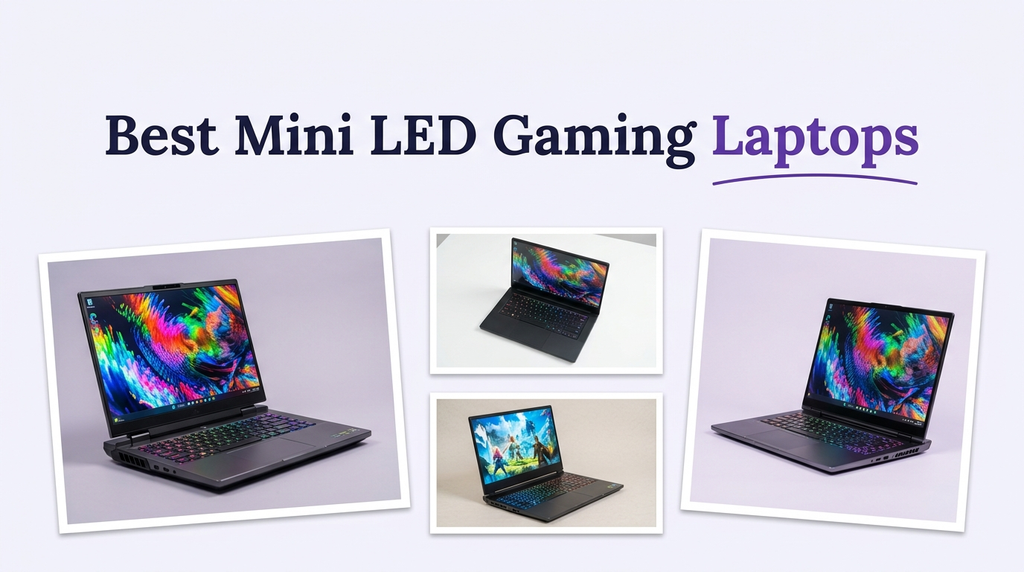
Mini LED gaming laptops deliver brighter highlights, deeper contrast, and richer color than standard IPS panels, making every frame look striking. We compare 10 standout options by display quality, GPU power, processor speed, cooling design, memory capacity, and real-world value to help you choose the right machine.
The latest models pair NVIDIA RTX 50-series graphics with Intel Core Ultra 9 and AMD Ryzen 9 processors, offering desktop-class performance in portable form factors. Screen sizes range from 16 to 18 inches, and storage configurations vary widely, so matching specs to your actual needs matters more than chasing the highest numbers.
To narrow the field, we evaluated each laptop's display technology, refresh rate, GPU tier, processor generation, RAM and storage capacity, connectivity options, and thermal design. We also considered customer ratings, build quality indicators, and the practical trade-offs between peak performance and portability. The goal is to help you identify which combination of screen fidelity, raw power, and everyday usability fits your gaming habits and workspace.
4.4/ 5

4.6/ 5

As an Amazon Associate we earn from qualifying purchases, at no additional cost to you.
Swipe across to compare all columns
| Product | Key highlights | Rating | Explore |
|---|---|---|---|

Best for Portability
msi Stealth 18 HX AI
|
RTX 5090 GPU
18-inch Mini LED
64GB DDR5 RAM
Intel Ultra 9
|
3.7/ 5 | Check Price |

Best for Dark Aesthetics
GIGABYTE AORUS Master 18
|
RTX 5080 GPU
Intel Ultra 9
32GB DDR5 RAM
18-inch display
|
3.4/ 5 | Check Price |
|
Best value
MSI Raider A18 HX
|
RTX 5080 GPU
Ryzen 9 9955HX3D
64GB DDR5 RAM
18-inch Mini LED
|
4.4/ 5 | Check Price |

Best for Ray Tracing
msi Titan 18 HX AI
|
RTX 5090 GPU
Intel Ultra 9-290HX
64GB DDR5 RAM
4TB NVMe SSD
|
3.5/ 5 | Check Price |
|
Best for Ray Tracing
MSI Titan 18 HX AI
|
RTX 5090 GPU
Intel Ultra 9-285HX
64GB DDR5 RAM
4TB NVMe storage
|
4.6/ 5 | Check Price |

Best for Storage
msi Raider 18 HX AI
|
RTX 5080 GPU
Intel Ultra 9-285HX
64GB DDR5 RAM
4TB NVMe SSD
|
3.1/ 5 | Check Price |
Best value
Acer Nitro V 16S
|
RTX 5060 GPU
Ryzen 7 260
32GB DDR5 RAM
16-inch IPS display
|
4.4/ 5 | Check Price |

Best for Everyday Use
XNQ 18 inch Laptop
|
Core i7-9750H processor
16GB DDR4 RAM
1TB SSD storage
18.5-inch FHD display
|
4.0/ 5 | Check Price |
|
Premium pick
ASUS ROG Strix Scar
|
RTX 5090 GPU
Intel Ultra 9-275HX
32GB DDR5 RAM
16TB NVMe storage
|
Not supplied | Check Price |

Best for Competitive Play
ASUS ROG Strix G16
|
RTX 5070 Ti
Ryzen 9 8940HX
32GB DDR5 RAM
16-inch 165Hz display
|
4.8/ 5 | Check Price |
As an Amazon Associate we earn from qualifying purchases, at no additional cost to you.
The msi Stealth 18 HX AI targets gamers and creators who want flagship GPU power in a chassis that does not scream gaming laptop. Its RTX 5090 and Intel Core Ultra 9-275HX combination handles demanding titles and rendering workloads without breaking a sweat, while the 18-inch 4K Mini LED display delivers the kind of contrast and color volume that makes open-world games and HDR content genuinely impressive.
The Mini LED backlight array produces deeper blacks and brighter highlights than a conventional IPS panel, which matters most in dark scenes where standard displays tend to look washed out. The 120Hz refresh rate is smooth enough for single-player and story-driven games, though competitive esports players may prefer a faster panel. The UHD+ resolution means the RTX 5090 has plenty of pixels to push, so enabling DLSS in demanding titles helps maintain comfortable frame rates.
Day-to-day usability benefits from 64GB of DDR5 memory and a 2TB NVMe SSD, which together keep load times short and allow you to keep dozens of browser tabs, a streaming app, and a game running simultaneously. Wi-Fi 7 support future-proofs your network connection for faster downloads and lower latency when your router supports the standard. The Windows 11 Pro license adds BitLocker encryption and remote desktop features that business users will appreciate.
This laptop makes the most sense for someone who values visual fidelity above raw frame rates and wants a machine that doubles as a mobile workstation. If you primarily play at 4K and care about HDR accuracy in both games and creative projects, the Stealth 18 is a strong fit. Just be aware that the 120Hz ceiling may feel limiting if you switch to fast-paced competitive shooters.
The 4K Mini LED panel covers a wide color gamut, which benefits photo and video editing alongside gaming. If you color-grade footage or work with HDR content, the increased brightness and local dimming zones give you a more accurate preview than a standard laptop screen. Pair the display with the RTX 5090's CUDA and Tensor cores for accelerated rendering in applications like DaVinci Resolve or Blender.
Competitive gamers who prioritize frame rates above 120Hz should look at models with 240Hz panels, such as the ASUS ROG Strix Scar in this list. The Stealth 18's 120Hz ceiling, while fine for cinematic gaming, will not satisfy players who want every possible frame advantage in titles like Valorant or Counter-Strike.
As an Amazon Associate we earn from qualifying purchases, at no additional cost to you.
The GIGABYTE AORUS Master 18 stands out immediately for its industrial design. The 5-degree black finish and 12-layer nanoimprint lithography create a surface that absorbs light and refracts it at different angles, giving the lid a crystal-like shimmer that looks unlike any other gaming laptop. Under the hood, the Intel Core Ultra 9 275HX and RTX 5080 provide serious gaming and AI performance.
The RTX 5080, built on NVIDIA's Blackwell architecture, supports DLSS 4 Multi Frame Generation and advanced ray tracing. This means you can enable path-traced lighting in supported titles and still achieve playable frame rates thanks to AI-driven frame generation. The Core Ultra 9 processor includes a dedicated NPU for sustained AI workloads, which benefits local image generation and background noise suppression during streaming.
With 32GB of DDR5 RAM, the AORUS Master handles most gaming and productivity scenarios comfortably, though heavy video editors or virtual machine users may eventually want more. The 18-inch form factor provides ample screen real estate for split-screen workflows and immersive gaming without an external monitor. Windows 11 Home keeps the interface familiar and supports the latest DirectStorage and Auto HDR features.
This laptop appeals to buyers who care about aesthetics as much as performance and want a conversation piece on their desk. The unique finish and build quality signal premium intent, and the RTX 5080 is more than capable for 1440p and 4K gaming. Just keep in mind that 32GB of RAM is the ceiling here, which may feel tight in a few years as game requirements climb.
The GiMATE AI assistant and the Core Ultra 9's integrated NPU enable on-device AI tasks without relying on cloud processing. This can speed up background removal in video calls, local image upscaling, and real-time translation. While these features are still evolving, having dedicated AI hardware means the laptop will benefit from future software updates that leverage the NPU.
If you need 64GB of RAM for professional video editing, 3D rendering, or running multiple virtual machines, the 32GB configuration in the AORUS Master will feel restrictive. Consider the MSI Titan 18 HX variants in this list, which ship with 64GB and offer more headroom for memory-intensive workflows.
As an Amazon Associate we earn from qualifying purchases, at no additional cost to you.
The MSI Raider A18 HX pairs AMD's Ryzen 9 9955HX3D processor with an RTX 5080 and a VESA DisplayHDR 1000-certified Mini LED panel, creating a combination that punches above its price tier. The 3D V-Cache technology in the AMD chip delivers a noticeable frame rate uplift in CPU-bound games, particularly simulation and strategy titles that benefit from the extra cache.
The 18-inch UHD+ Mini LED display covers 100 percent of the DCI-P3 color space and reaches HDR 1000 brightness levels, which means highlights in HDR games and movies look genuinely bright rather than merely boosted. The 120Hz refresh rate is adequate for most single-player and co-op gaming, though it falls short of the 240Hz panels found on some competitors. The IPS-level panel technology ensures wide viewing angles and consistent color across the large screen.
Connectivity is a strong point, with dual Thunderbolt 5 ports offering up to 120Gbps of bandwidth for external drives, docks, and displays. The 64GB of DDR5 6400MHz RAM and 2TB Gen 5 NVMe SSD provide fast load times and plenty of headroom for multitasking. The Cooler Boost 5 system with two fans and seven heat pipes, plus dedicated PCIe Gen 5 SSD cooling, helps sustain performance during long sessions.
This is the best value in the list for buyers who want a Mini LED display, flagship-class GPU, and 64GB of RAM without paying the premium that RTX 5090 models command. The AMD platform delivers excellent gaming performance, and the Thunderbolt 5 ports add future-proof versatility. If you can live with 120Hz, the Raider A18 offers a compelling balance of display quality, raw power, and connectivity.
The Ryzen 9 9955HX3D uses AMD's 3D V-Cache stacking technology to provide a large L3 cache that reduces memory latency in gaming workloads. In practice, this translates to higher minimum frame rates and smoother performance in CPU-limited scenarios such as large multiplayer maps, flight simulators, and open-world games with dense NPC populations. If you play titles like Microsoft Flight Simulator or Factorio, the 3D V-Cache advantage is tangible.
If you need the absolute fastest refresh rate for competitive esports, the 120Hz panel will feel slow compared to 240Hz alternatives. Players who prioritize frame rate above visual fidelity should consider the ASUS ROG Strix Scar with its 240Hz Mini LED display, even though it costs more.
As an Amazon Associate we earn from qualifying purchases, at no additional cost to you.
The msi Titan 18 HX AI with the Intel Core Ultra 9-290HX and RTX 5090 represents the upper end of what a gaming laptop can deliver. The 240Hz Mini LED UHD+ display is the standout feature here, combining 4K resolution with a refresh rate that satisfies both visual fidelity enthusiasts and competitive gamers who want every frame advantage.
The RTX 5090 pushes ray tracing to its current limits, handling path-traced lighting, reflections, and global illumination in supported titles with the help of DLSS 4. The 240Hz panel means you can actually see the extra frames the GPU produces in less demanding titles or when using aggressive DLSS settings. The 4K resolution does tax the GPU heavily in native rendering, so most players will rely on upscaling for the smoothest experience.
With 4TB of NVMe storage and 64GB of DDR5 RAM, this Titan variant eliminates the need for external drives or memory upgrades for the foreseeable future. You can install a large game library, keep multiple creative projects on the internal SSD, and run memory-hungry applications without hitting a ceiling. Thunderbolt 5 and Wi-Fi 7 round out the connectivity for fast external storage and network transfers.
This configuration suits buyers who want the fastest display and the most storage in a single package and are willing to pay a premium for it. The 240Hz Mini LED panel is genuinely impressive for both gaming and content creation. However, the 3.5 customer rating suggests some early-adopter concerns, so checking recent owner feedback before purchasing is a good idea.
Running games at native 4K and 240fps simultaneously is beyond even the RTX 5090 in most current titles. In practice, you will see 240Hz in lighter games and esports titles at reduced settings, while AAA games will run closer to 60-120fps with DLSS enabled. The high refresh rate still benefits input latency and motion clarity even when frame rates fall below 240, so the panel is not wasted.
If you do not need 4TB of internal storage and would rather save money, the MSI Titan 18 HX AI with the Core Ultra 9-285HX offers similar GPU performance with 4TB storage at a different price point. Alternatively, the MSI Raider A18 HX provides excellent Mini LED gaming with an RTX 5080 at a significantly lower cost.
As an Amazon Associate we earn from qualifying purchases, at no additional cost to you.
The MSI Titan 18 HX AI A2XWJG earns the top spot in this comparison thanks to its 4.6 customer rating, the highest among the Mini LED models listed. It combines an Intel Core Ultra 9 285HX processor with the RTX 5090 and 24GB of GDDR7 VRAM, delivering the kind of performance that handles any current game at maximum settings and leaves headroom for future titles.
The dual 2TB NVMe SSD configuration is a practical advantage over single-drive setups. You can dedicate one drive to your operating system and applications and the other to your game library, which helps maintain consistent load times and reduces wear on the system drive. The 64GB of DDR5 6400MHz RAM ensures that memory-intensive tasks like video editing, 3D rendering, and running virtual machines never hit a bottleneck.
The 18-inch UHD+ Mini LED display provides the contrast and brightness that make HDR gaming and movie watching genuinely enjoyable. While the 120Hz refresh rate is not the fastest available, it is smooth enough for the vast majority of gaming scenarios, and the 4K resolution paired with Mini LED local dimming creates a visual experience that faster but lower-resolution panels cannot match.
This is the best overall choice for buyers who want a no-compromise gaming and productivity laptop with the highest customer satisfaction in its class. The combination of RTX 5090 power, abundant storage, and a stunning Mini LED display makes it a versatile machine that will remain relevant for years. The main trade-off is the 120Hz refresh rate, which is a reasonable compromise for the 4K visual quality you gain.
Having two separate 2TB NVMe drives offers practical advantages beyond raw capacity. You can keep your operating system and creative applications on one drive while installing games on the other, which prevents game updates and large file transfers from slowing down your system. It also provides a layer of data redundancy; if one drive fails, your other data remains accessible while you arrange a replacement.
If portability is a top priority and you travel frequently with your laptop, the 18-inch Titan chassis is large and heavy compared to 16-inch alternatives. The ASUS ROG Strix G16 in this list offers strong gaming performance in a more compact form factor, though it does not feature a Mini LED display.
As an Amazon Associate we earn from qualifying purchases, at no additional cost to you.
The msi Raider 18 HX AI offers a specification sheet that reads like a much more expensive machine: Intel Core Ultra 9-285HX, RTX 5080, 64GB DDR5, and 4TB of NVMe storage. On paper, it is one of the most generously equipped laptops in this comparison, and its listed price is notably lower than many competitors with similar hardware.
The RTX 5080 handles 1440p gaming at high frame rates and can manage 4K with DLSS enabled. The 4TB SSD provides enough space for a large game library, video projects, and application installations without needing external storage. Thunderbolt 5 and Wi-Fi 7 ensure that connectivity will not be a bottleneck for years to come.
However, the 3.1 customer rating is the lowest in this list and warrants attention. Low ratings on high-spec machines often point to quality control issues, thermal management problems, or driver instability rather than raw performance shortcomings. It is worth reading recent owner reviews carefully to understand whether the reported issues are deal-breakers for your use case or minor inconveniences that firmware updates may resolve.
This laptop could be a smart buy for budget-conscious shoppers who want maximum specs and are comfortable troubleshooting potential early-adopter issues. If the low rating reflects isolated problems that have since been addressed, the hardware value is difficult to beat. If the issues are systemic, you may be better served by a slightly more expensive model with a stronger track record.
A low customer rating on a new laptop does not always indicate poor hardware. Early production batches sometimes have BIOS or driver issues that are resolved within a few months through updates. Before dismissing this model, check whether recent reviews mention improvements and whether the manufacturer has released firmware patches addressing the most common complaints.
If you need a reliable machine for professional work and cannot afford downtime for troubleshooting, the 3.1 rating is a genuine concern. The MSI Titan 18 HX AI A2XWJG with its 4.6 rating offers a more proven experience with similar high-end specifications, albeit at a higher price.
As an Amazon Associate we earn from qualifying purchases, at no additional cost to you.
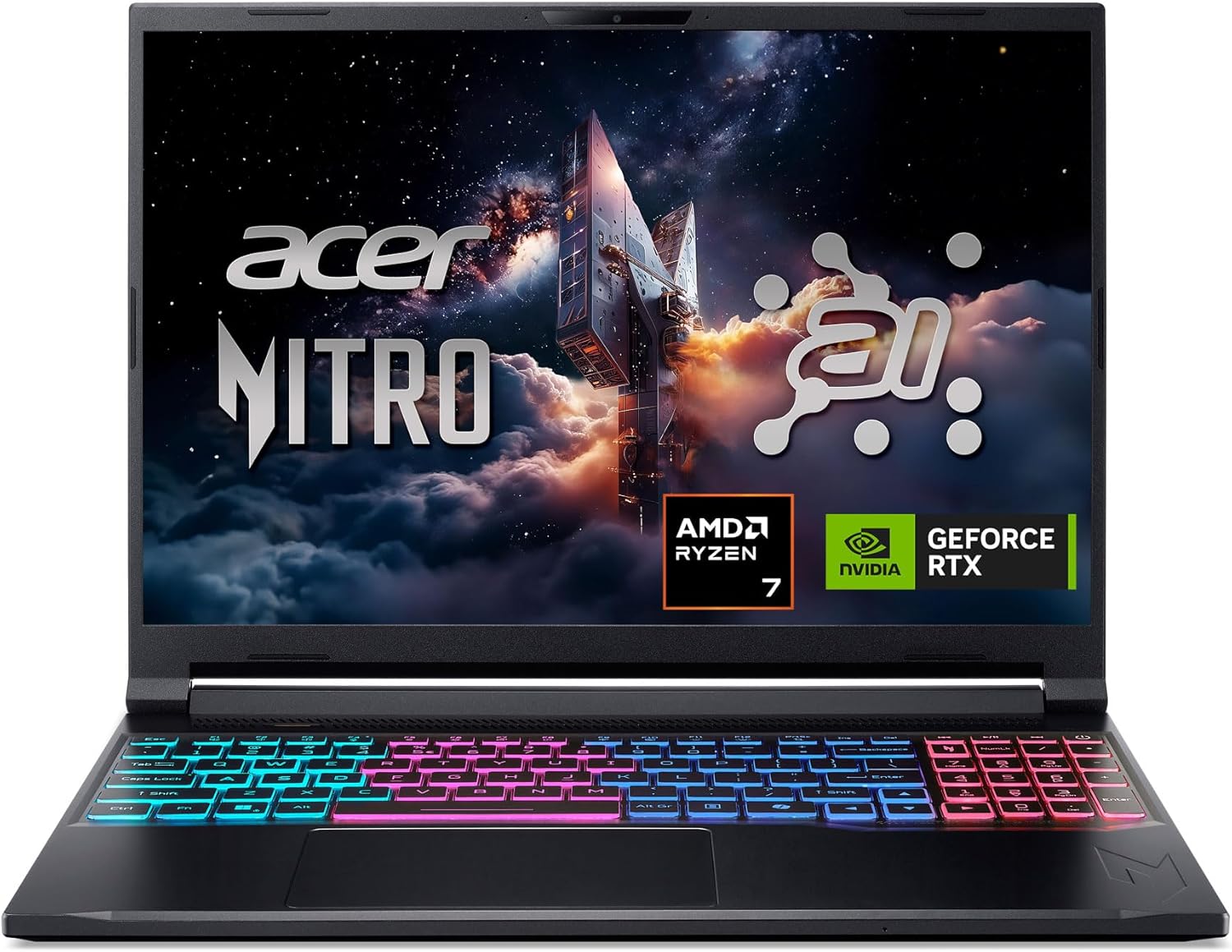
The Acer Nitro V 16S is the most affordable laptop in this comparison and the only one with an IPS display rather than Mini LED. It earns its place here because it offers the newest NVIDIA RTX 5060 GPU at a fraction of the cost of the flagship models, making it an accessible entry point into the RTX 50-series ecosystem for budget-conscious gamers.
The RTX 5060 supports DLSS 4 Multi Frame Generation and full ray tracing, which means you can experience next-generation visual effects even at this price tier. The 16-inch WUXGA display runs at 180Hz with 100 percent sRGB coverage, providing smooth motion and accurate colors for competitive gaming and everyday use. The 2026×1200 resolution is less demanding on the GPU than 4K, allowing the RTX 5060 to deliver high frame rates in most titles.
The AMD Ryzen 7 260 processor and 32GB of DDR5 RAM provide solid multitasking performance for gaming, streaming, and productivity. The 1TB Gen 4 SSD offers fast load times, though you may want to add a second drive later as your game library grows. Wi-Fi 6 keeps you connected reliably, even if it lacks the cutting-edge speed of Wi-Fi 7.
This laptop is ideal for gamers who want modern GPU features like DLSS 4 and ray tracing without spending flagship money. The 180Hz IPS panel is a step down from Mini LED in terms of contrast and HDR performance, but it is perfectly adequate for competitive gaming and general use. If Mini LED is a must-have feature for you, you will need to look at the more expensive options in this list.
The RTX 5060 is a capable mid-range GPU that excels at 1080p and 1440p gaming. At 1080p, you can expect high frame rates in most current titles with settings turned up. At 1440p, DLSS becomes more important for maintaining smooth performance in demanding games. Native 4K gaming is not realistic with this GPU, so the WUXGA display is actually a good match for the hardware.
If Mini LED display quality is your primary reason for shopping in this category, the Acer Nitro V 16S will not meet your expectations. Its IPS panel lacks the local dimming, HDR brightness, and contrast ratio that define the Mini LED experience. Consider the MSI Raider A18 HX for an affordable Mini LED option with stronger GPU performance.
As an Amazon Associate we earn from qualifying purchases, at no additional cost to you.
The XNQ 18 inch laptop occupies a very different position in this lineup. It uses an older Intel Core i7-9750H processor and integrated Intel UHD Graphics 630 rather than a dedicated RTX GPU, which means it is not a gaming laptop in the same class as the other entries. It is included here as a large-screen budget option for buyers who want an 18-inch display for everyday tasks and light gaming.
The 18.5-inch FHD IPS display with 72 percent NTSC coverage and an 88 percent screen-to-body ratio provides a spacious canvas for web browsing, document editing, and video streaming. The 10000mAh battery is unusually large for a laptop and should provide extended unplugged use for productivity tasks. The fingerprint reader and privacy camera add security features that are welcome for business and student use.
Performance is adequate for everyday computing but will struggle with modern AAA games. The i7-9750H is a six-core processor from an earlier generation, and the integrated GPU cannot handle demanding 3D workloads. The 16GB of DDR4 RAM is upgradable to 64GB, which provides some future-proofing for multitasking, though the processor will remain the limiting factor.
This laptop makes sense for students, office workers, or casual users who want a large screen and long battery life at a low price. It is not a gaming machine in the traditional sense, and buyers looking for Mini LED display quality or serious gaming performance should look elsewhere in this list. For its intended use case, however, it offers practical value.
With integrated Intel UHD Graphics 630, this laptop can handle older titles, indie games, and browser-based games at modest settings. Modern AAA titles will not run smoothly, and ray tracing is not supported. If gaming is a secondary concern and you mainly need a large-screen laptop for work and media consumption, the XNQ can fill that role at a fraction of the cost of a dedicated gaming machine.
Anyone shopping specifically for a Mini LED gaming laptop should skip this model. The XNQ lacks both a Mini LED display and a dedicated GPU, which are the two defining features of this category. The Acer Nitro V 16S is the most affordable option in this list that actually includes a modern dedicated GPU for gaming.
As an Amazon Associate we earn from qualifying purchases, at no additional cost to you.
The ASUS ROG Strix Scar AI is the most storage-heavy laptop in this comparison, shipping with a staggering 16TB of NVMe SSD space across two 8TB drives. Combined with the RTX 5090 and Intel Core Ultra 9-275HX, this configuration targets content creators and power users who need massive local storage for 4K and 8K video projects, large datasets, or extensive game libraries.
The 18-inch Mini LED WQXGA display runs at 240Hz with a 2560×1600 resolution, which strikes a practical balance between visual sharpness and GPU performance. The WQXGA resolution is less demanding than 4K, allowing the RTX 5090 to push higher frame rates while still delivering crisp text and detailed textures. The 240Hz refresh rate ensures smooth motion in competitive games and responsive cursor movement in creative applications.
The 32GB of DDR5 RAM is the one specification that feels modest for a machine at this price and capability level. Most buyers investing in a 16TB storage configuration will also benefit from 64GB of RAM for video editing and 3D rendering workflows. Fortunately, many 18-inch laptops offer user-accessible RAM slots, so upgrading later may be possible depending on the internal layout.
This laptop is the premium pick for buyers who need enormous storage capacity and a fast Mini LED display for both gaming and professional creative work. The lack of a customer rating makes it harder to assess real-world reliability, so early adopters should be prepared for potential firmware updates as the platform matures. The included Microsoft 365 Personal subscription and USB hub add practical value to the package.
For video editors working with 4K or 8K footage, 16TB of internal NVMe storage eliminates the need for constant external drive swapping. You can keep active projects, raw footage, and rendered exports all on the internal drives, which dramatically speeds up your workflow compared to editing from external HDDs or even SATA SSDs. The NVMe interface ensures that scrubbing through timelines and loading large project files remains responsive.
If you do not need 16TB of storage and would prefer 64GB of RAM out of the box, the MSI Titan 18 HX AI A2XWJG offers a more balanced configuration with 64GB DDR5 and 4TB storage at a lower price. The Titan also has a higher customer rating, which may provide more confidence for buyers who prefer a proven track record.
As an Amazon Associate we earn from qualifying purchases, at no additional cost to you.
The ASUS ROG Strix G16 holds the highest customer rating in this entire comparison at 4.8 stars, which speaks to strong owner satisfaction across the board. It pairs an AMD Ryzen 9 8940HX processor with an RTX 5070 Ti running at 140W TGP, delivering excellent gaming performance in a 16-inch chassis that is noticeably more portable than the 18-inch models dominating this list.
The 165Hz WUXGA display with 100 percent sRGB coverage and a 3ms response time is built for competitive gaming. The ACR anti-glare film reduces reflections in bright environments, and the MUX Switch lets you bypass the integrated GPU entirely, routing frames directly from the RTX 5070 Ti to the display for a 5-10 percent performance boost in GPU-bound scenarios. This is a feature that competitive players will appreciate.
Thermal management is handled by a vapor chamber, Tri-Fan technology, and Conductonaut Extreme liquid metal, which together keep the CPU and GPU cool enough to sustain high clock speeds during extended gaming sessions. The 32GB of DDR5 RAM and 1TB SSD provide a solid foundation, though the storage may need upgrading as your game library grows. Wi-Fi 6E and 2.5G Ethernet ensure low-latency online gaming.
This laptop is the best choice for competitive gamers who want a compact, highly rated machine with strong GPU performance and a fast display. It does not feature a Mini LED panel, so buyers who prioritize HDR contrast and local dimming should look at the 18-inch Mini LED models instead. For pure gaming satisfaction and portability, however, the Strix G16 is hard to beat.
A MUX Switch physically disconnects the integrated GPU from the display, allowing the dedicated RTX 5070 Ti to send frames directly to the screen without passing through the iGPU. This eliminates a bottleneck that can reduce frame rates by 5-10 percent in GPU-intensive games. Combined with Advanced Optimus, the laptop can switch between MUX mode for gaming and hybrid mode for battery life without requiring a reboot.
If Mini LED display quality is your primary buying criterion, the Strix G16 does not qualify. Its LED panel lacks the local dimming zones and HDR brightness of Mini LED technology. For a compact gaming laptop with a Mini LED screen, you would need to look outside this list, as the Mini LED models here are all 18-inch machines.
As an Amazon Associate we earn from qualifying purchases, at no additional cost to you.
Choosing a mini LED gaming laptop involves balancing display quality, GPU performance, processor capability, memory, storage, and portability. The right combination depends on the types of games you play, whether you also use the laptop for creative work, and how often you travel with it.
Mini LED displays use thousands of tiny LEDs grouped into local dimming zones behind the LCD panel. This allows the screen to dim specific areas independently, producing deeper blacks and brighter highlights than a standard IPS or VA panel. The result is a higher contrast ratio and more impactful HDR performance, which is especially noticeable in dark game environments, cinematic cutscenes, and HDR video content.
When comparing Mini LED laptops, pay attention to the number of dimming zones, peak brightness measured in nits, and HDR certification level such as VESA DisplayHDR 1000. More dimming zones generally mean better local contrast and less blooming around bright objects on dark backgrounds. Peak brightness above 1000 nits ensures that HDR highlights look genuinely bright rather than merely slightly brighter than SDR content.
If you primarily play competitive esports titles where frame rate matters more than visual fidelity, a fast IPS panel may serve you better than a Mini LED display. Mini LED adds cost and can introduce slight blooming in fast-moving scenes with extreme contrast transitions. For single-player RPGs, open-world adventures, and creative work, the visual upgrade is well worth the investment.
The GPU is the single most important component for gaming performance. In the current generation, the NVIDIA RTX 50-series ranges from the RTX 5060 for budget gaming to the RTX 5090 for flagship performance. Each step up delivers more CUDA cores, more VRAM, and higher memory bandwidth, which translates to better frame rates at higher resolutions and settings.
VRAM capacity matters increasingly as games adopt higher-resolution textures and more complex ray tracing effects. The RTX 5060 typically ships with 8GB, the RTX 5070 Ti with 12GB, the RTX 5080 with 16GB, and the RTX 5090 with 24GB of GDDR7 memory. If you plan to game at 4K or use heavy ray tracing, 16GB or more of VRAM provides a comfortable buffer against texture streaming stutters and future game requirements.
Match the GPU to your display resolution. An RTX 5060 pairs well with a 1080p or 1200p display, an RTX 5070 Ti or 5080 suits 1440p gaming, and the RTX 5090 is the best choice for native 4K. Buying a flagship GPU for a 1080p screen wastes money, while pairing a mid-range GPU with a 4K Mini LED panel will force you to rely heavily on DLSS upscaling.
Modern gaming laptops use either Intel Core Ultra 9 or AMD Ryzen 9 processors, both of which offer excellent gaming and multitasking performance. Intel's latest Core Ultra chips include a dedicated NPU for AI workloads and efficient E-cores for background tasks, while AMD's Ryzen 9 9955HX3D features 3D V-Cache technology that boosts gaming frame rates in CPU-bound scenarios.
For most gamers, the difference between a Core Ultra 9-275HX and a Core Ultra 9-290HX is marginal in real-world gaming. The GPU is the primary bottleneck in most titles at high settings. However, if you play simulation games, strategy titles, or massively multiplayer games with large player counts, the CPU plays a larger role, and AMD's 3D V-Cache can provide a meaningful advantage.
Do not overpay for the latest processor generation if the GPU tier is the same. A laptop with an RTX 5080 and a slightly older CPU will outperform a laptop with an RTX 5070 Ti and the newest processor in almost every game. Prioritize GPU first, then choose the best CPU you can afford within your budget.
Gaming laptops in this category ship with either 32GB or 64GB of DDR5 RAM. For pure gaming, 32GB is more than sufficient for current titles, even with streaming software and browser tabs running in the background. The jump to 64GB becomes worthwhile if you regularly edit 4K video, run virtual machines, work with large datasets, or use memory-intensive creative applications alongside your games.
RAM speed also matters, though the difference is less dramatic than GPU or CPU upgrades. DDR5 5600MHz is the baseline for current gaming laptops, while 6400MHz provides a modest performance uplift in CPU-bound scenarios and integrated graphics workloads. If you are choosing between two otherwise identical configurations, the faster RAM is a nice bonus but not a deciding factor.
Check whether the laptop's RAM is user-upgradable before buying. Some models solder the memory to the motherboard, which means you are locked into the factory configuration for the life of the machine. If you think you may need more RAM in the future, choose a model with accessible SODIMM slots that allow you to add or replace memory modules.
All the laptops in this comparison use NVMe SSDs, which provide fast load times and responsive system performance. The key differences are capacity and PCIe generation. Gen 4 NVMe drives offer sequential read speeds around 5,000-7,000 MB/s, while Gen 5 drives can exceed 10,000 MB/s. In practice, the difference in game load times between Gen 4 and Gen 5 is small, but Gen 5 benefits large file transfers and creative workflows.
Storage capacity is more important than speed for most gamers. Modern AAA games routinely require 100-150GB each, so a 1TB drive fills up quickly with a handful of titles. A 2TB configuration provides comfortable breathing room, while 4TB or more is ideal for buyers who want to maintain a large library without constantly uninstalling and reinstalling games.
Look for laptops with two or more M.2 SSD slots, which allow you to add a second drive later without replacing the original. Some models ship with dual drives pre-installed, which is convenient but often commands a premium. If budget is tight, buying a laptop with a single 1TB or 2TB drive and adding a second drive yourself is usually more cost-effective.
Refresh rate determines how many times per second the display updates the image. A 120Hz panel updates twice as fast as a standard 60Hz screen, while 165Hz and 240Hz panels provide even smoother motion. Higher refresh rates reduce motion blur and input lag, which is particularly beneficial in fast-paced competitive games where split-second reactions matter.
The trade-off with Mini LED displays is that higher refresh rates at 4K resolution are technically challenging and expensive. Most 4K Mini LED laptop panels top out at 120Hz, while 240Hz Mini LED panels typically use a lower WQXGA resolution. If you want both 4K and 240Hz, you will need to accept that the GPU cannot push 240 frames per second at native 4K in most games anyway.
For competitive esports players, a 165Hz or 240Hz panel at 1080p or 1440p is the practical sweet spot. For single-player and cinematic gaming, a 120Hz 4K Mini LED display delivers a more visually impressive experience. Choose based on the types of games you play most often rather than chasing the highest number on the spec sheet.
High-performance gaming laptops generate significant heat, and the cooling system determines whether the CPU and GPU can sustain their rated clock speeds during extended play sessions. Look for laptops with multiple heat pipes, large fans, vapor chambers, and liquid metal thermal compound, all of which contribute to better heat dissipation and lower operating temperatures.
Thermal throttling occurs when the CPU or GPU reaches its maximum safe temperature and reduces clock speeds to cool down. This causes frame rate drops and inconsistent performance, which is particularly frustrating in competitive games. A well-designed cooling system keeps temperatures in check and allows the hardware to maintain peak performance for hours without throttling.
Pay attention to fan noise as well. Some laptops prioritize cooling performance at the expense of acoustic comfort, producing loud fan noise under load that can be distracting without headphones. If you game in a shared space or prefer a quiet environment, look for models with advanced fan curve controls that let you balance temperature and noise to your preference.
Mini LED gaming laptops with 18-inch screens are inherently large and heavy, typically weighing between 2.5 and 3.5 kilograms. If you plan to carry your laptop to LAN events, coffee shops, or work, the size and weight will be a constant consideration. A 16-inch model like the ASUS ROG Strix G16 offers a more portable alternative, though it sacrifices the Mini LED display in this lineup.
Build quality affects both durability and the premium feel of the laptop. Metal chassis construction, sturdy hinges, and a rigid keyboard deck contribute to a machine that feels solid and withstands daily use. Plastic builds are lighter and cheaper but may flex under pressure and show wear more quickly over time.
Consider your actual usage pattern before choosing a screen size. If the laptop will mostly sit on a desk connected to an external monitor, an 18-inch model provides a great built-in display for times when you are not at your main setup. If you travel frequently, a smaller and lighter laptop will be much more comfortable to carry, even if it means giving up some screen real estate.
Set up your laptop on a hard, flat surface with plenty of clearance around the vents to ensure proper airflow. Avoid placing it on soft surfaces like beds or couches, which can block the intake vents and cause overheating. Consider using a laptop cooling pad with built-in fans if you game for extended sessions in warm environments, as the additional airflow can reduce internal temperatures by several degrees and help maintain consistent performance.
Keep your GPU and chipset drivers updated through the manufacturer's software or the NVIDIA GeForce Experience app. Driver updates often include performance optimizations for newly released games, bug fixes for display issues, and improvements to DLSS and ray tracing features. Also check for BIOS updates periodically, as these can address thermal management, fan curve behavior, and hardware compatibility issues that affect stability and performance.
Clean the keyboard, screen, and vents regularly to prevent dust buildup that can impair cooling and degrade the display. Use a microfiber cloth and a gentle screen cleaner for the Mini LED panel, avoiding harsh chemicals or excessive pressure that could damage the delicate backlight layers. Compressed air can help clear dust from the vents and fan intakes, but use short bursts and hold the can upright to avoid moisture buildup inside the chassis.
Mini LED displays use thousands of tiny LEDs arranged in local dimming zones behind the LCD panel, allowing specific areas of the screen to dim independently. This produces deeper blacks, brighter highlights, and a higher contrast ratio than a standard IPS panel, which uses a single uniform backlight. The result is more impactful HDR performance and better visual quality in dark scenes.
An RTX 5090 provides the best experience for native 4K gaming, but an RTX 5080 can also handle 4K with DLSS upscaling enabled. The RTX 5090's 24GB of VRAM gives it more headroom for high-resolution textures and heavy ray tracing, while the RTX 5080's 16GB is sufficient for most current titles. Your choice depends on your budget and whether you want to maximize visual settings.
For single-player games, RPGs, and cinematic experiences, 120Hz is smooth and enjoyable, especially at 4K resolution where the visual detail compensates for the lower refresh rate. Competitive esports players who prioritize reaction time and motion clarity may prefer 165Hz or 240Hz panels, which are available on some models in this list at lower resolutions.
Most 18-inch gaming laptops feature user-accessible SODIMM slots that allow RAM upgrades. However, some thinner models may solder the memory to the motherboard. Check the specific model's specifications or service manual before purchasing to confirm whether the RAM is upgradable, especially if you plan to increase memory in the future.
Modern AAA games typically require 80-150GB each, so a 1TB drive fills up with six to ten large titles. A 2TB configuration provides comfortable room for a diverse library, while 4TB or more is ideal for buyers who want to keep many games installed simultaneously. Consider a laptop with dual M.2 slots so you can add storage later without replacing the original drive.
DLSS 4 is NVIDIA's latest AI-powered upscaling and frame generation technology. It uses neural rendering to boost frame rates, reduce latency, and improve image quality by generating additional frames and upscaling lower-resolution renders to match your display's native resolution. This is especially valuable at 4K, where native rendering would otherwise produce lower frame rates.
Both AMD and Intel offer excellent gaming processors in the current generation. AMD's Ryzen 9 9955HX3D with 3D V-Cache excels in CPU-bound games like simulators and strategy titles, while Intel's Core Ultra 9 chips offer strong all-around performance with an integrated NPU for AI tasks. The GPU is the more important factor for gaming performance in most scenarios.
Mini LED displays can exhibit blooming, which is a faint glow around bright objects on dark backgrounds, when the local dimming zones are not fine enough to isolate small bright areas. Higher-end panels with more dimming zones minimize this effect significantly. In practice, blooming is most noticeable in static high-contrast scenes and is rarely distracting during active gameplay.
Gaming laptops typically provide two to five hours of battery life for light productivity tasks like web browsing and document editing. During gaming, battery life drops to one to two hours because the GPU and CPU draw maximum power. For the best gaming performance, always plug in the laptop, as running on battery significantly reduces GPU power and frame rates.
Wi-Fi 7 offers higher bandwidth, lower latency, and improved multi-device performance compared to Wi-Fi 6E. For online gaming, the reduced latency can provide a slight advantage, though a wired Ethernet connection remains the most reliable option for competitive play. Wi-Fi 7 is a future-proofing feature that will become more beneficial as compatible routers become widespread.
The MSI Titan 18 HX AI A2XWJG stands out as the best overall choice in this comparison, combining the highest customer rating with an RTX 5090, 64GB of RAM, 4TB of dual-drive storage, and a vivid 18-inch Mini LED display. It delivers the kind of no-compromise performance that handles any current game at maximum settings and provides ample headroom for creative workflows and future titles.
For buyers with different priorities, the MSI Raider A18 HX offers excellent value with its AMD 3D V-Cache processor, Mini LED HDR 1000 display, and RTX 5080 at a more accessible price point. The ASUS ROG Strix Scar AI serves as the premium pick for content creators who need massive 16TB storage and a 240Hz Mini LED panel, while the ASUS ROG Strix G16 provides the highest customer satisfaction in a compact 16-inch form factor for competitive gamers.
Your best choice depends on how you balance display quality, GPU power, storage needs, and portability. If Mini LED HDR performance is your top priority and you want proven reliability, the MSI Titan 18 HX AI A2XWJG is the safest and most capable pick. If budget and value matter most, the MSI Raider A18 HX delivers flagship-class features at a lower price, while competitive gamers who prize portability should strongly consider the ASUS ROG Strix G16.