

MECHREVO Aurora 16X
4.4/ 5
Core i7-14650HX
RTX 5060 115W
16-inch 180Hz 2.5K
100% sRGB panel
A 4K gaming laptop under $4,000 is a serious investment, and the money goes to different places in every model. We compare 10 options by GPU tier, display resolution and refresh rate, memory, storage, cooling and portability to help you spend wisely.
Some of these laptops push an RTX 5080 or RTX 5090 toward high-resolution play, while others pair an RTX 5060 with a sharp 2.5K screen and put the savings into memory or storage. The right balance depends on whether you actually need 4K, or whether a fast QHD panel serves you better.
We compared the supplied specifications and customer ratings across these 10 models, focusing on graphics tier, processor class, display resolution and refresh rate, color coverage, memory, storage, cooling design, connectivity and chassis size. We weighed how each configuration fits different games and creative workloads rather than assuming the priciest option is always the best match.
4.4/ 5

3.3/ 5

5.0/ 5
As an Amazon Associate we earn from qualifying purchases, at no additional cost to you.
Swipe across to compare all columns
| Product | Key highlights | Rating | Explore |
|---|---|---|---|
Balanced entry option
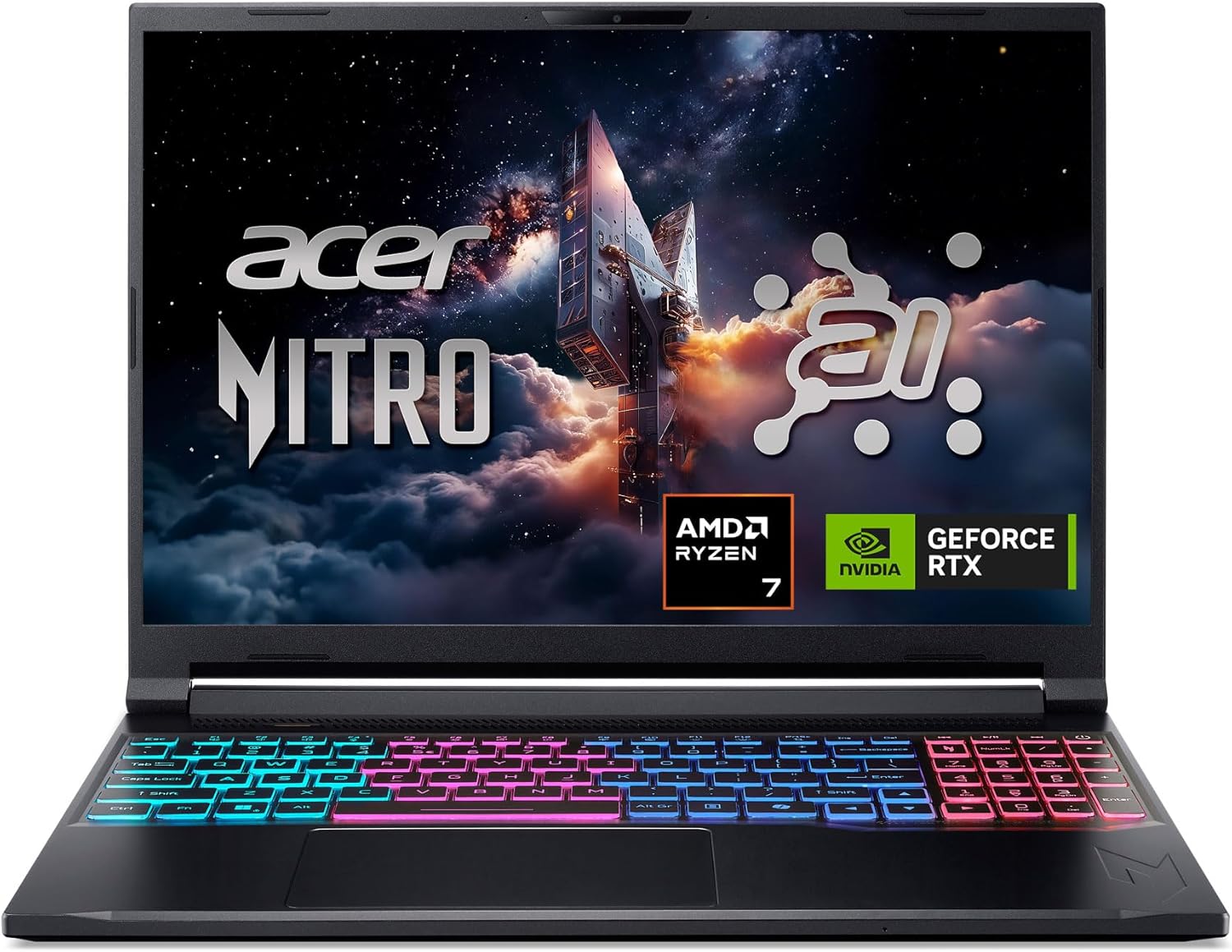
Acer Nitro V 16S AI
|
Ryzen 7 260
RTX 5060 GPU
16-inch 180Hz
32GB DDR5
|
4.4/ 5 | Check Price |

Best value
ASUS ROG Strix G16 2026
|
Core i7 14650HX
RTX 5060 GPU
16-inch 165Hz
16GB DDR5
|
4.4/ 5 | Check Price |

Best value
MSI Cyborg 17
|
Core 7-240H
RTX 5060 GPU
17.3-inch 144Hz
16GB DDR5
|
4.5/ 5 | Check Price |
Best value
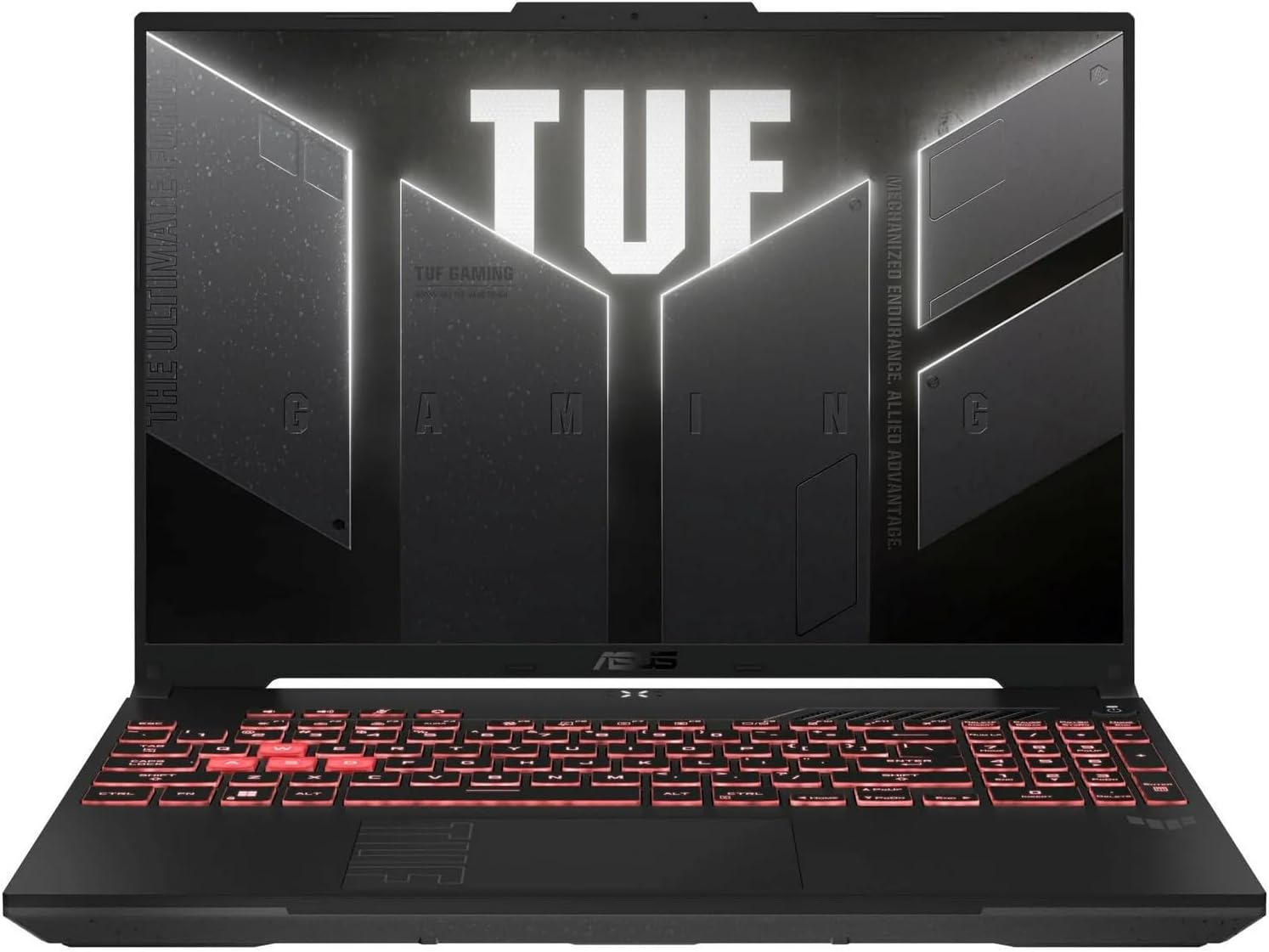
ASUS TUF Gaming A16
|
Ryzen 7 7445HS
RTX 4050 GPU
16-inch 144Hz
16GB DDR5
|
4.6/ 5 | Check Price |

Best value
HP Victus 15.6
|
Core i5-12450H
RTX 3050 GPU
15.6-inch 144Hz
16GB DDR4
|
4.4/ 5 | Check Price |

Everyday student option
NIMO 15.6 Student Laptop
|
Ryzen 5 processor
Radeon Vega 8
15.6-inch FHD
8GB DDR4
|
4.5/ 5 | Check Price |

Best value
Acer Nitro V 15
|
Core i5-13420H
RTX 4050 GPU
15.6-inch 165Hz
8GB DDR5
|
4.5/ 5 | Check Price |
|
Best value
MECHREVO Aurora 16X
|
Core i7-14650HX
RTX 5060 GPU
16-inch 180Hz 2.5K
100% sRGB panel
|
4.4/ 5 | Check Price |

Everyday gaming option
NIMO Gaming Ryzen 7
|
Ryzen 7 7735HS
Radeon 680M
15.6-inch FHD
16GB DDR5
|
Not supplied | Check Price |

Best onsite support
Alienware 16 Aurora
|
Core 7 240H
RTX 5050 GPU
16-inch 120Hz
1 Year Onsite
|
4.1/ 5 | Check Price |
As an Amazon Associate we earn from qualifying purchases, at no additional cost to you.
The Nitro V 16S AI is the entry point of this group and a useful reminder that most laptops under $4,000 do not actually have a 4K panel. Its 16-inch WUXGA display runs at 180Hz and covers 100% sRGB, which is smooth and colorful but well short of 4K sharpness. Buyers who need true 4K output should plan on an external display.
Where the Nitro earns its place is memory and value. It ships with 32GB of DDR5 and a 1TB Gen 4 SSD, and the chassis leaves one M.2 slot free for adding storage later. The Ryzen 7 260 and RTX 5060 cover mainstream gaming, streaming and creative apps.
A practical detail is the pair of DDR5 slots, already occupied by the 32GB kit, which caps memory at 32GB if you follow the listed maximum. Wi-Fi 6 is older than the Wi-Fi 7 found on several rivals, so wireless performance depends more on your router than on future-proofing.
This model fits buyers who want generous memory and a smooth 180Hz screen and are comfortable adding a 4K monitor for high-resolution work. If you want a built-in high-resolution panel, the higher-tier models are the better match.
The Nitro’s internal panel is WUXGA, not 4K. Pairing it with an external 4K monitor gives you high-resolution output for editing or media while keeping the laptop screen for everyday tasks.
Buyers who want a built-in 4K or near-4K panel or Wi-Fi 7 should look at the AORUS Master and higher-tier models in this list.
As an Amazon Associate we earn from qualifying purchases, at no additional cost to you.
The 2026 ROG Strix G16 brings the cooling design of ASUS’s premium line to an RTX 5060 configuration. Its Core i7 14650HX and 16GB of DDR5 memory cover mainstream gaming and everyday productivity, while the 16-inch FHD+ panel runs at 165Hz with a 3ms response time and an anti-glare film.
The cooling system combines an end-to-end vapor chamber, three fans and liquid metal on the chipset. That matters for sustained play, where a simpler cooling setup might force the GPU to reduce clocks after a long session. The 1TB Gen 4 SSD is a practical size for a moderate library, and Wi-Fi 7 adds future-ready wireless.
The RGB lightbar can be switched to Stealth Mode for a more professional look in shared spaces. The main trade-off for a 4K-focused shopper is resolution: FHD+ looks sharp for its size but is not a high-resolution editing panel. Memory is also limited to 16GB, which is less comfortable for heavy multitasking.
This model fits gamers who prioritize cooling and wireless modernity and plan to add an external 4K monitor for high-resolution work. If you need a built-in high-resolution panel, the OLED models are the better fit.
A laptop that throttles after twenty minutes undermines its own specifications. The tri-fan vapor chamber design is aimed at keeping clocks steadier during long sessions, which matters more than a short burst of peak performance.
Buyers who need a built-in high-resolution panel or 32GB of memory should compare the AORUS Master and MECHREVO models.
As an Amazon Associate we earn from qualifying purchases, at no additional cost to you.
The Cyborg 17 is built around a 17.3-inch FHD 144Hz display, giving it a larger viewing area than the 15.6- and 16-inch models. MSI describes it as thin and light for its size, making it a more portable big-screen option for buyers who want immersion without a permanent desk setup.
The Core 7-240H and RTX 5060 provide current-generation graphics with ray tracing and DLSS support, while 16GB of DDR5 memory and a 1TB NVMe SSD cover most gaming and everyday needs. Wi-Fi 6E and a useful port set, including USB-C, HDMI and RJ45, support online play and external displays.
The main compromise for a 4K-focused shopper is the FHD resolution, which looks less sharp on a 17.3-inch panel than a higher-resolution screen would. Memory is also limited to 16GB, which is less comfortable for heavy multitasking or large creative projects.
This laptop suits buyers who want a big screen and modern graphics and plan to use an external monitor for high-resolution work. If you need a built-in sharp panel or 32GB of memory, the higher-spec models are the better fit.
The larger screen is useful for games and split-screen work, but check the dimensions against your bag and desk before buying. Thin-and-light design helps, but a 17-inch chassis is still a different carry than a 15-inch one.
Buyers who need a built-in high-resolution display or 32GB memory should compare the AORUS Master and MECHREVO models.
As an Amazon Associate we earn from qualifying purchases, at no additional cost to you.
The TUF Gaming A16 is a budget-friendly way into a 16-inch gaming laptop. Its Ryzen 7 7445HS and RTX 4050 cover mainstream and esports titles at moderate settings, and the 16-inch FHD+ 144Hz display is smooth for everyday play. It is not a high-resolution editing machine, but it is a sensible starting point for buyers who want a larger screen without stretching the budget.
The 16GB of DDR5 memory and 512GB SSD are modest by the standards of this list. They are workable for a starter library and everyday tasks, but the storage capacity is the first thing most owners will notice when installing several large games. The backlit keyboard and Windows 11 round out the practical features.
The main limitation is the older RTX 4050, which has less headroom for demanding ray-traced games than the RTX 5060 models. The 512GB SSD also fills quickly, so buyers should plan on adding storage or managing their library carefully.
This model fits budget shoppers who want a 16-inch screen and 144Hz refresh rate for esports and older titles. If you want a built-in high-resolution panel or current-generation graphics, the higher-tier models are the better match.
It is a reasonable fit for students and casual gamers who want a larger screen for coursework and esports without paying for a high-end GPU.
Buyers who want current-generation RTX 5060 graphics or a high-resolution panel should compare the MECHREVO Aurora 16X and AORUS Master models.
As an Amazon Associate we earn from qualifying purchases, at no additional cost to you.
The HP Victus 15.6 is the most budget-oriented laptop in this comparison. Its RTX 3050 and 12th-gen Core i5-12450H are older than the hardware in the other models, so it suits buyers who want a capable entry into gaming rather than maximum frame rates in the newest titles. The 15.6-inch FHD anti-glare display runs at 144Hz.
The 16GB of DDR4 memory and 512GB PCIe SSD are modest by the standards of this list. They are workable for a starter library and everyday tasks, but the storage capacity is the first thing most owners will notice when installing several large games. Wi-Fi 6 and a backlit keyboard round out the practical features.
Windows 11 Pro is included, which adds management features that can matter for students or small offices. The older GPU is the main limitation: it handles esports and older titles comfortably, but it is not the right choice for demanding ray-traced games at high settings or 4K output.
This model makes sense for a first gaming laptop or a secondary machine on a tight budget. If your library leans toward newer AAA releases or you need 4K output, the RTX 5060 and higher models offer more headroom.
It is a reasonable fit for esports players, students and casual gamers who want a 144Hz screen without paying for current-generation graphics.
Buyers who want to play demanding new releases at high settings or output to a 4K monitor should look at the RTX 5060 and higher models here.
As an Amazon Associate we earn from qualifying purchases, at no additional cost to you.
The NIMO 15.6 is included as a non-gaming reference point for buyers who need a general-purpose laptop rather than a gaming machine. Its AMD Ryzen 5 processor and Radeon Vega 8 integrated graphics handle coursework, document editing and everyday web apps, but they are not suited to demanding modern games or 4K gaming.
Where the NIMO stands out is upgrade potential. Two DDR4 SO-DIMM slots support memory upgrades up to 32GB, and the single M.2 slot supports an SSD up to 4TB. That makes it a flexible platform for students and home-office users who want to grow into the machine over time.
The 15.6-inch FHD display and 175-degree hinge suit shared workspaces, and the fingerprint reader in the touchpad speeds up sign-in. The main limitations are the 8GB of RAM and 128GB SSD as shipped, both of which are below what modern gaming or heavy multitasking expects. Buyers should budget for upgrades.
This model fits students and remote workers who need an affordable everyday laptop and are willing to add memory and storage. If gaming performance or 4K output is the goal, a dedicated GPU model in this list is the right choice.
Two SO-DIMM slots and a single M.2 slot mean the NIMO can grow with your needs. Adding memory and storage later can extend its useful life, though the base 128GB drive fills quickly.
Buyers who want to play modern games or output 4K should choose a dedicated GPU model such as the MECHREVO Aurora 16X or AORUS Master.
As an Amazon Associate we earn from qualifying purchases, at no additional cost to you.
The Nitro V 15 is a compact, budget-conscious option with a 165Hz FHD IPS display and an RTX 4050. It suits buyers who want a smooth screen and modern ports without paying for current-generation graphics, though the older GPU has less headroom for demanding titles than the RTX 5060 models here.
The Core i5-13420H provides adequate processing for gaming and everyday productivity, and the 512GB Gen 4 SSD is workable for a smaller library. The standout connectivity feature is Thunderbolt 4, which supports power charging, data transfer and video output over a single port, plus Killer Ethernet for stable wired play.
The biggest limitation is the 8GB of DDR5 memory, which is below the practical minimum for comfortable modern gaming. Two DDR5 slots are available with a maximum of 32GB, so an upgrade is possible, but buyers should factor that cost into the total price.
This model fits budget shoppers who are willing to add memory and who value Thunderbolt 4 and a 165Hz screen. If you want to avoid opening the chassis or need 4K output, a higher-spec model is the simpler choice.
Thunderbolt 4 combines charging, data and video in one port, which is useful for docking a laptop at a desk. It is uncommon at this price and adds flexibility for external displays and fast storage, including a 4K monitor.
Buyers who want modern RTX 5060 graphics or 16GB of memory out of the box should look at the MECHREVO Aurora 16X or the ROG Strix G16 2026.
As an Amazon Associate we earn from qualifying purchases, at no additional cost to you.
The MECHREVO Aurora 16X is our value pick because it pairs a 16-inch 2.5K 180Hz IPS display covering 100% sRGB with an RTX 5060 rated at 115W and a 16-core Core i7-14650HX. That combination gives it sharp visuals and strong processing for a price well below the flagship models.
The 2.5K resolution is not 4K, but it is close enough that text and detailed game environments look crisp, and the 180Hz refresh rate keeps motion smooth. The RTX 5060 with DLSS 4 and ray tracing covers modern games, while the 16-core processor handles streaming, code builds and video editing.
MECHREVO’s Control Center includes one-click performance profiles and cooling management, and the dual-fan cooling system with phase-change thermal material supports up to 175W combined CPU and GPU performance. The main cautions are that the brand has a less established support footprint than ASUS or MSI, and the panel is 2.5K rather than native 4K.
This model fits buyers who want a sharp 2.5K screen, strong processor performance and RTX 5060 graphics at a competitive price. If native 4K output or a more established support network matters, the AORUS Master models are the better fit.
A 2.5K panel is easier to drive than 4K, so the RTX 5060 can reach higher frame rates while still offering sharp visuals. Pair it with an external 4K monitor when you need native 4K output for editing.
Buyers who specifically need a built-in 4K panel or prefer a more established brand should compare the AORUS Master and higher-tier models.
As an Amazon Associate we earn from qualifying purchases, at no additional cost to you.
The NIMO Gaming Ryzen 7 is included as an everyday option with integrated Radeon 680M graphics rather than a dedicated GPU. Its 8-core Ryzen 7 7735HS and 16GB of DDR5 memory handle office work, coding and light editing, and the Radeon 680M can manage some 1080p gaming at modest settings, but it is not a 4K gaming machine.
The laptop stands out for upgrade potential and everyday usability. Dual DDR5 SO-DIMM slots and a PCIe 4.0 SSD support future upgrades, while the 100W PD charging and 2-meter cable make it easier to power away from a fixed desk. A fingerprint reader and backlit keyboard round out the practical features.
The main limitation is graphics performance: integrated Radeon 680M is well below the dedicated RTX GPUs in the rest of this list, so demanding modern titles and 4K output are out of reach. There is also no customer rating available at the time of writing, so buyers should read the return terms carefully.
This model fits students, coders and remote workers who want a flexible everyday laptop with upgrade room. If you need dedicated graphics or 4K gaming, the MECHREVO and AORUS models are the right choice.
Radeon 680M is suitable for everyday tasks, light photo editing and some older or less demanding games at 1080p. It is not a substitute for a dedicated RTX GPU when it comes to modern AAA titles or 4K output.
Buyers who want dedicated graphics for modern games or 4K output should choose the MECHREVO Aurora 16X or one of the AORUS Master models.
As an Amazon Associate we earn from qualifying purchases, at no additional cost to you.
The Alienware 16 Aurora is built for buyers who value support and chassis design as much as raw frame rates. Its RTX 5050 is the least powerful GPU in this comparison, so it suits gaming at moderate settings rather than maximum ray tracing. The 16-inch WQXGA panel at 120Hz is sharper than several FHD rivals, though its refresh rate is lower than the 165Hz and 180Hz panels elsewhere.
Alienware’s Cryo-Chamber structure focuses airflow toward the core components, and the design avoids a rear thermal shelf for a cleaner footprint on a desk. The 300-nit display is usable indoors but may struggle in very bright rooms. Buyers who share a workspace will appreciate the streamlined shape.
The headline practical benefit is Dell’s one-year onsite service, which sends a technician to your home, office or chosen location if a covered hardware issue cannot be resolved remotely. That is a meaningful difference for anyone who relies on a single machine for work and cannot easily ship it away for repair.
This laptop suits buyers who prioritize resolution, support and a tidy design over maximum gaming performance or true 4K output. If you want a stronger GPU or a higher refresh rate, the RTX 5060 and higher models in this list are better matches.
A single laptop that handles both work and play can be disruptive to send away for repair. Onsite service reduces that downtime by bringing the fix to you, which is a real convenience for students and remote workers.
Competitive gamers who want higher frame rates or a stronger GPU should compare the RTX 5060 and RTX 5080 models, which offer more graphics headroom.
As an Amazon Associate we earn from qualifying purchases, at no additional cost to you.
Shopping for a 4K gaming laptop under $4,000 means deciding how much of that budget should go to resolution, graphics power and cooling. Many laptops in this range use QHD or 2.5K panels rather than native 4K, so understanding the trade-offs helps you spend wisely.
True 4K panels are rare in gaming laptops under $4,000 because they are expensive and demanding on the GPU. Many models here use QHD, 2.5K or FHD+ panels instead, which are easier to drive and can reach higher frame rates. A 2.5K or QHD panel still looks sharp at 16 inches and pairs better with mid-tier graphics.
If you need native 4K output for video editing or high-resolution media, an external 4K monitor is often the more practical route. Check which ports support 4K at 60Hz or higher, and confirm whether the laptop’s HDMI or USB-C output can drive the resolution and refresh rate you want.
Prioritize a built-in high-resolution panel only if you regularly work away from a desk and need the sharpness on the laptop itself. Otherwise, a fast QHD or 2.5K panel plus an external 4K monitor usually delivers better overall value.
The graphics processor has the biggest influence on frame rates and visual settings. In this list, the RTX 5090 sits at the top, followed by the RTX 5080, then the RTX 5060 and the older RTX 4050 and RTX 3050. A higher-tier GPU generally supports more demanding ray tracing and higher resolutions, though the gap varies by game.
GPU memory also matters. The RTX 5090 models here carry 24GB of GDDR7, the RTX 5080 carries a large allocation, and several others carry 8GB. More memory helps at higher resolutions and with high-resolution textures, but it does not make a lower-tier GPU faster on its own.
Set a target resolution and frame rate first. If you mostly play esports at QHD, an RTX 5060 is enough. If you want ray tracing at 4K or the highest settings, prioritize the RTX 5080 or RTX 5090 models.
The display is what you interact with every day, so it deserves as much attention as the GPU. A 165Hz or 180Hz QHD panel is a good balance for smooth gaming and creative work. A 240Hz OLED panel offers deeper contrast and faster response but costs more and demands more GPU power.
Panel quality also varies. Some models here cover 100% sRGB or 100% DCI-P3 and include HDR support, which helps with creative work and media. Anti-glare coatings reduce reflections in bright rooms, while glossy OLED panels may look more vibrant but can be harder to use near a window.
Prioritize refresh rate if you play fast competitive games. Prioritize resolution and color coverage if you also edit photos or video. Avoid paying for a 4K panel if your GPU cannot drive it at the frame rates you want.
16GB of RAM is the practical minimum for modern gaming, but 32GB is increasingly useful for multitasking, creative apps and future headroom. Several models here ship with 32GB, which reduces the need to upgrade later. Check whether the memory is soldered or socketed if you plan to expand.
Storage is just as important. Modern games can take 100GB or more each, so a 1TB drive fills quickly. A 2TB drive is more comfortable for a large library, while a 512GB or 128GB drive is best suited to a small starter collection. Look for PCIe Gen 4 SSDs for fast load times.
Buy as much memory and storage as you can reasonably afford at purchase. Upgrading later is possible on some models, but it adds cost and effort.
A laptop’s cooling system determines whether its powerful components can run at full speed for more than a few minutes. Vapor chambers, multiple fans, liquid metal and large heat pipes are all designed to reduce throttling during long gaming sessions. Larger chassis generally cool better than thinner ones because they have more room for airflow.
Do not judge cooling by the number of fans alone. Look for a design that covers both the CPU and GPU and has a reputation for sustained performance. The AORUS Master models use a large vapor chamber and 160-blade fans, while the MECHREVO Aurora 16X supports up to 175W combined CPU and GPU performance.
If you play for hours at a time, prioritize cooling. If you only play in short sessions, a simpler cooling system may be adequate.
A high-performance gaming laptop is rarely a lightweight ultrabook. The 17.3- and 18-inch models here are easier to see but harder to carry, while the 15.6- and 16-inch options are more portable. Weight, charger size and chassis thickness all affect daily portability. Check the total carry weight, not just the laptop.
Battery life is another compromise. Gaming laptops typically drain quickly under load, so plan to use the charger for extended play. Some models include MUX switches or Advanced Optimus to improve battery life for non-gaming tasks. That feature is useful if you use the laptop for work or study away from an outlet.
Choose a smaller model if you carry it daily. Choose a larger model if it mostly stays on a desk and you want a bigger screen.
If 4K output matters to you, check the ports carefully. You need HDMI 2.1 or DisplayPort over USB-C or Thunderbolt to drive 4K at high refresh rates. Thunderbolt 4 and USB4 add flexibility for docking and high-speed external storage, which is useful if you plan to edit 4K video.
Wi-Fi 6E and Wi-Fi 7 are newer standards that can reduce latency and congestion on compatible routers, but they will not improve a slow internet plan. An Ethernet port is useful for stable online gaming and fast file transfers.
Prioritize HDMI 2.1 or Thunderbolt 4 if you plan to connect a 4K monitor. Prioritize Wi-Fi 7 if you have a compatible router and want future-proofing.
Warranty and seller terms vary in this category. The Alienware model includes a year of onsite service, while some other listings involve reseller upgrades or less established brands. Those differences affect what happens if something goes wrong.
Read the listing carefully to see who provides support and whether the configuration has been modified after leaving the factory. A lower price is less appealing if support is unclear or if the return window is short.
If service matters to you, prioritize models with clear manufacturer support. If you are comfortable with third-party configuration, verify the seller’s warranty terms before buying.
Price is not a perfect indicator of value in this category. The MECHREVO Aurora 16X delivers a 2.5K 180Hz screen and RTX 5060 for far less than the flagship models, while the AORUS Master RTX 5080 adds OLED contrast and a higher-tier GPU. Compare the whole package rather than one specification.
Upgradeability can extend lifespan. Access to RAM and storage is a plus, and a spare M.2 slot makes it easier to add capacity later. Some laptops have soldered memory, so check before assuming you can upgrade.
Set a budget and identify the one or two features you care most about. Spend on the GPU and display first, then add memory and storage if the budget allows.
Set up the laptop on a hard, flat surface so the cooling vents are not blocked. Avoid using it on a bed or cushion for long gaming sessions, because trapped heat can cause the fans to run louder and the components to throttle. If you use an external 4K monitor, check which ports support the resolution and refresh rate you want.
Keep the operating system and graphics drivers up to date. Many gaming laptops rely on vendor control software to switch between integrated and discrete graphics, adjust fan profiles and enable the highest refresh rate. Familiarize yourself with those settings so you are not leaving performance unused. For competitive play, enable the direct GPU mode if the model supports it.
Clean the vents regularly with compressed air and keep the laptop away from dust and pet hair. Check the manufacturer’s guidance before opening the chassis for upgrades, because some models have tool-free access while others require more care. Store the laptop in a padded sleeve when carrying it, and use a surge protector when plugged in.
Most gaming laptops under $4,000 use QHD, 2.5K or FHD+ panels rather than native 4K. A few high-end models may offer 4K, but they are less common and often come with trade-offs in refresh rate or price. Many buyers pair a fast QHD laptop with an external 4K monitor instead.
The RTX 5080 and RTX 5090 offer more graphics headroom for ray tracing and higher resolutions, so they are worth considering if you want to play at 4K or near-4K settings. If you mostly play esports at QHD, an RTX 5060 can be enough and may come with a sharper screen or more storage for the same budget.
For most games, 16GB is still enough, but 32GB is increasingly useful for 4K gaming with background apps, streaming or creative work. Several laptops in this list include 32GB, which gives more headroom for multitasking and future game requirements.
A 240Hz OLED panel offers deeper contrast and faster response, which can make games look more cinematic and reduce motion blur. A 180Hz QHD panel is still smooth and often costs less. The right choice depends on whether contrast and motion clarity matter more than price.
4K games can take 100GB or more each, so a 1TB SSD is a practical minimum and 2TB is more comfortable for a large library. A 512GB or 128GB drive fills quickly. Check whether the laptop has an extra M.2 slot if you plan to add storage later.
Many models here include HDMI 2.1 or Thunderbolt 4, which can drive a 4K monitor at high refresh rates. Check the exact port specifications for the model you are considering, because output capabilities vary. A Thunderbolt 4 or USB4 port adds flexibility for docking and high-speed storage.
Wi-Fi 7 supports newer wireless standards with potentially higher throughput and lower latency on compatible routers. It is more future-ready, but the real-world benefit depends on your router and internet connection. If you use Ethernet for gaming, the Wi-Fi standard matters less.
A desktop generally offers more performance per dollar and better cooling for 4K gaming. Choose a desktop if you always play at a desk and do not need portability. Choose a laptop if you need to move your machine or prefer an all-in-one setup.
Confirm who provides the warranty and what it covers, because a reseller-upgraded unit may carry a distributor warranty rather than the manufacturer’s standard terms. Ask about the return window and whether the upgraded memory and storage are covered. If the seller’s terms are unclear, consider a factory-sealed configuration instead.
The GIGABYTE AORUS Master 16 RTX 5080 is our Best overall choice because it combines a 16-inch 240Hz OLED display, an RTX 5080, a Ryzen 9 9955HX3D and 32GB of DDR5 memory in a relatively slim chassis. It offers strong high-resolution performance and OLED contrast without stepping up to the RTX 5090 price.
The MECHREVO Aurora 16X is the Best value pick for shoppers who want a sharp 2.5K 180Hz screen, a 16-core processor and RTX 5060 graphics at a lower price. The GIGABYTE AORUS Master 16 RTX 5090 is the Premium pick for those who want the strongest GPU and 2TB of storage. Buyers who need onsite service should consider the Alienware 16 Aurora.
Your final decision should come down to whether you need native 4K on the laptop itself or can pair a fast QHD screen with an external 4K monitor. Prioritize the GPU and display for gaming, the processor and memory for creative work, and the chassis size for portability. Matching those priorities to your budget will lead you to the right machine.