

ASUS ROG Strix G16
5.0/ 5
RTX 5070 Ti graphics
165Hz FHD display
Vapor chamber cooling
32GB DDR5 memory

Find the right premium gaming laptop with a vapor chamber for demanding sessions. We compare 10 standout options by the factors that matter most in this category, including GPU power, cooling efficiency, display quality, processor performance, build thickness, memory capacity, and long-term thermal reliability under sustained loads.
Vapor chamber cooling sets these machines apart from standard heat-pipe designs by spreading heat across a wider surface area. This translates to higher sustained clock speeds, quieter fan noise during intense gameplay, and more consistent frame rates when your GPU and CPU are under heavy load.
To narrow down these ten options, we compared GPU tier and wattage, display refresh rates and panel types, processor core counts, memory and storage configurations, chassis thickness, and the specific cooling architecture each model uses. We also considered port selection, wireless connectivity standards, and real-world trade-offs like upgradeability versus thinness. The goal is to help you match a laptop's thermal design and raw performance to the games and creative workloads you actually run.
5.0/ 5

4.7/ 5

As an Amazon Associate we earn from qualifying purchases, at no additional cost to you.
Swipe across to compare all columns
| Product | Key highlights | Rating | Explore |
|---|---|---|---|
|
Premium pick
Razer Blade 16 64GB
|
RTX 5090 24GB
240Hz OLED display
64GB LPDDR5X RAM
14.9mm thin chassis
|
Not supplied | Check Price |
|
Best value
ASUS ROG Strix G16
|
RTX 5070 Ti 12GB
165Hz FHD display
Ryzen 9 8940HX
Vapor chamber cooling
|
5.0/ 5 | Check Price |
|
Best for Portability
Razer Blade 16 32GB
|
RTX 5090 24GB
240Hz OLED display
32GB LPDDR5X RAM
14.9mm CNC aluminum
|
4.2/ 5 | Check Price |

Best for Large Screens
MSI Crosshair 18 HX
|
RTX 5070 8GB
240Hz QHD+ display
Core Ultra 9 275HX
18-inch IPS panel
|
5.0/ 5 | Check Price |

Best for 18-inch Gaming
ASUS ROG Strix G18
|
RTX 5080 16GB
240Hz 2.5K display
Core Ultra 9 275HX
Vapor chamber cooling
|
Not supplied | Check Price |

Best for Lightweight Gaming
MSI Cyborg 17
|
RTX 5060 GPU
144Hz FHD display
Core 7-240H processor
5.5-pound lightweight build
|
4.5/ 5 | Check Price |
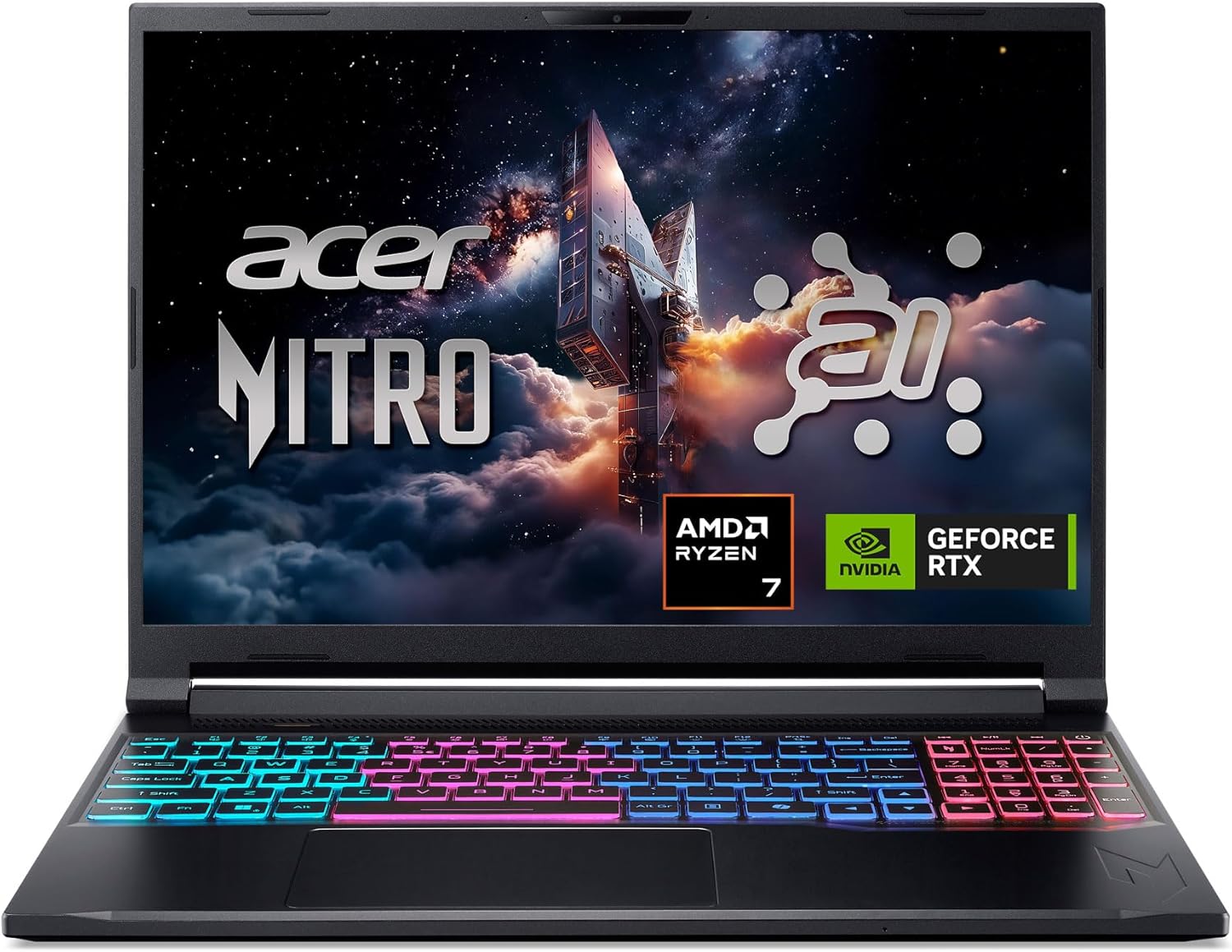
Best value
Acer Nitro V 16S
|
RTX 5060 GPU
180Hz WUXGA display
Ryzen 7 260 CPU
32GB DDR5 RAM
|
4.4/ 5 | Check Price |

Best for Ultralight Travel
Thunderobot Zero Air
|
RTX 5060 8GB
165Hz QHD+ OLED
Ultra 7 356H
Aero VC cooling
|
4.7/ 5 | Check Price |

Best for Sustained Workloads
HP Omen Max 16
|
RTX 5080 16GB
240Hz WQXGA display
Ryzen AI 9 HX
64GB DDR5 RAM
|
5.0/ 5 | Check Price |
|
Best overall
ASUS ROG G16 2026
|
RTX 5080 GPU
240Hz Nebula HDR
Core Ultra 9 290HX
End-to-end vapor chamber
|
4.7/ 5 | Check Price |
As an Amazon Associate we earn from qualifying purchases, at no additional cost to you.
The Razer Blade 16 with 64GB of LPDDR5X memory and an RTX 5090 is built for buyers who want the absolute ceiling of laptop gaming performance without carrying a bulky machine. At just 14.9mm thick, it rivals ultrabooks in portability while housing a 24GB GDDR7 GPU that can handle modern AAA titles at high settings and frame rates. The CNC-milled aluminum chassis gives it a rigid, premium feel that stands apart from plastic-bodied competitors.
The 16-inch QHD+ OLED panel is one of the strongest displays available on any gaming laptop right now. With a 240Hz refresh rate, 0.2ms response time, and VESA DisplayHDR TrueBlack 1000 certification reaching up to 1100 nits, it delivers deep blacks and vivid color across the full DCI-P3 gamut. Whether you are playing fast-paced competitive shooters or editing HDR video, the panel keeps motion sharp and colors accurate.
Thermal management relies on a vapor chamber design that spreads heat more evenly than traditional heat pipes, which helps the Intel Core Ultra 9 386H and RTX 5090 sustain higher boost clocks during long sessions. Connectivity is forward-looking with Thunderbolt 5, HDMI 2.1, Wi-Fi 7, and an SD card slot. Windows Hello facial recognition adds a layer of convenience for daily logins.
This configuration makes the most sense if you need maximum GPU horsepower and plan to keep the laptop for several years without upgrading RAM. The 64GB of soldered memory is generous enough for heavy multitasking, game streaming, and creative workloads, but you cannot add more later. If you want the same chassis with a lower starting cost, the 32GB variant is also available.
The Calman-verified 100% DCI-P3 color coverage and per-pixel dimming of this OLED display make it a genuine option for color-sensitive tasks like photo retouching and video grading. Unlike IPS panels that rely on a backlight, each OLED pixel produces its own light, which means true blacks and near-infinite contrast. If you split your time between gaming and content creation, this screen eliminates the need for an external reference monitor in many workflows.
If you prefer to upgrade your RAM over time or want to keep your initial investment lower, the non-upgradeable 64GB configuration may feel like overkill. Buyers who primarily game at 1080p or do not need the RTX 5090's full 24GB of VRAM will find better value in models with an RTX 5070 Ti or RTX 5080.
As an Amazon Associate we earn from qualifying purchases, at no additional cost to you.
The 2026 ASUS ROG Strix G16 pairs an AMD Ryzen 9 8940HX processor with an RTX 5070 Ti GPU, delivering strong 1080p and 1440p gaming performance at a more accessible price than the flagship models in this list. The 16-core CPU handles streaming, recording, and background applications without dropping frames, making it a practical choice for gamers who multitask during play.
Cooling is a standout feature here. The vapor chamber works alongside ASUS Tri-Fan technology to pull heat away from both the CPU and GPU more effectively than single-fan or basic heat-pipe layouts. This matters because the RTX 5070 Ti performs best when it can sustain its boost clocks without thermal throttling, and the Tri-Fan design helps keep temperatures manageable even during extended sessions.
The 16-inch FHD display runs at 165Hz with a 3ms response time, which is smooth enough for competitive esports titles. The port layout is generous, with two USB-C ports, HDMI 2.1, 2.5G Ethernet, and multiple USB-A connections distributed across both sides of the chassis. The RGB Aura light bar along the bottom edge adds a customizable aesthetic touch that syncs with other ROG peripherals.
This laptop is a strong fit for gamers who want vapor chamber cooling and a capable GPU without paying flagship premiums. The main trade-off is the FHD resolution, which looks perfectly fine for competitive gaming but may not satisfy buyers who prioritize visual detail in single-player titles. If you plan to install several large AAA games, consider adding a second SSD early on.
The three-fan layout in this Strix G16 directs airflow across the vapor chamber more aggressively than a dual-fan setup. To keep the system running quietly during lighter tasks, use the silent or performance profile in Armoury Crate for everyday browsing and switch to turbo mode only when gaming. This approach reduces fan noise and dust buildup over time while still delivering full power when you need it.
If you primarily play visually demanding single-player games and want sharper image quality, the FHD panel may disappoint compared to the QHD+ and 2.5K displays available on other models in this list. Buyers who need more than 1TB of internal storage out of the box should also look at configurations with 2TB drives.
As an Amazon Associate we earn from qualifying purchases, at no additional cost to you.
This 32GB variant of the Razer Blade 16 offers the same RTX 5090 GPU, Intel Core Ultra 9 386H processor, and 240Hz OLED display as its 64GB sibling, but at a lower price point. For most gamers and many content creators, 32GB of LPDDR5X memory is more than sufficient for current titles, streaming software, and creative applications running simultaneously.
The OLED panel remains the star of the show, with its 2560×1600 resolution, 0.2ms response time, and DisplayHDR TrueBlack 1000 brightness. Colors are Calman-verified across 100% of the DCI-P3 gamut, which means you get accurate, vibrant visuals whether you are gaming or working on photo and video projects. The 16:10 aspect ratio provides extra vertical space that is useful for productivity tasks.
Thermal performance benefits from the same vapor chamber cooling system found in the 64GB model. The thin 14.9mm CNC aluminum chassis dissipates heat through the vapor chamber's large surface area, helping the RTX 5090 maintain its 165W TGP without excessive fan noise. The 2TB PCIe 4.0 SSD provides fast load times, and a second M.2 slot lets you expand storage up to 8TB total.
Choose this configuration if you want flagship GPU performance and the best display in this lineup but do not need 64GB of RAM for your specific workflow. The savings over the 64GB model can go toward a quality external monitor or additional storage. Just be aware that the soldered memory means 32GB is the permanent ceiling.
The two M.2 NVMe slots in this Blade 16 give you flexibility that many thin gaming laptops lack. The primary 2TB drive handles your operating system and most-used games, while the second slot accepts an additional drive up to 6TB for a combined 8TB of internal storage. This is particularly useful if you work with large video files or maintain a growing game library.
If your workflow regularly involves large datasets, virtual machines, or heavy 3D rendering that benefits from more than 32GB of RAM, the 64GB variant or a laptop with user-upgradeable SO-DIMM slots would be a better long-term investment. The soldered memory design means you cannot add RAM later.
As an Amazon Associate we earn from qualifying purchases, at no additional cost to you.
The MSI Crosshair 18 HX targets gamers who want a desktop-replacement experience with an 18-inch QHD+ IPS display running at 240Hz. The larger screen makes a noticeable difference in immersion for open-world games and simulation titles, and the 2560×1600 resolution keeps text and UI elements sharp across the extra panel real estate.
Inside, the Intel Core Ultra 9 275HX processor provides 24 cores with turbo speeds up to 5.4GHz, which gives you plenty of headroom for gaming, streaming, and background tasks. The RTX 5070 GPU with 8GB of GDDR7 memory handles modern titles well at QHD+ settings, though the 8GB VRAM ceiling may become a limitation in future titles that demand more texture memory at high resolutions.
The 32GB of DDR5 5600MHz RAM and 2TB NVMe SSD provide a solid foundation for multitasking and large game libraries without requiring immediate upgrades. Audio is handled by a Dynaudio setup with dual 2W speakers and dual 2W woofers, which delivers better sound quality than the thin speakers found in many gaming laptops. The 720p webcam includes a privacy shutter for secure video calls.
This laptop is best suited for gamers who primarily play at a desk and value screen size over portability. The 18-inch form factor means it will not fit in most standard laptop bags, and the overall weight is higher than 15- or 16-inch alternatives. If you travel frequently with your gaming laptop, a smaller chassis with a similar GPU may serve you better.
The RTX 5070's 8GB of GDDR7 memory is adequate for current games at QHD+ settings, but some recent titles with high-resolution texture packs already push beyond 8GB at maximum settings. If you plan to play at native 2560×1600 with ultra textures and ray tracing enabled, you may need to lower texture quality in the most demanding titles. DLSS and frame generation can help offset some of the performance impact.
Buyers who need a laptop for frequent travel or small desk spaces should look at 15- or 16-inch models instead. The 18-inch chassis is noticeably larger and heavier, making it less practical for commuting or LAN events. If you want more VRAM for future-proofing, consider a model with an RTX 5080 or RTX 5090.
As an Amazon Associate we earn from qualifying purchases, at no additional cost to you.
The ASUS ROG Strix G18 combines an 18-inch 2.5K Nebula display with an RTX 5080 GPU and vapor chamber cooling, making it one of the most powerful large-screen gaming laptops in this lineup. The 240Hz refresh rate and Pantone-validated color accuracy with 100% DCI-P3 coverage make the display suitable for both competitive gaming and creative work that demands color precision.
The Intel Core Ultra 9 275HX processor reaches up to 5.4GHz across its 24 cores, providing strong single-threaded performance for gaming and ample multi-threaded power for rendering and encoding tasks. The RTX 5080 with 16GB of GDDR7 memory and Advanced Optimus support handles ray-traced titles at high settings, and DLSS frame generation helps push frame rates even higher in supported games.
Thermal management uses a combination of vapor chamber cooling, Tri-Fan technology, and Conductonaut Extreme liquid metal on the CPU. This multi-layered approach keeps temperatures in check during extended gaming sessions and helps the GPU sustain its rated performance without aggressive throttling. The MUX switch lets you route frames directly from the discrete GPU for a 5-10% performance boost in competitive scenarios.
This laptop is ideal for gamers who want a large, high-resolution screen and a powerful GPU with enough VRAM to handle future titles at high settings. The 18-inch chassis means it is best used as a desktop replacement rather than a travel companion. If you need similar GPU power in a more portable package, the 16-inch models with RTX 5080 GPUs in this list are worth comparing.
ASUS ROG Nebula displays use an anti-glare film that reduces reflections while maintaining contrast and color saturation. On this 18-inch model, the 500-nit brightness and 2.5K resolution combine to produce a sharp, vivid image even in well-lit rooms. The 240Hz refresh rate ensures that fast camera movements in games remain smooth, and the 100% DCI-P3 coverage means colors look accurate for photo and video editing.
If battery life is a priority for your workflow, the combination of an 18-inch high-refresh display, RTX 5080, and 24-core processor will drain the battery quickly during unplugged use. Buyers who need long battery life for classes, meetings, or travel should consider a thinner 15- or 16-inch model with a less power-hungry GPU.
As an Amazon Associate we earn from qualifying purchases, at no additional cost to you.
The MSI Cyborg 17 occupies a unique position in this lineup by offering a 17.3-inch screen in a chassis that weighs just 5.5 pounds and measures 0.83 inches thin. This makes it one of the most portable large-screen gaming laptops available, and a practical choice for students or commuters who want a bigger display without the bulk of a traditional 17-inch machine.
The Intel Core 7-240H processor uses a hybrid architecture to balance performance and efficiency, handling modern games and everyday tasks smoothly. The RTX 5060 GPU supports real-time ray tracing and DLSS 4, which can significantly boost frame rates in supported titles by generating additional frames through AI. This helps compensate for the GPU's more modest raw power compared to higher-tier options.
The Cooler Boost shared-pipe thermal design keeps the thin chassis from overheating during gaming sessions, though it does not use a full vapor chamber like some of the larger models in this guide. The 16GB of DDR5 RAM and 1TB NVMe SSD provide adequate performance for most games, though you may want to upgrade the RAM if you regularly run multiple demanding applications simultaneously.
This laptop is best for buyers who prioritize a large screen and low weight over maximum graphical fidelity. The RTX 5060 handles 1080p gaming well, especially with DLSS enabled, but it will struggle with ultra settings at higher resolutions. If you want a bigger screen with more GPU power, the 18-inch models above offer stronger performance at the cost of additional weight.
DLSS 4's Multi Frame Generation and enhanced Super Resolution features can dramatically improve frame rates on the RTX 5060, especially in ray-traced titles. Enable DLSS in game settings and experiment with the Quality and Balanced modes to find the best trade-off between image sharpness and performance. In many current games, DLSS Quality mode at 1080p produces an image that is difficult to distinguish from native resolution.
If you play at resolutions above 1080p or want to use ultra texture settings in the latest AAA titles, the RTX 5060 and 16GB of RAM will feel limiting. Buyers who need more graphical horsepower should look at models with an RTX 5070 Ti or higher, and those who run memory-intensive creative software should prioritize 32GB configurations.
As an Amazon Associate we earn from qualifying purchases, at no additional cost to you.
The Acer Nitro V 16S offers one of the best price-to-specification ratios in this lineup, combining an AMD Ryzen 7 260 processor, RTX 5060 GPU, and 32GB of DDR5 memory at a price well below the flagship models. This makes it an appealing entry point for gamers who want modern GPU features like ray tracing and DLSS 4 without a four-figure investment.
The 16-inch WUXGA IPS display runs at 180Hz with 100% sRGB color coverage, providing smooth motion and accurate colors for gaming at 2026×1200 resolution. While this is a lower resolution than the QHD+ and 2.5K panels on more expensive models, it pairs well with the RTX 5060's performance envelope, allowing you to achieve higher frame rates without relying as heavily on upscaling.
The Ryzen 7 260 processor includes an NPU capable of 38 AI TOPS, and the RTX 5060 adds 572 AI TOPS for a combined total that supports local AI workloads and accelerated creative tasks. The two DDR5 SO-DIMM slots hold 32GB at 5600MHz, and the two M.2 PCIe slots let you expand storage beyond the included 1TB Gen 4 SSD.
This laptop is a smart choice for budget-conscious gamers who want 32GB of RAM and a current-generation GPU. The main trade-offs are the lower display resolution and the absence of Wi-Fi 6E or Wi-Fi 7, which may matter if you rely on wireless connectivity for competitive online gaming. For most players on a wired connection, these limitations will not affect the gaming experience.
Many gaming laptops in this price range ship with 16GB of RAM, which is becoming tight for modern titles that load large texture sets and for multitaskers who run browsers, Discord, and streaming software alongside their games. Having 32GB from the start means you will not need to open the chassis for a memory upgrade anytime soon, and it provides headroom for future games that may demand more memory.
If you play on an external 1440p or 4K monitor and want to drive those higher resolutions natively, the RTX 5060 and WUXGA display will not deliver the visual fidelity you need. Buyers who prioritize display sharpness should look at models with QHD+ or 2.5K panels and more powerful GPUs like the RTX 5070 Ti or RTX 5080.
As an Amazon Associate we earn from qualifying purchases, at no additional cost to you.
The Thunderobot Zero Air 15 takes a different approach to gaming laptop design by prioritizing weight reduction without sacrificing core specifications. The aerospace-grade magnesium-aluminum alloy chassis, lighter OLED panel, and compact Aero VC cooling system combine to create a 15.3-inch gaming laptop that is noticeably lighter than most competitors in this size class.
The QHD+ OLED display at 165Hz offers excellent color reproduction and deep blacks in a compact form factor, making it a strong choice for gamers who also do creative work on the go. The Intel Ultra 7 356H processor provides 16 cores with turbo speeds up to 4.7GHz, which is sufficient for modern gaming and multitasking. The 64GB of RAM and 2TB SSD are generous for this price range.
The Aero VC cooling system uses a vapor chamber design that is 30g lighter than conventional alternatives while still providing effective heat dissipation for the RTX 5060 GPU and Ultra 7 processor. The port selection includes two USB-A, two USB-C, HDMI, and RJ-45 Ethernet, covering most connectivity needs without requiring a dongle. The RGB backlit keyboard and built-in webcam round out the feature set.
This laptop is best for travelers and commuters who want a capable gaming machine that will not weigh down their bag. The RTX 5060 handles 1080p and moderate 1440p gaming well, especially with DLSS, but it is not designed for maximum settings at native QHD+ in the most demanding titles. If raw GPU power is your top priority, the heavier models with RTX 5080 or RTX 5090 GPUs will serve you better.
Thunderobot reduced weight across multiple components: the magnesium-aluminum chassis saves 169g compared to standard aluminum, the OLED panel is 85g lighter than a comparable IPS display, and the Aero VC cooling system shaves another 30g. These incremental savings add up to a laptop that is meaningfully easier to carry daily, which matters if you commute with your machine or travel frequently for work and gaming.
If you primarily game at a desk and want the highest possible frame rates at QHD+ or higher resolutions, the RTX 5060 will feel underpowered compared to the RTX 5080 and RTX 5090 options in this guide. The Wi-Fi 6 connectivity is also a step behind the Wi-Fi 7 found on newer models, which may matter for future-proofing your wireless setup.
As an Amazon Associate we earn from qualifying purchases, at no additional cost to you.
The HP Omen Max 16 is designed for users who need sustained high performance over long periods, whether for extended gaming marathons, 3D rendering, or data analysis. The AMD Ryzen AI 9 HX 375 processor includes a 55 TOPS NPU for local AI workloads, and the RTX 5080 GPU with 16GB of GDDR7 memory provides strong gaming and compute performance.
The OMEN Tempest Cooling Pro system is engineered to suppress thermal throttling under continuous heavy loads, which is the key differentiator for this laptop. When a GPU and CPU run at full load for hours, many laptops gradually reduce clock speeds to manage heat. The Tempest system maintains steadier performance over time, which translates to more consistent frame rates and shorter render times.
The 16-inch WQXGA IPS display runs at 240Hz with 500 nits of brightness, 3ms response time, and 100% sRGB coverage. Anti-glare and low-blue-light features help reduce eye strain during long sessions, which is a practical benefit for anyone who spends eight or more hours a day in front of the screen. The 64GB of DDR5 RAM and 2TB SSD provide ample resources for demanding workflows.
This laptop is a strong fit for professionals and enthusiasts who need a machine that can sustain peak performance without throttling during long workloads. The IPS panel does not match the contrast of OLED displays found on some competitors, but its anti-glare coating and eye-comfort features make it more comfortable for extended use in bright environments.
Many gaming laptops achieve impressive peak benchmark scores in short tests but throttle significantly after 15-30 minutes of continuous load. The Tempest Cooling Pro system in the Omen Max is designed to minimize this drop-off, which means your frame rates in the third hour of gaming will be closer to your frame rates in the first hour. For competitive gamers and professionals running long renders, this consistency is more valuable than a slightly higher peak score.
If display contrast and HDR performance are your top priorities, the IPS panel on the Omen Max cannot match the per-pixel dimming and TrueBlack levels of the OLED displays on the Razer Blade 16 or Thunderobot Zero Air. Buyers who want the thinnest possible chassis should also look at the 14.9mm Razer Blade models.
As an Amazon Associate we earn from qualifying purchases, at no additional cost to you.
The 2026 ASUS ROG Strix G16 earns its place as the best overall pick by combining an end-to-end vapor chamber cooling system, a next-generation Intel Core Ultra 9 290HX Plus processor, and an RTX 5080 GPU in a 16-inch chassis that balances performance with practicality. The end-to-end vapor chamber covers both the CPU and GPU, which is more effective than partial vapor chamber designs that only cool one component.
The 16-inch ROG Nebula HDR display is a standout feature, offering 2.5K resolution at 240Hz with Dolby Vision HDR support and a new AGLR film that reduces glare while enhancing contrast. The result is a bright, punchy image that looks good from wide viewing angles and holds up in well-lit rooms. The 100% DCI-P3 color coverage and Pantone validation make it suitable for creative work alongside gaming.
One of the most practical features is the tool-free access panel on the bottom of the chassis. A simple latch lets you upgrade the RAM, SSD, and even clean the fans without a screwdriver, which is rare in gaming laptops and makes long-term maintenance much easier. The MUX switch with Advanced Optimus automatically routes frames through the discrete GPU for gaming and switches to the integrated GPU for battery life, all without requiring a reboot.
This laptop is the strongest all-around choice for most buyers in this category. The RTX 5080 provides excellent 1440p gaming performance with headroom for ray tracing, the vapor chamber keeps thermals under control, and the tool-free upgrade path means you can add more RAM and storage as your needs grow. The main limitation is the 1TB SSD, which will fill up quickly with modern game installations.
Unlike laptops that use a vapor chamber only over the GPU or CPU, the end-to-end design in this Strix G16 spans both major heat sources. This means heat from the CPU and GPU is distributed across the entire chamber surface rather than concentrated in separate zones, which reduces hot spots and allows both components to sustain higher clocks simultaneously. Combined with tri-fan technology and Conductonaut Extreme liquid metal, this is one of the most comprehensive cooling solutions in a 16-inch laptop.
If you need 64GB of RAM out of the box for professional workloads like large-scale video editing or running multiple virtual machines, the 32GB configuration will require an immediate upgrade. Buyers who want the absolute maximum GPU performance should also consider the Razer Blade 16 with the RTX 5090, though it comes at a significantly higher price.
As an Amazon Associate we earn from qualifying purchases, at no additional cost to you.
Choosing a gaming laptop with vapor chamber cooling involves balancing GPU power, display quality, thermal design, and portability against your budget and use case. The factors below cover the most important decisions you will face.
The GPU is the single most important component for gaming performance, and the current generation spans from the RTX 5060 to the RTX 5090 in this lineup. The RTX 5060 handles 1080p gaming well and can manage moderate 1440p settings with DLSS, while the RTX 5070 and 5070 Ti step up to comfortable 1440p performance. The RTX 5080 and 5090 are designed for high-refresh 1440p and entry-level 4K gaming with ray tracing enabled.
VRAM capacity is equally important for future-proofing. The RTX 5060 and RTX 5070 come with 8GB of GDDR7, which is adequate for current titles at 1080p and 1440p but may become a bottleneck as game textures grow larger. The RTX 5070 Ti offers 12GB, the RTX 5080 provides 16GB, and the RTX 5090 includes 24GB. If you plan to keep your laptop for three or more years and play at high resolutions, more VRAM gives you a meaningful safety margin.
Match the GPU tier to your display resolution and the types of games you play. Competitive esports players can get excellent results from an RTX 5060 or 5070 Ti at 1080p, while single-player enthusiasts who want ray tracing at 1440p should target the RTX 5080 or higher.
A vapor chamber is a flat, sealed metal enclosure filled with a small amount of liquid that evaporates at hot spots and condenses at cooler areas, spreading heat across a much larger surface area than traditional copper heat pipes. This design is particularly effective in thin gaming laptops where there is limited vertical space for stacked heat pipes and large heatsinks. The result is lower peak temperatures and more consistent performance under sustained loads.
Not all vapor chamber implementations are equal. Some laptops use a partial vapor chamber that covers only the GPU, while others like the 2026 ASUS ROG Strix G16 use an end-to-end design that spans both the CPU and GPU. The more comprehensive the coverage, the better the system can handle simultaneous heavy loads on both processors. Additional features like liquid metal thermal compound, tri-fan layouts, and multiple heat pipes work alongside the vapor chamber to further improve thermal performance.
When comparing cooling systems, look for descriptions that specify what components the vapor chamber covers and what supplementary cooling technologies are used. A laptop with an end-to-end vapor chamber and liquid metal will generally sustain higher performance than one with a partial chamber and standard thermal paste, even if the GPU and CPU specifications are identical.
Gaming laptop displays in this category range from FHD (2026×1080) to 2.5K (2560×1600) and use either IPS or OLED panel technology. IPS panels offer good color accuracy, wide viewing angles, and high brightness at a lower cost, making them a reliable choice for most gamers. OLED panels deliver superior contrast with true blacks, faster pixel response times, and wider color gamuts, but they come at a premium and may have lower sustained brightness in full-screen white scenarios.
Refresh rates in this lineup range from 144Hz to 240Hz. The difference between 144Hz and 240Hz is most noticeable in fast-paced competitive games where every frame of input latency matters. For single-player titles and creative work, the jump from 144Hz to 240Hz is less dramatic, and you may benefit more from a higher resolution or better color accuracy. The 180Hz and 165Hz options in the middle provide a good balance for mixed use.
Choose your display based on your primary use case. Competitive gamers should prioritize refresh rate and response time, while content creators and single-player enthusiasts should focus on resolution, color gamut coverage, and panel type. If you split your time between both, a 240Hz QHD+ OLED or IPS panel offers the best compromise.
The processors in this lineup range from the Intel Core 7-240H and AMD Ryzen 7 260 at the entry level to the Intel Core Ultra 9 290HX Plus and AMD Ryzen AI 9 HX 375 at the top. Core counts vary from 8 to 24, and boost clocks range from around 4.7GHz to 5.4GHz. For pure gaming, single-threaded performance and boost clock speed matter most, as many games still rely heavily on a few fast cores.
Higher core counts become important when you run multiple demanding applications simultaneously, such as gaming while streaming, recording, or running background encoding tasks. The 24-core Intel Ultra 9 processors and 16-core AMD Ryzen 9 chips handle these workloads with ease, while the 8-core and 16-core options are sufficient for gaming with lighter multitasking. Built-in NPUs for AI acceleration are becoming more common and can speed up tasks like background blur in video calls and local AI inference.
For most gamers, a mid-range processor like the Core 7-240H or Ryzen 7 260 paired with a strong GPU will deliver better gaming performance than a top-tier CPU paired with a weaker GPU. Invest in the GPU first and choose a processor that matches your multitasking needs.
RAM configurations in this lineup range from 16GB to 64GB, using DDR5 or LPDDR5X memory at speeds from 5600MHz to 9600MHz. For current gaming, 16GB is the minimum and 32GB is the comfortable standard. The 64GB configurations are aimed at professionals who run memory-intensive applications like video editing, 3D rendering, or virtual machines alongside their games.
Storage ranges from 1TB to 2TB of PCIe Gen 4 NVMe SSD, with most laptops offering at least one additional M.2 slot for expansion. Game sizes continue to grow, with many AAA titles requiring 100GB or more, so a 1TB drive can fill up quickly if you maintain a large library. Having a second M.2 slot lets you add storage without replacing the primary drive.
Check whether the RAM is soldered or uses SO-DIMM slots before buying. Soldered LPDDR5X memory, as found in the Razer Blade 16 models, offers faster speeds and a thinner chassis but cannot be upgraded. SO-DIMM slots, as found in the ASUS ROG and Acer Nitro models, let you add or replace RAM later. If you are unsure about your future memory needs, a laptop with upgradeable SO-DIMM slots provides more flexibility.
Gaming laptops with vapor chamber cooling span a wide range of form factors, from the ultra-thin 14.9mm Razer Blade 16 to the larger 18-inch desktop replacements. Thinner chassis designs are easier to carry and fit in standard laptop bags, but they may run louder under load because the fans have less space to move air. Thicker chassis designs can accommodate larger heatsinks and more fans, which often results in quieter operation and better sustained performance.
Build materials also vary significantly. CNC-milled aluminum and magnesium-aluminum alloy chassis provide a premium feel and better heat dissipation than plastic bodies, but they add cost. The weight difference between a 5.5-pound 17-inch laptop and a 6-plus-pound 16-inch model may seem small on paper, but it becomes noticeable during daily commuting or travel.
Decide how often you will carry your laptop before choosing a form factor. If it will mostly stay on a desk, a larger 17- or 18-inch model with better cooling and a bigger screen is worth the extra weight. If you travel or commute regularly, a 15- or 16-inch model under 5.5 pounds will be much more practical, even if it means slightly higher fan noise under load.
Modern gaming laptops in this category offer a range of connectivity options, from Wi-Fi 6 and USB-C to Wi-Fi 7 and Thunderbolt 5. Wi-Fi 7 provides lower latency and higher bandwidth than Wi-Fi 6 or 6E, which can improve online gaming performance on compatible routers. Thunderbolt 5 offers up to 80Gbps of bandwidth for external displays, storage, and docking stations, making it valuable for users who connect to a desktop setup at home.
Port selection varies by model and affects how many peripherals you can connect without a hub. Look for at least one HDMI 2.1 port for external monitors, multiple USB-A ports for mice and keyboards, and USB-C ports that support DisplayPort Alt Mode or Thunderbolt for additional displays. An RJ-45 Ethernet port is useful for stable wired gaming connections, and an SD card slot is helpful for photographers and videographers.
Before buying, list the peripherals and external displays you plan to connect and verify that the laptop has the necessary ports. If you rely on a specific connection type like Thunderbolt for an eGPU or docking station, confirm that the laptop supports it rather than assuming all USB-C ports offer the same capabilities.
Set up your laptop on a hard, flat surface with at least a few inches of clearance around the vents to allow proper airflow. Avoid placing it on soft surfaces like beds or couches during gaming sessions, as fabric can block the intake vents and cause the vapor chamber cooling system to work harder than necessary. If you game at a desk, consider a laptop stand that elevates the rear of the chassis to improve air circulation underneath.
Use the manufacturer's control software to manage performance profiles based on your current activity. Most gaming laptops offer silent, balanced, and turbo modes that adjust fan speeds, CPU power limits, and GPU wattage. Running in turbo mode all the time generates unnecessary heat and noise during light tasks, so switch to balanced or silent mode for web browsing and office work. This practice also helps extend the lifespan of the fans and thermal compound.
Clean the air vents and fan intakes every three to six months using compressed air to prevent dust buildup, which is the most common cause of thermal degradation over time. If your laptop has a tool-free access panel like the ASUS ROG Strix G16, you can open the bottom cover to clean the fans more thoroughly. Keep the laptop away from humid environments and avoid eating near the keyboard to reduce the risk of liquid damage and debris accumulation.
A vapor chamber is a flat, sealed metal enclosure that uses liquid evaporation and condensation to spread heat across a large surface area. In a gaming laptop, it replaces or supplements traditional copper heat pipes, providing more uniform cooling across the CPU and GPU. This results in lower peak temperatures, quieter fan operation, and more consistent performance during long gaming sessions.
For most gamers who play for extended periods, vapor chamber cooling provides a meaningful improvement in sustained performance compared to basic heat-pipe designs. The benefit is most noticeable in thin laptops where traditional cooling solutions struggle to dissipate heat from high-wattage components. If you primarily game in short bursts or use lower-power GPUs, the difference may be less significant.
It depends on the model. Laptops with SO-DIMM slots, such as the ASUS ROG Strix G16 and Acer Nitro V 16S, allow RAM upgrades. Models with soldered LPDDR5X memory, like the Razer Blade 16, do not. Most laptops in this list offer at least one additional M.2 NVMe slot for storage expansion. Check the specific model's specifications before purchasing if upgradeability is important to you.
OLED displays offer superior contrast with true blacks, faster pixel response times, and wider color gamuts compared to IPS panels. This makes them excellent for visually rich single-player games and HDR content. IPS panels typically offer higher sustained brightness and are less susceptible to burn-in from static UI elements. For competitive gaming, both panel types can deliver excellent results at high refresh rates.
For comfortable 1440p gaming at high settings in current AAA titles, an RTX 5070 Ti or RTX 5080 is the recommended starting point. The RTX 5070 with 8GB VRAM can handle 1440p with some settings adjustments, while the RTX 5080 with 16GB provides more headroom for ray tracing and future titles. DLSS and frame generation can also help boost performance on lower-tier GPUs at this resolution.
The jump from 60Hz to 144Hz is dramatic and immediately noticeable in fast-paced games. The difference between 144Hz and 240Hz is more subtle and most beneficial in competitive esports titles where every millisecond of input latency matters. For single-player games and creative work, the improvement from 144Hz to 240Hz is less impactful than upgrading to a higher resolution or better panel type.
Wi-Fi 7 offers lower latency, higher bandwidth, and improved reliability compared to Wi-Fi 6 and 6E, which can benefit online gaming on compatible networks. However, the actual improvement depends on your router and internet connection. If you primarily game over a wired Ethernet connection, the Wi-Fi standard is less critical. Wi-Fi 7 is more of a future-proofing feature than a current necessity for most gamers.
A MUX switch allows the laptop's display to connect directly to the discrete GPU, bypassing the integrated GPU. This eliminates a small performance bottleneck and can boost gaming frame rates by 5-10% in some titles. Advanced Optimus implementations can switch between the integrated and discrete GPU automatically without a reboot. If you want maximum gaming performance, a MUX switch is a useful feature, but it is not essential for casual gaming.
There is no single ideal thickness, as cooling performance depends on the entire thermal design including the vapor chamber, fan count, heatsink size, and airflow path. Thinner laptops around 15-17mm can cool effectively with vapor chambers but may run louder under load. Thicker laptops around 20-25mm have more room for larger fans and heatsinks, which can result in quieter operation. Focus on the cooling technology and real-world thermal performance rather than thickness alone.
Yes, most of the laptops in this list are capable content creation machines. The high-core-count processors, 32GB or more of RAM, fast NVMe storage, and color-accurate displays make them suitable for video editing, 3D rendering, photo retouching, and graphic design. Models with OLED displays and 100% DCI-P3 coverage, like the Razer Blade 16, are particularly well-suited for color-sensitive creative work.
The ASUS ROG Strix G16 2026 stands out as the strongest overall choice because it combines an end-to-end vapor chamber cooling system, an RTX 5080 GPU, a 240Hz Nebula HDR display, and tool-free access to RAM and storage. This combination of top-tier cooling, strong gaming performance, and practical upgradeability makes it a laptop that can grow with your needs over several years without feeling outdated.
For buyers with different priorities, there are strong alternatives throughout this lineup. The Razer Blade 16 with 64GB of RAM and an RTX 5090 is the clear premium pick for those who want the absolute maximum performance in an ultra-thin chassis. The 2026 ASUS ROG Strix G16 with the RTX 5070 Ti provides excellent vapor chamber cooling and 32GB of RAM at a more accessible price point. For buyers who want a large screen, the MSI Crosshair 18 and ASUS ROG Strix G18 both deliver immersive 18-inch displays with strong GPU options.
Your final decision should come down to how you balance GPU power, display quality, portability, and budget. If you game primarily at a desk and want the best possible performance, prioritize an RTX 5080 or RTX 5090 with a QHD+ or 2.5K display. If you travel frequently, look at thinner 15- or 16-inch models with efficient cooling. And if you want to stretch your budget, the Acer Nitro V 16S and MSI Cyborg 17 offer capable gaming performance at significantly lower price points. Match the laptop's strengths to your actual use case, and the vapor chamber cooling will reward you with consistent performance for years to come.