
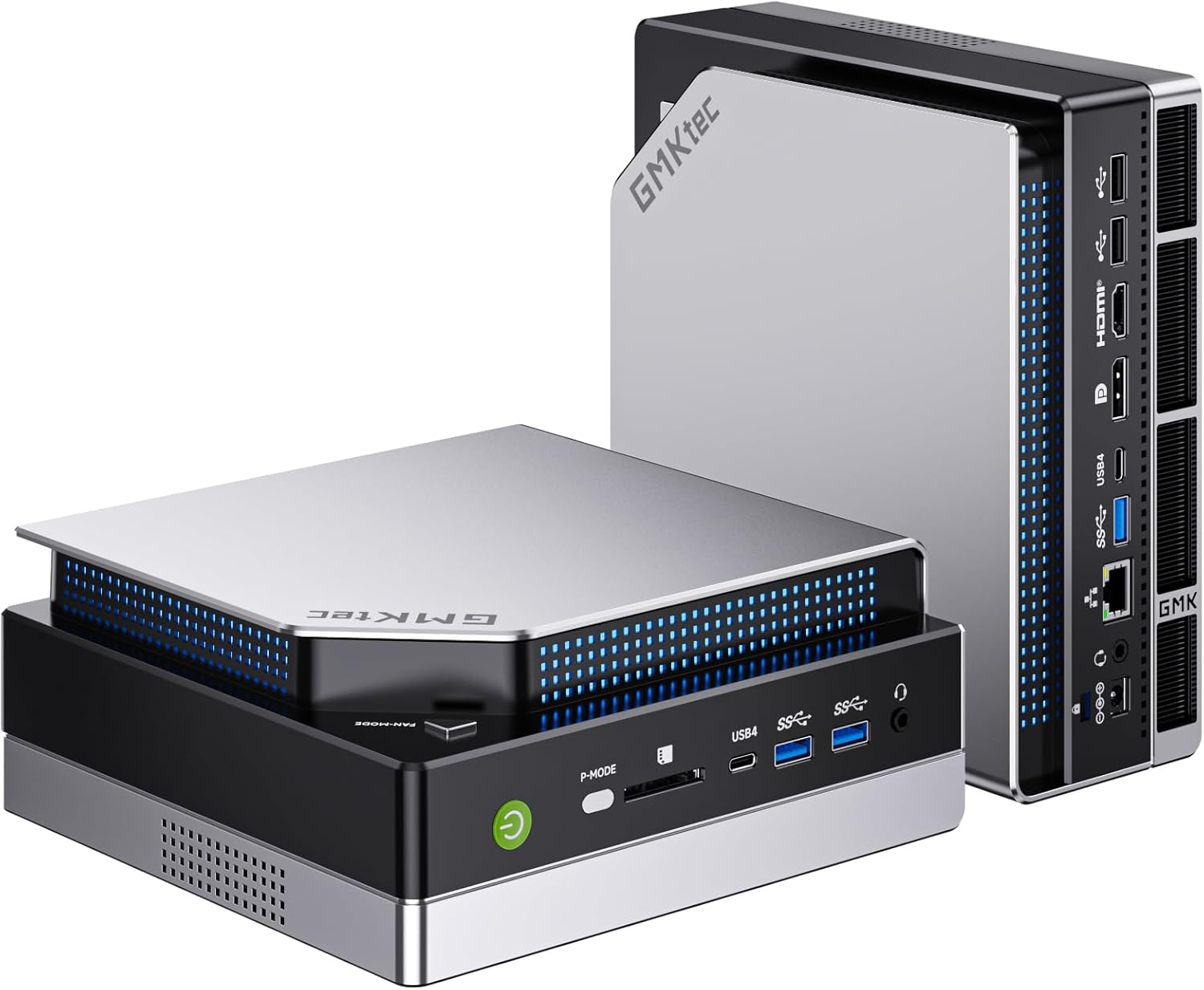
GMKtec EVO-X2
4.3/ 5
Ryzen AI Max+ 395
Radeon 8060S graphics
64GB LPDDR5X memory
140W performance mode
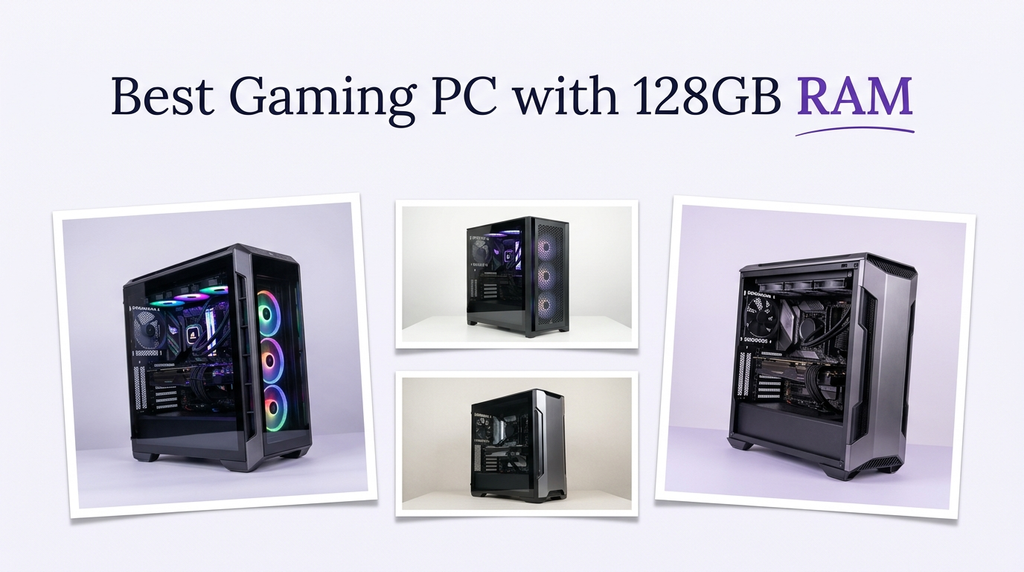
A gaming PC with 128GB of RAM is a specialist machine. Most games do not need that much memory, and buyers who want it are usually doing something else alongside gaming: running local AI models, editing high-resolution video, compiling large projects, or keeping dozens of virtual machines open. The right 128GB machine pairs that capacity with a processor and graphics solution that can actually use it.
The difference between a useful 128GB build and a wasteful one comes down to balance and memory architecture. Large-capacity DDR5 in a desktop tower behaves differently from the unified LPDDR5X memory found in modern AI mini PCs, where the same pool can be allocated to both the CPU and the integrated GPU. That design matters for local AI work and for integrated graphics that share system memory.
To build this guide, we compared the listed specifications and customer ratings across all ten machines. We weighed memory capacity and type, processor generation and core count, graphics solution and video memory, storage size and interface, cooling design, and connectivity. We also considered how each machine fits different high-memory workflows rather than ranking by price. The recommendations reflect specification-based reasoning, not measured test results.
4.3/ 5

4.3/ 5

4.2/ 5
As an Amazon Associate we earn from qualifying purchases, at no additional cost to you.
Swipe across to compare all columns
| Product | Key highlights | Rating | Explore |
|---|---|---|---|
|
Best overall
GMKtec EVO-X3
|
Ryzen AI Max+ 395
Radeon 8060S iGPU
128GB LPDDR5X memory
2TB PCIe 4.0
|
4.3/ 5 | Check Price |
|
Premium pick
BOSGAME M5
|
Ryzen AI Max+ 395
Radeon 8060S iGPU
128GB LPDDR5X memory
2TB PCIe 4.0
|
4.2/ 5 | Check Price |
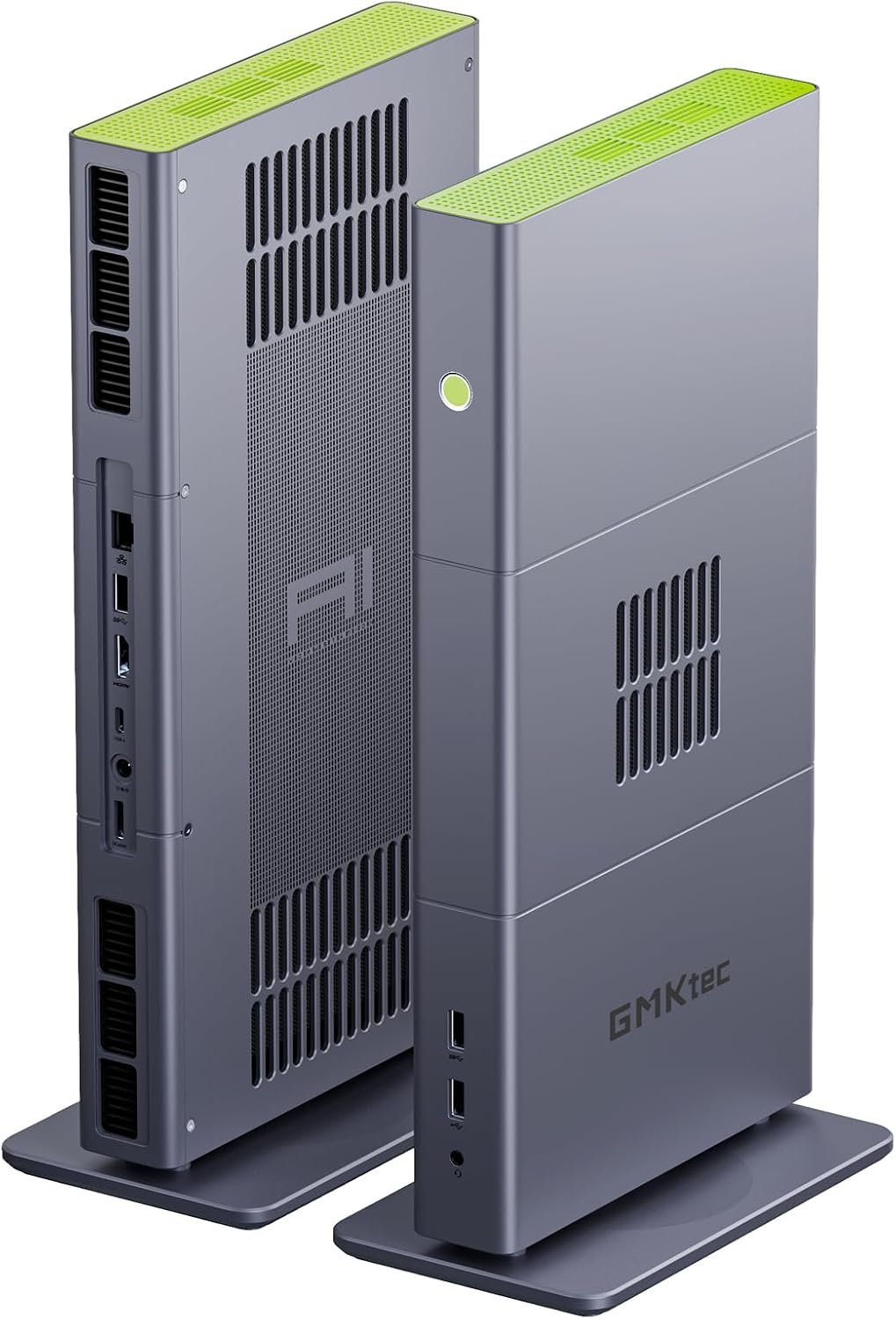
Best for AI development
GMKtec X3
|
Ryzen AI Max+ 395
Radeon 8060S iGPU
128GB LPDDR5X memory
2TB PCIe 4.0
|
4.3/ 5 | Check Price |

Best compact 64GB option
GMKtec EVO-X2
|
Ryzen AI Max+ 395
Radeon 8060S iGPU
64GB LPDDR5X memory
2TB SSD storage
|
4.3/ 5 | Check Price |
|
Best value
GMKtec EVO-X2 64GB
|
Ryzen AI Max+ 395
Radeon 8060S iGPU
64GB LPDDR5X memory
Three performance modes
|
4.3/ 5 | Check Price |

Best desktop tower GPU
Skytech Ryzen 7 9800X3D
|
Ryzen 7 9800X3D CPU
RTX 5070 Ti 16GB
32GB DDR5 6000
2TB NVMe SSD
|
4.2/ 5 | Check Price |

Best value
iBUYPOWER Element
|
Ryzen 9 7900X CPU
RTX 5070 12GB
32GB DDR5 memory
1TB NVMe SSD
|
4.3/ 5 | Check Price |

Best high-rated AI mini PC
NIMO AI Mini PC
|
Ryzen AI Max+ 395
Radeon 8060S iGPU
128GB LPDDR5 memory
1TB PCIe 4.0
|
5.0/ 5 | Check Price |

Best desktop 128GB tower
MSI Codex Z2 128GB
|
Ryzen 7 8700F CPU
RTX 5060 Ti 8GB
128GB DDR5 memory
8TB PCIe SSD
|
Not supplied | Check Price |
As an Amazon Associate we earn from qualifying purchases, at no additional cost to you.
The GMKtec EVO-X3 is the Best overall pick because it pairs the 16-core Ryzen AI Max+ 395 with 128GB of LPDDR5X memory running at 8000MT/s and a 2TB PCIe 4.0 SSD. It is a compact AI workstation rather than a traditional desktop tower, and its unified memory architecture lets the CPU and integrated GPU share the same large pool.
The Ryzen AI Max+ 395 brings 16 Zen 5 cores, 32 threads, and a 50 TOPS XDNA 2 NPU. The Radeon 8060S integrated graphics with 40 RDNA 3.5 compute units delivers gaming performance in the range of mainstream laptop GPUs, which is enough for 1080p gaming at high settings in many titles. For local AI work, the 128GB of memory can be allocated to large models, and the OCuLink port allows an external GPU for more graphics power.
Connectivity is strong for a compact machine: WiFi 7, Bluetooth 5.4, a 2.5G LAN port, dual 8K display output, and USB4. The three-fan cooling system supports performance modes up to 140W peak power. The full-metal chassis is compact and quiet-oriented.
The main limitation is that this is an integrated-graphics machine, not a desktop with a discrete flagship card. Gamers who want maximum frame rates at high resolutions should consider an external GPU or a tower with a dedicated card. For buyers who want 128GB of unified memory for AI and creative work alongside capable 1080p gaming, this is the strongest overall choice.
In a unified memory design, the CPU and GPU share the same memory pool. That allows large AI models and graphics workloads to use the full 128GB rather than being limited to dedicated video memory, which is a key advantage for local AI work.
Gamers who want maximum frame rates at 1440p or 4K should choose a desktop with a discrete graphics card. Buyers who prefer a traditional tower with DDR5 slots should compare the MSI Codex configuration.
As an Amazon Associate we earn from qualifying purchases, at no additional cost to you.
The BOSGAME M5 is the Premium pick because it pairs the Ryzen AI Max+ 395 with 128GB of LPDDR5X memory at 8000MT/s and a 2TB PCIe 4.0 SSD, and it adds quad 8K display output and dual USB4 ports. It is aimed at creators and AI developers who want a compact machine with expansive display connectivity.
The Ryzen AI Max+ 395 provides 16 Zen 5 cores and a 50 TOPS NPU, and the Radeon 8060S integrated graphics handles 1080p gaming and GPU-accelerated creative work. The 128GB of memory is the key feature for local AI models and heavy multitasking, and the second M.2 slot allows storage expansion.
Connectivity includes WiFi 7, Bluetooth 5.4, 2.5GbE LAN, dual USB4, HDMI 2.1, and DisplayPort 1.4. The quad 8K output is useful for multi-monitor workstations. The customer rating of 4.2 is slightly lower than the EVO-X3, so it is worth reading owner feedback carefully.
This machine makes sense for a creator or AI developer who wants 128GB of unified memory and extensive display connectivity. If you want the highest-rated configuration or OCuLink external GPU support, the EVO-X3 is the better fit.
Four 8K-capable outputs allow a multi-monitor workstation for video walls, trading desks, or complex creative setups. Check that your monitors and cables support the combination you plan to use.
Buyers who want external GPU support should choose the EVO-X3. Gamers who want maximum frame rates at high resolutions should consider a desktop with a discrete graphics card.
As an Amazon Associate we earn from qualifying purchases, at no additional cost to you.
The GMKtec X3 pairs the Ryzen AI Max+ 395 with 128GB of LPDDR5X memory and a 2TB PCIe 4.0 SSD, and it includes an OCuLink PCIe 4.0 x4 port for an external GPU. It is aimed at AI developers who want large memory for local models and the option to add desktop-class graphics later.
The Ryzen AI Max+ 395 provides 16 Zen 5 cores, 32 threads, and a 50 TOPS NPU. The Radeon 8060S integrated graphics handles 1080p gaming and creative workloads, and the 128GB unified memory pool can be allocated to large language models. The OCuLink port allows an external GPU dock for demanding gaming or rendering.
Connectivity includes WiFi 7, Bluetooth 5.4, and a 2.5G LAN port. The compact chassis uses a three-fan cooling design. The main limitation is that the OCuLink port does not support hot plugging, so the system must be powered off before connecting or disconnecting an external GPU.
This machine makes sense for an AI developer who wants 128GB of memory and the flexibility to add an external GPU. If you want a simpler integrated-graphics build or the highest-rated configuration, the EVO-X3 and BOSGAME M5 are worth comparing.
OCuLink provides a PCIe connection to an external GPU dock, which can add desktop-class graphics for gaming and rendering. It operates at PCIe x4 speeds and does not support hot plugging, so power off before connecting.
Gamers who want native high-resolution gaming without an external GPU should choose a desktop tower. Buyers who prefer a simpler setup should compare the EVO-X3.
As an Amazon Associate we earn from qualifying purchases, at no additional cost to you.
The GMKtec EVO-X2 pairs the Ryzen AI Max+ 395 with 64GB of LPDDR5X memory and a 2TB SSD. It is a compact AI mini PC with strong processing power and quad 8K display support, but it does not reach the 128GB capacity that defines this guide.
The Ryzen AI Max+ 395 provides 16 Zen 5 cores and a 50 TOPS NPU, and the Radeon 8060S integrated graphics handles 1080p gaming and creative work. The 64GB of memory is enough for many AI models and multitasking workloads, but buyers who specifically need 128GB should look at the EVO-X3 or BOSGAME M5.
Connectivity includes WiFi 7, Bluetooth 5.4, 2.5GbE LAN, HDMI 2.1, DisplayPort 1.4, dual USB4, and an SD 4.0 card reader. The triple-fan cooling design supports quiet operation.
This machine makes sense for a buyer who wants a compact AI PC with 64GB of memory. If 128GB is a firm requirement, the EVO-X3 and BOSGAME M5 are the right fit.
64GB of unified memory is enough for many local AI models and creative workloads. Buyers who plan to run very large models or heavy virtualization should prioritize 128GB.
Buyers who specifically need 128GB of memory should choose the EVO-X3 or BOSGAME M5. Gamers who want a discrete graphics card should consider a desktop tower.
As an Amazon Associate we earn from qualifying purchases, at no additional cost to you.
This GMKtec EVO-X2 configuration pairs the Ryzen AI Max+ 395 with 64GB of LPDDR5X memory and three performance modes. It is the Best value pick among the AI mini PCs here, though it does not reach 128GB of memory.
The Ryzen AI Max+ 395 provides 16 Zen 5 cores and a 50 TOPS NPU, and the Radeon 8060S integrated graphics handles 1080p gaming and creative workloads. The 64GB of memory is enough for many AI models and multitasking, and the three performance modes let you balance power and noise.
Connectivity includes WiFi 7, Bluetooth 5.4, 2.5GbE LAN, HDMI 2.1, DisplayPort 1.4, dual USB4, and an SD 4.0 card reader. The triple-fan cooling design supports quiet operation.
This machine makes sense for a buyer who wants a capable AI mini PC at a lower price and can work within 64GB of memory. If 128GB is a firm requirement, the EVO-X3 and BOSGAME M5 are the right fit.
The combination of the 16-core Ryzen AI Max+ 395 and 64GB of LPDDR5X memory at a lower price covers the essentials for local AI work and 1080p gaming without paying for 128GB capacity.
Buyers who specifically need 128GB of memory should choose the EVO-X3 or BOSGAME M5. Gamers who want a discrete graphics card should consider a desktop tower.
As an Amazon Associate we earn from qualifying purchases, at no additional cost to you.
The Skytech Ryzen 7 9800X3D pairs the RTX 5070 Ti 16GB with the Ryzen 7 9800X3D, 32GB of DDR5 6000 memory, and a 2TB NVMe SSD. It is a strong gaming tower, but it does not include 128GB of memory, so it is relevant here mainly as a comparison point for buyers who prioritize graphics over memory capacity.
The RTX 5070 Ti 16GB provides strong gaming performance at 1440p and 4K, and the Ryzen 7 9800X3D's large cache helps frame pacing. The 32GB of DDR5 6000 memory is fast but falls well short of 128GB capacity. The 2TB NVMe SSD provides generous storage.
Cooling is handled by a 360mm AIO liquid cooler, and the case is a showcase design with a tempered-glass panel. The main limitations for this guide are the 32GB memory capacity and the older WiFi 5 standard.
This desktop makes sense for a buyer who prioritizes gaming performance over memory capacity. If 128GB is a firm requirement, the EVO-X3, BOSGAME M5, and MSI Codex configurations are the right fit.
For pure gaming, a stronger graphics card often matters more than 128GB of memory. Buyers who mainly game should weigh the GPU first, while buyers with memory-heavy workloads should prioritize capacity.
Buyers who specifically need 128GB of memory should choose the EVO-X3, BOSGAME M5, or MSI Codex configurations. Anyone who wants the newest wireless standard should plan for a wired connection.
As an Amazon Associate we earn from qualifying purchases, at no additional cost to you.
The iBUYPOWER Element pairs the twelve-core Ryzen 9 7900X with the RTX 5070 12GB, 32GB of DDR5 memory, and a 1TB NVMe SSD. It is a strong multitasking tower, but it does not include 128GB of memory, so it is relevant here mainly as a comparison point.
The Ryzen 9's twelve cores provide headroom for gaming, streaming, and creative work. The RTX 5070 12GB handles high-resolution gaming well. The 32GB of DDR5 memory is fast but falls short of 128GB capacity, and the 1TB NVMe SSD is modest for a large library.
Connectivity includes six USB 3.1 ports and Ethernet. There is no USB-C port listed, which may matter for newer accessories.
This desktop makes sense for a buyer who wants strong CPU performance and a capable GPU at a reasonable price. If 128GB is a firm requirement, the EVO-X3, BOSGAME M5, and MSI Codex configurations are the right fit.
High-end gaming and multitasking benefit from a processor that can keep up with game logic and background applications. The Ryzen 9's twelve cores provide headroom for streaming and creative work.
Buyers who specifically need 128GB of memory should choose the EVO-X3, BOSGAME M5, or MSI Codex configurations. Anyone who needs USB-C should verify the port layout.
As an Amazon Associate we earn from qualifying purchases, at no additional cost to you.
The NIMO AI Mini PC pairs the Ryzen AI Max+ 395 with 128GB of LPDDR5 memory at 8000MT/s and a 1TB PCIe 4.0 SSD. It carries the highest customer rating in this comparison and is aimed at AI developers and creators who want large memory in a compact machine.
The Ryzen AI Max+ 395 provides 16 Zen 5 cores and strong AI compute, and the Radeon 8060S integrated graphics handles 1080p gaming and creative workloads. The 128GB of memory is the key feature for local AI models and heavy multitasking. The 1TB SSD is the main storage limitation for large datasets.
Connectivity includes WiFi 7, Bluetooth 5.2, USB4, and multiple display outputs. The compact chassis is designed for desktop use.
This machine makes sense for a buyer who wants 128GB of memory and values strong owner feedback. If you need more storage or external GPU support, the EVO-X3 and X3 configurations are worth comparing.
A customer rating of 5.0 suggests buyers have been satisfied with this configuration. It is still worth reading individual reviews to understand the experience with integrated graphics and storage capacity.
Buyers who need more storage should choose a 2TB model. Gamers who want maximum frame rates at high resolutions should consider a desktop with a discrete graphics card.
As an Amazon Associate we earn from qualifying purchases, at no additional cost to you.
The MSI Codex Z2 configuration is the only traditional desktop tower in this comparison with 128GB of DDR5 memory, paired with the Ryzen 7 8700F, the RTX 5060 Ti 8GB, and an 8TB PCIe NVMe SSD. It is aimed at buyers who want a tower with expandable memory and enormous storage.
The 128GB of DDR5 memory is the key feature for memory-heavy workloads, and the 8TB SSD provides exceptional storage for large datasets, game libraries, and project files. The RTX 5060 Ti 8GB handles 1080p and 1440p gaming, though its 8GB of video memory is modest for high settings.
The configuration includes Windows 11 Pro, a 650W power supply, RGB lighting, and a range of USB and display ports. There is no customer rating listed, so owner feedback is limited.
This desktop makes sense for a buyer who wants 128GB of DDR5 memory in a traditional tower with massive storage. If you want a higher-rated configuration or unified memory for AI work, the EVO-X3 and NIMO models are worth comparing.
A traditional tower with DDR5 slots allows memory to be replaced or expanded later, which can be an advantage for buyers who plan to upgrade. The 8TB SSD provides storage that is hard to match in compact machines.
Gamers who want higher frame rates at high settings should choose a stronger graphics card. Buyers who want unified memory for local AI work should compare the EVO-X3 and NIMO configurations.
As an Amazon Associate we earn from qualifying purchases, at no additional cost to you.

The NIMO 2026 AI PC is a mobile workstation rather than a desktop, pairing the Ryzen AI Max+ 395 with 128GB of LPDDR5X memory and a 1TB SSD. It is included here as an option for buyers who want 128GB of memory in a portable form factor for AI work and development.
The Ryzen AI Max+ 395 provides 16 Zen 5 cores and strong AI compute, and the Radeon 8060S integrated graphics handles 1080p gaming and creative workloads. The 128GB of memory is the key feature for local AI models and heavy multitasking. The 2.5K 165Hz display and 99Wh battery make it suitable for travel.
Connectivity includes dual USB4, HDMI 2.1, WiFi, and Bluetooth. The 230W adapter supports rapid charging. There is no customer rating listed, so owner feedback is limited.
This machine makes sense for a developer or creator who needs 128GB of memory on the move. If you want a stationary desktop with expandable memory or stronger gaming, the EVO-X3 and MSI Codex configurations are a better fit.
A mobile workstation with 128GB of memory lets you run local AI models and heavy development environments away from a desk. The 99Wh battery is the maximum allowed for air travel.
Buyers who want a stationary desktop with expandable memory should choose the MSI Codex configuration. Gamers who want maximum frame rates should consider a desktop with a discrete graphics card.
As an Amazon Associate we earn from qualifying purchases, at no additional cost to you.
A 128GB machine is a specialist purchase, and the right choice depends on why you need that much memory. These factors explain what to prioritize.
The 128GB machines here fall into two groups. The AI mini PCs use unified LPDDR5X memory soldered on-board, which allows the CPU and integrated GPU to share the same large pool. The MSI Codex tower uses 128GB of DDR5 in traditional slots. Each approach has trade-offs.
Unified memory is advantageous for local AI models and integrated graphics, because the GPU can access far more memory than a typical dedicated card. DDR5 slots allow memory to be replaced or expanded later, which can be better for long-term upgrades. LPDDR5X runs at high speeds such as 8000MT/s, which helps bandwidth-heavy workloads.
If you want unified memory for AI work, choose an LPDDR5X mini PC. If you want expandable memory in a traditional tower, choose the DDR5 configuration.
Most 128GB machines here use integrated Radeon 8060S graphics, which shares the memory pool and delivers performance in the range of mainstream laptop GPUs. That is enough for 1080p gaming at high settings in many titles, but it is not a match for a discrete flagship card at high resolutions.
The MSI Codex tower uses the RTX 5060 Ti 8GB, a dedicated card with its own video memory. It handles 1440p gaming well, though 8GB of video memory is modest for high settings. The AI mini PCs can add an external GPU through OCuLink on some models.
If gaming performance is your top priority, choose a desktop with a discrete graphics card. If memory capacity and AI work matter more, integrated graphics with unified memory can be sufficient.
The AI mini PCs use the 16-core Ryzen AI Max+ 395, which provides strong multi-core performance and a 50 TOPS NPU. The desktop towers use the Ryzen 7 8700F and Ryzen 9 7900X, which are capable but lack the same AI acceleration.
For local AI work, the NPU and integrated GPU matter alongside CPU cores. For general multitasking, more cores help. The Ryzen AI Max+ 395 combines both in a compact package.
If AI workloads are central to your use, prioritize the Ryzen AI Max+ 395. If you mainly multitask, a high-core desktop processor is also suitable.
A 128GB machine often pairs with large datasets, AI models, and game libraries. The machines here offer 1TB, 2TB, or 8TB SSDs. A 1TB drive is a reasonable starting point, 2TB gives more freedom, and 8TB is exceptional for large archives.
Some mini PCs include a second M.2 slot for expansion. The MSI Codex tower includes an 8TB SSD out of the box.
If you work with large datasets, prioritize 2TB or more. If you mainly run AI models and a few games, 1TB can be sufficient.
Compact AI mini PCs use multi-fan cooling and performance modes to balance power and noise. The GMKtec models list three modes ranging from quiet to performance, with peak power up to 140W. The BOSGAME and NIMO models use similar cooling designs.
Desktop towers use larger air or liquid coolers, which generally offer more thermal headroom. The MSI Codex tower uses a 650W power supply.
If you run sustained AI workloads, check the cooling design and performance modes. For shorter sessions, standard cooling is sufficient.
The AI mini PCs offer extensive connectivity, including WiFi 7, 2.5GbE LAN, USB4, and multiple 8K display outputs. Some models include OCuLink for external GPUs. The desktop towers offer traditional USB and display ports.
If you plan to use multiple monitors or an external GPU, check the port layout. OCuLink requires powering off before connecting or disconnecting.
Match the connectivity to your workflow. If you use many displays or external devices, prioritize a model with the ports you need.
Set up your machine with adequate airflow, keeping clearance around the vents. On mini PCs, use the performance modes to balance power and noise for your workload. Connect monitors to the correct outputs and confirm the display resolution and refresh rate in system settings.
Keep the cooling system clean by checking the fans and vents for dust every few months. Dust reduces airflow and can cause higher temperatures and louder fan noise. Use compressed air to clean the vents while the machine is off.
Update drivers and AI software regularly, as performance and compatibility can improve with new releases. Monitor memory usage during heavy workloads to confirm that 128GB is helping your workflow, and back up important data regularly.
For gaming alone, 128GB is far more than most titles need. It becomes useful when you run local AI models, edit high-resolution video, compile large projects, or keep many virtual machines open. Buyers who only game may be better served by 32GB and a stronger GPU.
Unified memory is a design where the CPU and GPU share the same memory pool. It allows the GPU to access far more memory than a typical dedicated card, which is useful for local AI models and integrated graphics workloads.
Yes, at moderate settings. The Radeon 8060S integrated graphics in these machines delivers performance in the range of mainstream laptop GPUs, which is enough for 1080p gaming at high settings in many titles. For higher resolutions or maximum settings, a discrete graphics card is better.
LPDDR5X offers high bandwidth in a compact soldered package and is common in AI mini PCs. DDR5 in traditional slots can be replaced or expanded later. Choose based on whether you value unified memory or upgrade flexibility.
A processor with enough cores and, for AI work, a capable NPU is important. The Ryzen AI Max+ 395 provides 16 cores and a 50 TOPS NPU, making it well suited to local AI workloads. Desktop processors with high core counts are also suitable for multitasking.
Large datasets and AI models consume significant storage. A 1TB SSD is a reasonable starting point, 2TB gives more freedom, and 8TB is exceptional for large archives. Check whether the machine has an additional M.2 slot for expansion.
Some models, such as the GMKtec X3 and EVO-X3, include an OCuLink port for an external GPU dock. OCuLink does not support hot plugging, so power off before connecting or disconnecting.
Yes. High-resolution video editing, especially with large projects and effects, can benefit from more memory. Pair it with a strong processor and GPU for the best results.
It depends on the model. The AI mini PCs use soldered LPDDR5X memory that cannot be upgraded. The MSI Codex tower uses DDR5 slots, which may allow replacement or expansion. Check the specifications before buying.
The GMKtec EVO-X3 is the strongest overall choice in this comparison for a machine with 128GB of memory. Its 16-core Ryzen AI Max+ 395, 128GB of LPDDR5X at 8000MT/s, 2TB SSD, WiFi 7, and OCuLink external GPU support make it well suited to local AI work, creative workloads, and capable 1080p gaming.
For buyers who want quad 8K display output, the BOSGAME M5 is a strong alternative. The GMKtec X3 emphasizes OCuLink expansion for external GPUs, and the NIMO AI Mini PC carries the highest customer rating. The MSI Codex Z2 is the only traditional desktop tower with 128GB of DDR5 and 8TB of storage, while the Skytech and iBUYPOWER towers offer strong gaming but only 32GB of memory.
Your final decision should start with why you need 128GB. If AI work and unified memory matter most, choose the EVO-X3 or BOSGAME M5. If you want expandable DDR5 in a tower, choose the MSI Codex. The right machine is the one that matches your workload and budget without paying for capability you will not use.